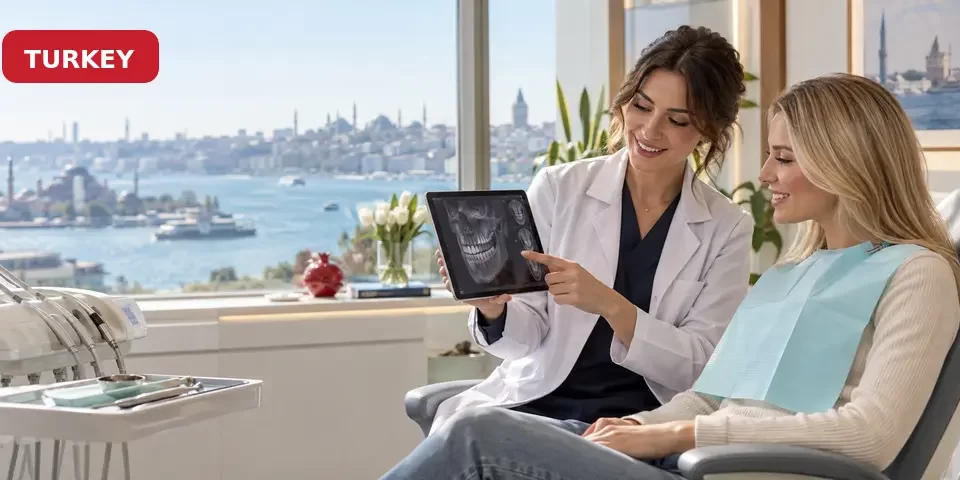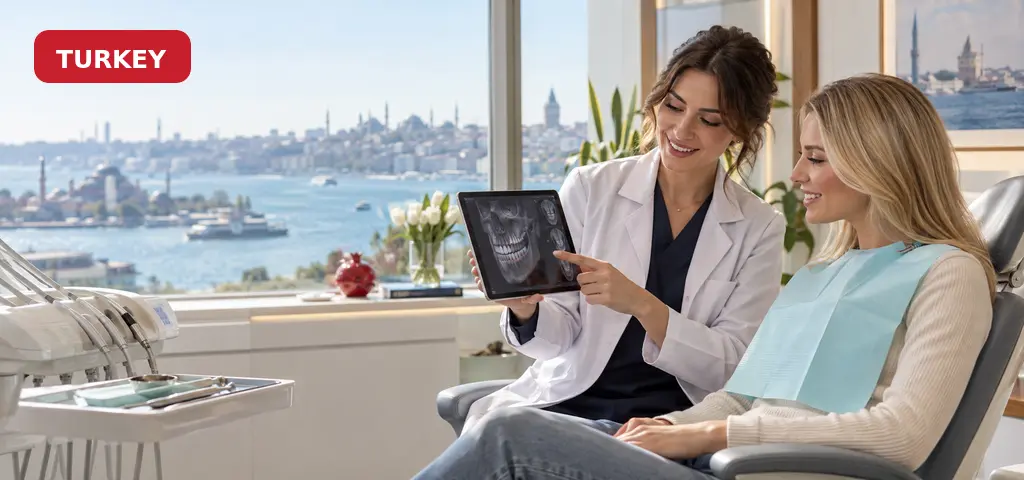


Dental Treatment in Turkey: A Planning Guide

E-Max Veneers vs Zirconium Crowns: Which Is Better?
10 August 2026
Dental Treatment Packages in Turkey Explained
17 September 2026
Dental treatment in Turkey can be practical for international patients when diagnosis, treatment scope, timing and follow-up are agreed before travel. The right starting point is a clinical plan, not a package headline. A reliable decision begins by separating the name of a procedure from the patient’s actual diagnosis. This distinction is especially important for patients arranging care from abroad. This guide explains dental treatment in Turkey for people considering dental care in Turkey, with particular attention to suitability, alternatives, treatment stages, limitations, travel planning and long-term maintenance.
The primary question behind “dental treatment in Turkey” should be answered early: the correct approach is the one supported by the patient’s clinical findings, not the one that produces the shortest package or the most dramatic promise. International dental planning starts with diagnosis, medical history, current records and a clear definition of the patient’s main concern. Travel coordination can make care easier, but it must remain separate from the clinical decision. A coordinator may organise appointments and logistics; only the treating clinician should confirm suitability, alternatives, limitations and consent. For dental treatment in Turkey, the final recommendation should be recorded in language the patient can understand and should remain open to revision when new diagnostic information appears.
What This Topic Actually Means
Dental treatment in Turkey is best understood as a clinical decision rather than a fixed product. Dental treatment in Turkey can be practical for international patients when diagnosis, treatment scope, timing and follow-up are agreed before travel. The right starting point is a clinical plan, not a package headline. Two patients using the same search phrase may therefore need different care, different timing or no active treatment at all.
International dental planning starts with diagnosis, medical history, current records and a clear definition of the patient’s main concern. Travel coordination can make care easier, but it must remain separate from the clinical decision. A coordinator may organise appointments and logistics; only the treating clinician should confirm suitability, alternatives, limitations and consent. In the context of dental treatment in Turkey, this wider view protects the patient from choosing a procedure before the problem has been defined. It also gives the dentist a clear objective against which the result can be reviewed.
A helpful explanation distinguishes the desired outcome from the method used to reach it. With dental treatment in Turkey, the method may change after examination even when the patient’s main goal remains the same. This distinction is especially important for patients arranging care from abroad. Consent should cover the realistic result, alternatives, biological cost, maintenance and the possibility that treatment may need to be staged.
Who May Be Suitable?
A useful remote review can identify likely options, but definitive planning may require an examination, current X-rays and an assessment of gums, bite and remaining tooth structure. For dental treatment in Turkey, suitability is not established by a single photograph, age, price request or online questionnaire. The clinician must consider whether the proposed result can be achieved while preserving health, function and cleaning access.
A useful assessment reviews symptoms, existing restorations, gum health, bite, photographs and imaging only when clinically justified. Remote information can support an initial view, yet the final decision follows an in-person examination. The written plan should distinguish confirmed treatment from possibilities that depend on new findings. The relevance of each record depends on dental treatment in Turkey; unnecessary tests are not a sign of better care, while missing information can lead to an unreliable plan. The patient should be shown how the findings connect to the recommendation.
People with active infection, uncontrolled gum disease, unresolved pain or a medical issue affecting treatment may need preliminary care or coordination first. This does not automatically rule out dental treatment in Turkey, but it may change timing, technique or the preferred alternative. Elective work should not be used to cover an untreated disease process.
Clinical Assessment and Diagnostic Records
The assessment for dental treatment in Turkey begins with the patient’s concern, symptom history, previous treatment and relevant medical information. Medicines, allergies, smoking, pregnancy, diabetes, bleeding risk, previous complications and anxiety can influence planning. The dentist then examines the teeth, gums, bite and oral tissues in the areas relevant to the proposed care.
A useful assessment reviews symptoms, existing restorations, gum health, bite, photographs and imaging only when clinically justified. Remote information can support an initial view, yet the final decision follows an in-person examination. The written plan should distinguish confirmed treatment from possibilities that depend on new findings. For dental treatment in Turkey, imaging should be selected because it answers a diagnostic question, not simply because the patient is travelling. Photographs and digital scans can improve communication and design but do not show every biological factor.
Remote records can support an initial opinion about dental treatment in Turkey, yet the clinic should label this as preliminary. If the in-person assessment changes the scope, the new finding should be demonstrated and the patient should receive an updated written plan. A deposit or flight booking should never replace informed consent.
Treatment Options and Conservative Alternatives
Options may range from monitoring and preventive care to restorative, periodontal, orthodontic, implant or cosmetic treatment. The least invasive option that can meet the clinical objective should be considered. When treatment is elective, the patient should have enough time to compare alternatives rather than being pushed toward the fastest package. The discussion for dental treatment in Turkey should include what happens with a more conservative option, a staged option and no immediate treatment. This comparison helps the patient understand what is gained and what must be maintained.
An option can be technically possible without being the best fit for the patient’s priorities. With dental treatment in Turkey, the dentist should consider comfort, treatment time, reversibility, tooth preservation, long-term repair and the patient’s ability to clean the result. A more complex procedure should have a clear additional benefit.
The patient should also understand whether the proposed care treats the underlying cause or mainly changes appearance or symptoms. If dental treatment in Turkey is combined with other treatment, the sequence should be explained so that one stage does not compromise another. Alternatives should be described fairly without presenting the most extensive plan as automatically superior.
How the Treatment or Care Process Is Planned
Planning should separate essential treatment from elective cosmetic work, explain alternatives and sequence procedures so healing time is realistic. For dental treatment in Turkey, each stage should have a purpose, a responsible clinician and a review point. The plan should identify what can be completed in one visit and what depends on healing, laboratory work or response to initial care.
A step-by-step plan for dental treatment in Turkey reduces confusion for international patients. It should state when records are taken, when temporary treatment is used, when the definitive result is delivered and when adjustments are expected. If the plan contains optional stages, the criteria for using them should be written before treatment begins.
Treatment should not be compressed simply to match a flight. With dental treatment in Turkey, a review appointment can be as important as the procedure because it checks comfort, function, cleaning access and the patient’s understanding of aftercare. A staged approach may be the more responsible choice even when a faster option is technically available.
Benefits, Limits and Realistic Expectations
The potential benefit of dental treatment in Turkey depends on the problem it is intended to solve. A meaningful benefit may involve health, comfort, function, appearance or easier maintenance, but it should be defined before treatment. This allows the outcome to be judged against a realistic objective rather than a generic before-and-after image.
No clinic can responsibly confirm every procedure or final timetable from photographs alone. Complex reconstruction may require staged visits or changes after examination. The main planning risks are incomplete diagnosis, compressed schedules, unclear responsibilities, hidden exclusions and weak follow-up. Medical conditions, medicines, allergies and previous complications can change the safest approach. Major changes after arrival should be demonstrated and explained before additional treatment is authorised. For dental treatment in Turkey, these limitations do not mean that treatment is inappropriate; they mean the patient needs a balanced explanation. No material, device or technique removes the need for maintenance or eliminates every complication.
Expectations should include the possibility of adjustment, repair or future replacement. The result of dental treatment in Turkey can also be influenced by ageing, gum changes, habits, diet, disease and treatment to neighbouring teeth. A calm explanation of these variables is more useful than a fixed lifetime claim.
Risks, Warning Signs and When to Seek Help
The main planning risks are incomplete diagnosis, compressed schedules, unclear responsibilities, hidden exclusions and weak follow-up. Medical conditions, medicines, allergies and previous complications can change the safest approach. Major changes after arrival should be demonstrated and explained before additional treatment is authorised. The relevance and probability of each risk for dental treatment in Turkey depend on individual findings. The dentist should explain common short-term effects separately from complications that require review.
Pain that is severe, spontaneous or worsening; swelling; fever; discharge; uncontrolled bleeding; mobility; trauma; or a significant change in bite should not be dismissed as routine after dental treatment in Turkey. Breathing or swallowing difficulty and rapidly spreading swelling require emergency medical care. Patients travelling soon after treatment need a clear contact plan.
Home remedies should not delay diagnosis. Patients should not use household glue, alter an appliance, stop prescribed medicine or repeatedly self-medicate without professional advice. When dental treatment in Turkey has been started abroad, a local dentist may need the treatment summary and material or component details to provide safe urgent care.
Key Options at a Glance
| Planning area | What it means |
|---|---|
| Diagnosis | What records and examination support the plan? |
| Scope | Which teeth and procedures are included? |
| Timing | How many visits and healing stages are expected? |
| Exclusions | Which findings could add treatment or cost? |
| Follow-up | Who reviews the result after travel? |
This table is a decision aid, not a personal recommendation. The appropriate pathway for dental treatment in Turkey may use one option or a staged combination. A clinician must connect the selected approach to examination findings and explain why a simpler or different option would not meet the same objective.
Decision Scenarios and Practical Trade-Offs
One way to evaluate dental treatment in Turkey is to compare three planning scenarios. In the first, examination findings support the patient’s original expectation and the proposed sequence can proceed after consent. In the second, the goal remains reasonable but preliminary care, healing or a more conservative first stage is needed. In the third, the expected benefit does not justify the biological cost or risk, so monitoring or another option is recommended. These scenarios are not predictions; they show why an online request cannot function as a final prescription. For this subject, the key individual issue is that a useful remote review can identify likely options, but definitive planning may require an examination, current x-rays and an assessment of gums, bite and remaining tooth structure. The final choice should record which scenario most closely fits the findings and why.
Trade-offs for dental treatment in Turkey should be discussed in connected pairs rather than as isolated advantages. A shorter schedule may reduce time abroad but leave less opportunity for review. A more extensive intervention may change more features but also remove more tissue, add recovery or increase future maintenance. A lower initial quotation may exclude diagnostics, temporary work, laboratory stages or later adjustments. Conversely, the most expensive proposal is not automatically the most appropriate. The patient needs a written comparison that relates these trade-offs to the stated objective. In this case, compare like-for-like written plans, ask what is excluded and keep time for review rather than choosing solely on a headline fee. That approach helps the patient compare like with like and recognise where uncertainty remains.
A practical decision record for dental treatment in Turkey can be brief but should be specific and easy to revisit. It should name the diagnosis or working diagnosis, the desired outcome, the selected option, reasonable alternatives, important risks, expected stages, review arrangements and the circumstances that would change the plan. It should also state what the patient must do, such as following hygiene instructions, attending reviews, wearing an appliance or allowing healing time. The relevant process point here is that planning should separate essential treatment from elective cosmetic work, explain alternatives and sequence procedures so healing time is realistic. If the plan changes after examination, the reason, additional cost and effect on travel should be discussed before work continues. This record supports consent and makes follow-up easier for both the treating clinic and any local dentist.
Cost, Timing and International Travel
Compare like-for-like written plans, ask what is excluded and keep time for review rather than choosing solely on a headline fee. For dental treatment in Turkey, a useful quotation identifies the teeth or areas involved, procedures, materials, provisional stages, laboratory work, planned reviews and foreseeable additions. A headline figure without scope cannot be compared reliably.
The total budget for dental treatment in Turkey may also include flights, accommodation, local travel, time away from work and a possible second visit. Travel services should be shown separately from clinical care. The shortest stay is not automatically the safest or least expensive if it removes time for review or requires unfinished treatment to be managed at home.
Before paying a deposit for dental treatment in Turkey, ask which findings could change the plan and how additional treatment is authorised. A major revision after arrival should be supported by a demonstrated finding and updated consent. Current numerical prices are not stated here because fees change and depend on the confirmed clinical scope.
Aftercare and Long-Term Maintenance
Maintain routine care at home, keep copies of records and arrange a clear route for questions or review after returning. Continuity matters after the patient returns home. The clinic should provide a treatment summary, relevant images, material or implant records, aftercare instructions and a route for clinical questions. Local maintenance should be agreed in advance for complex or staged treatment. Aftercare for dental treatment in Turkey should be written and tailored rather than copied from an unrelated procedure.
The patient should know which symptoms are expected, how to clean the area, whether diet or activity needs temporary modification and when the next review is due. With dental treatment in Turkey, maintenance protects both the treated area and the surrounding teeth and tissues. Missing routine care can turn a manageable issue into a more complex one.
Before leaving Turkey after dental treatment in Turkey, request a treatment summary, relevant diagnostic records, material or device details and contact information for clinical questions. If a local dentist will provide maintenance, responsibilities should be clear. New pain, swelling, bleeding, movement or functional change should be assessed rather than saved for the next planned trip.
Questions to Ask Before Treatment
The following questions help turn a discussion about dental treatment in Turkey into a reviewable clinical plan. They are most useful when the answers are recorded before irreversible treatment, payment deadlines or travel commitments.
- What diagnosis supports the recommendation?
- Which alternatives would preserve more natural tooth structure?
- Which findings could change the plan after examination?
- What is included in the written fee and what is excluded?
- How many clinical and laboratory stages are expected?
- What result is realistic and which limitations will remain?
- How will short-term complications be managed?
- What maintenance will be required after returning home?
- Which records and material details will be supplied?
- Who is responsible for each stage and for the final review?
Not every question has one universal answer. The purpose is to understand how the recommendation for dental treatment in Turkey was reached, what uncertainty remains and how care will continue after the main procedure. A clinic should be able to answer clinical questions through the treating professional rather than relying only on sales or travel staff.
Frequently Asked Questions
What does dental treatment in Turkey mean?
Dental treatment in Turkey can be practical for international patients when diagnosis, treatment scope, timing and follow-up are agreed before travel. The right starting point is a clinical plan, not a package headline. The exact meaning for an individual patient depends on examination findings and the objective of treatment.
Who may be suitable for dental treatment in Turkey?
A useful remote review can identify likely options, but definitive planning may require an examination, current X-rays and an assessment of gums, bite and remaining tooth structure. Suitability cannot be confirmed from age, photographs or one symptom alone.
How is dental treatment in Turkey planned?
Planning should separate essential treatment from elective cosmetic work, explain alternatives and sequence procedures so healing time is realistic. The written plan should connect each step to a diagnosis and identify which details remain provisional.
What are the main limitations of dental treatment in Turkey?
No clinic can responsibly confirm every procedure or final timetable from photographs alone. Complex reconstruction may require staged visits or changes after examination. These limitations should be discussed before irreversible treatment or travel arrangements are finalised.
Are there alternatives to dental treatment in Turkey?
Alternatives to dental treatment in Turkey depend on the underlying problem and may include monitoring, prevention, a more conservative procedure or a different restorative or surgical approach. The clinician should explain the biological cost and maintenance of each reasonable option.
How long does dental treatment in Turkey take?
Timing for dental treatment in Turkey depends on diagnosis, healing, laboratory stages and whether treatment is combined with another procedure. A remote schedule is preliminary until the patient has been examined.
How much does dental treatment in Turkey cost in Turkey?
Compare like-for-like written plans, ask what is excluded and keep time for review rather than choosing solely on a headline fee. A useful quotation is itemised and avoids presenting an unexamined patient with a misleading universal figure.
What aftercare is needed after dental treatment in Turkey?
Maintain routine care at home, keep copies of records and arrange a clear route for questions or review after returning. The clinic should also explain normal symptoms, warning signs and the next review.
Can dental treatment in Turkey be completed during one trip?
Some stages of dental treatment in Turkey may fit within one visit, while healing or laboratory requirements can make a staged plan safer. The number of trips should follow the clinical sequence rather than a package deadline.
When should I seek an earlier dental assessment?
During planning or recovery for dental treatment in Turkey, new or worsening pain, swelling, bleeding, mobility, trauma, a broken restoration or a significant change in bite should be assessed. Breathing or swallowing difficulty and rapidly spreading swelling require emergency medical care.
Related reading for dental treatment in Turkey: How to Choose the Right Cosmetic Dentist in Turkey, Dental Costs in Turkey: What Changes the Price?, Dental Anxiety: How to Make Treatment Easier.
Medical review note: This content explains dental treatment in Turkey for general education and international patient planning. It does not confirm an individual diagnosis or suitability and does not replace an examination by a dentist. The final scope, timing and aftercare should be based on current clinical findings and informed consent.