
'/%3E%3C/svg%3E)


E-Max Veneers vs Zirconium Crowns: Which Is Better?

Can I Get Veneers Without Shaving My Teeth?
10 August 2026
Dental Treatment in Turkey: A Planning Guide
17 September 2026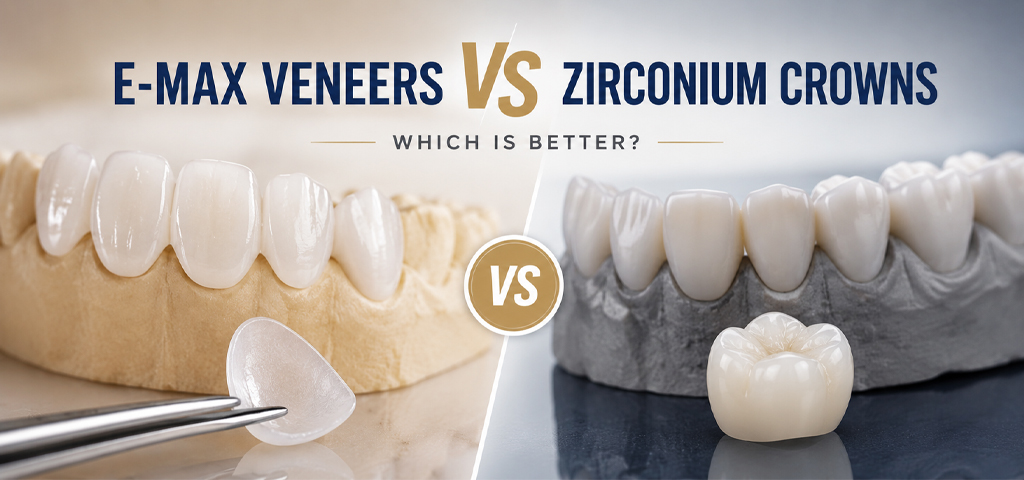
E-Max veneers and zirconium crowns are both widely used in cosmetic dentistry, but they are designed for different clinical situations. E-Max veneers are generally considered when the natural teeth are structurally healthy and the main goal is to improve colour, shape, proportion or minor aesthetic imperfections while preserving more natural tooth structure. Zirconium crowns provide more extensive coverage and may be more appropriate for teeth that are significantly damaged, heavily restored or require additional structural support. For this reason, asking whether E-Max or zirconium is “better” does not have a universal answer. The right choice depends on the condition of your natural teeth, how much tooth structure remains, your bite, existing dental work and the changes you want to achieve.
For patients considering cosmetic dental treatment in Turkey, this distinction is particularly important. E-Max and zirconium should not simply be viewed as two competing materials or different smile packages. The first decision should be whether a tooth actually needs a veneer or a crown. Once the appropriate restoration has been determined, the dentist can select a ceramic material according to the aesthetic and functional requirements of that tooth.
What Is the Difference Between E-Max and Zirconium?
E-Max is a lithium disilicate glass-ceramic known for combining strength with favourable optical properties. It can reproduce characteristics such as translucency and light transmission that are important when trying to create restorations that resemble natural enamel. E-Max can be used for different types of restorations, but it is particularly well known in aesthetic dentistry for veneers and certain crowns.
Zirconia is a high-strength dental ceramic commonly used for crowns and bridges. Modern zirconia is available in different formulations with varying levels of strength and translucency, which means it can be used in both functional and aesthetic areas depending on the clinical requirements. Compared with traditional zirconia materials, newer translucent zirconia options can provide significantly improved aesthetics.
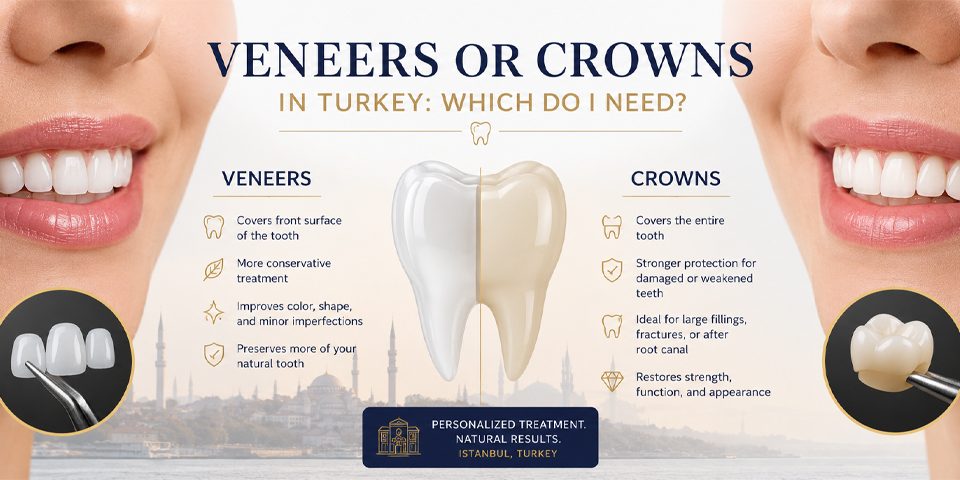
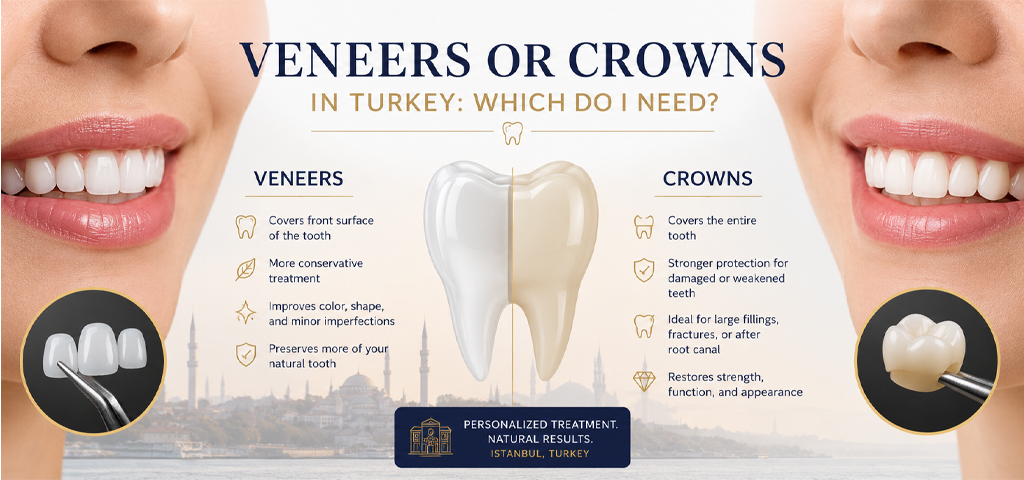
The most important difference, however, is not simply the material itself. Patients often compare an “E-Max veneer” with a “zirconium crown,” but this comparison involves both a material difference and a restoration-design difference. A veneer primarily covers the front surface of a tooth, while a crown covers the tooth much more extensively. This affects how the tooth is prepared and how much natural tooth structure may need to be removed.
What Are E-Max Veneers?
E-Max veneers are thin ceramic restorations bonded primarily to the visible front surface of the teeth. They are commonly used when patients want to improve aesthetic concerns such as persistent discolouration, uneven tooth proportions, small gaps, worn edges or certain minor alignment irregularities. When the teeth are healthy and appropriately positioned, E-Max veneers can often provide these changes with a relatively conservative preparation.
One of the reasons E-Max is frequently selected for veneers is its ability to reproduce natural-looking optical characteristics. Natural teeth are not simply one flat shade of white; they have variations in translucency, brightness and texture. A carefully planned ceramic veneer can incorporate these characteristics so that the final result integrates with the patient’s facial features and surrounding teeth rather than appearing excessively uniform.
E-Max veneers are not suitable for every tooth. Teeth with extensive structural damage, very large restorations or insufficient healthy enamel may require a different restorative approach. The patient’s bite, tooth position and habits such as grinding or clenching must also be considered before veneers are recommended.
What Are Zirconium Crowns?
Zirconium crowns are full-coverage restorations made from zirconia ceramic. Because a crown surrounds most of the visible portion of the tooth, it can provide greater coverage than a veneer and may be considered when the underlying tooth has significant structural compromise.
A zirconium crown may be appropriate for a tooth with a large existing filling, substantial fracture, severe wear or extensive previous dental treatment. Zirconia is also commonly considered when higher functional demands are present because of its mechanical properties. However, the decision to place a crown should be based on the condition of the tooth rather than simply on the strength of the material.
Modern zirconia can also provide good aesthetic results. Earlier generations of zirconia were often associated with greater opacity, but contemporary materials are available with improved translucency. The dentist and dental technician can select the appropriate type according to the location of the tooth, underlying tooth colour, functional forces and desired appearance.
Which Looks More Natural: E-Max or Zirconium?
Both E-Max and modern zirconia can produce natural-looking restorations when used appropriately, but E-Max is particularly valued in highly aesthetic areas because of its optical properties. Its translucency can allow light to interact with the restoration in a way that resembles natural enamel, which can be beneficial for front teeth when the underlying tooth colour and clinical conditions are suitable.
This does not mean that E-Max automatically produces a more natural smile. Material is only one part of the result. Tooth proportions, ceramic thickness, preparation design, surface texture, translucency, shade selection, gum levels and the relationship between the teeth and face all influence how natural a restoration appears. Zirconia may also be the more appropriate material when additional masking or strength is required.
A natural smile should not be defined simply by how white the teeth are. Excessively opaque, identical or uniformly shaped restorations can appear artificial regardless of the ceramic used. The objective should be to select both the restoration and material according to the individual patient rather than trying to reproduce the same smile design for everyone.
Which Requires More Tooth Shaving?
An E-Max veneer generally requires less tooth preparation than a full zirconium crown because the veneer primarily covers the front surface of the tooth, while a crown requires space around a much larger portion of the tooth. However, the exact amount of preparation varies according to the individual clinical situation.
For healthy teeth requiring primarily aesthetic changes, a veneer may allow more enamel and natural tooth structure to be preserved. Some appropriately selected cases can be treated with minimal preparation, while others require more space because of tooth position, discolouration or the desired change in shape.
A crown naturally involves more extensive preparation because it needs to cover the tooth circumferentially. This can be entirely appropriate when the tooth is already significantly damaged or heavily restored. The concern is not that crowns require more preparation; it is whether that additional preparation is clinically justified for the tooth being treated.
For this reason, healthy teeth should not automatically be prepared for zirconium crowns simply because a patient wants a smile makeover. The condition of each tooth should first be evaluated to determine whether a more conservative restoration can achieve the intended result.
When Are E-Max Veneers the Better Choice?
E-Max veneers may be a suitable option when the natural teeth are generally healthy and the main concerns are aesthetic. Patients seeking changes in tooth colour, shape, width, length or minor spacing may be candidates, particularly when sufficient healthy enamel remains for predictable bonding.
They can also be useful when the objective is to create a subtle and natural-looking smile rather than dramatically altering the entire structure of the teeth. Because veneers can often preserve more natural tooth tissue than crowns, they may represent a more conservative solution when the clinical conditions are favourable.
However, choosing E-Max simply because it is associated with aesthetic dentistry is not appropriate. A tooth with extensive damage or insufficient remaining structure may require greater coverage. In these situations, trying to use a veneer solely to avoid a crown may compromise the restorative plan.
When Are Zirconium Crowns the Better Choice?
Zirconium crowns may be more appropriate when teeth require substantial coverage and structural restoration rather than primarily an aesthetic surface change. Teeth with large fillings, significant fractures, extensive wear or previous restorations may benefit from the additional coverage provided by a crown.
They may also be considered in areas exposed to higher functional forces or when the underlying tooth requires greater masking. The specific type of zirconia can then be selected according to the balance of strength and aesthetics required.
This does not mean every root canal-treated, discoloured or imperfect tooth automatically requires a zirconium crown. Each tooth should be assessed individually. Some teeth may be suitable for alternative restorations, while others genuinely require full coverage.
E-Max Veneers or Zirconium Crowns for Healthy Teeth?
When teeth are structurally healthy, the first priority should generally be to determine whether the desired aesthetic improvement can be achieved without unnecessary removal of healthy tooth structure. In suitable cases, veneers, whitening, orthodontics, composite bonding or combinations of conservative treatments may be considered before full-coverage crowns.
There are exceptions. Tooth position, bite relationships, severe discolouration or other clinical factors can make treatment more complex, so it would be inaccurate to say that a healthy-looking tooth should never receive a crown. Nevertheless, the reason for recommending full coverage should be clearly understood before irreversible preparation begins.
Patients should therefore ask why each tooth is receiving a particular restoration rather than simply choosing between an E-Max or zirconium package. One tooth may be suitable for an E-Max veneer while another tooth in the same smile may require a crown because of previous damage. A personalised treatment plan does not necessarily use the same restoration on every visible tooth.
Can E-Max Veneers and Zirconium Crowns Be Used Together?
Yes. E-Max veneers and zirconium crowns can be used within the same treatment plan when different teeth have different clinical needs. For example, healthy front teeth may be suitable for conservative veneers while a neighbouring tooth with a large restoration or substantial structural damage may require a crown.
When different materials and restoration types are combined in the aesthetic zone, careful planning is important to achieve consistency in colour, translucency, shape and surface texture. The final restorations should be designed as part of the same smile rather than as isolated individual teeth.
Using different restorations according to the condition of each tooth can actually be a more conservative approach than placing the same type of crown or veneer across the entire smile. The goal is not material uniformity; it is selecting the appropriate treatment for each tooth while creating a visually harmonious result.
How Does a Dentist Decide Between E-Max and Zirconium?
The decision begins with an examination of the natural teeth rather than with material selection. The dentist evaluates remaining tooth structure, enamel quality, existing fillings or crowns, fractures, wear, tooth position, gum health and bite. The patient’s aesthetic goals and desired degree of change are then considered alongside these clinical findings.
If a tooth is healthy and mainly requires aesthetic modification, a veneer may be considered. If it requires more extensive structural restoration, a crown may be more appropriate. Only after deciding the type of restoration should the ceramic material be selected according to factors such as location, functional forces, underlying tooth colour and aesthetic requirements.
Digital photographs, scans and smile planning can also help evaluate the relationship between the teeth, lips and face. This is particularly important for cosmetic treatment because selecting the right material alone cannot compensate for inappropriate tooth proportions or an unsuitable treatment plan.
Can I Know Which Is Better Before Travelling to Turkey?
An initial assessment can often provide an indication of whether your teeth appear more suitable for veneers, crowns or a combination before you travel to Turkey. Clear photographs, information about previous dental treatment and recent X-rays can help the dentist understand your starting condition and discuss possible treatment options.
However, the final decision should be confirmed after an in-person examination. Photographs cannot fully show enamel condition, bite relationships, the extent of existing restorations or every structural issue affecting the teeth. The treatment plan may therefore need to be adjusted after clinical and radiographic evaluation.
For international patients, the preliminary consultation is useful for understanding why a particular treatment is being considered. Rather than asking only whether E-Max or zirconium is available, it is more useful to ask which teeth appear to require veneers, which may need crowns and why.
Frequently Asked Questions
Is E-Max better than zirconium?
Neither material is universally better. E-Max may offer advantages for certain highly aesthetic restorations, while zirconia may be preferred when different mechanical or masking properties are required. The correct choice depends on the tooth and the type of restoration being planned.
Is E-Max or zirconium better for front teeth?
E-Max is frequently used for aesthetic restorations in the front of the mouth because of its optical properties, but modern translucent zirconia can also provide good aesthetic results. The condition of the tooth and whether it requires a veneer or crown should be determined before choosing the material.
Which is stronger, E-Max or zirconium?
Zirconia is generally associated with higher fracture strength, but choosing a dental restoration based solely on which material is strongest can be misleading. The restoration design, tooth condition, ceramic thickness and bite forces all influence treatment selection.
Which lasts longer, E-Max or zirconium?
There is no universal lifespan that applies to every E-Max or zirconium restoration. Longevity depends on treatment planning, tooth condition, preparation, bonding or cementation, bite forces, oral hygiene, grinding habits and ongoing dental care.
Can I have E-Max veneers without shaving my teeth?
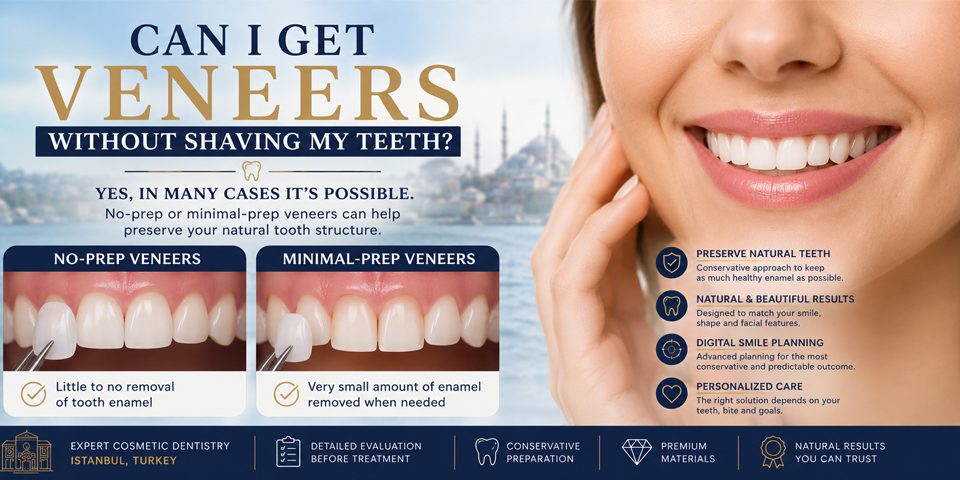
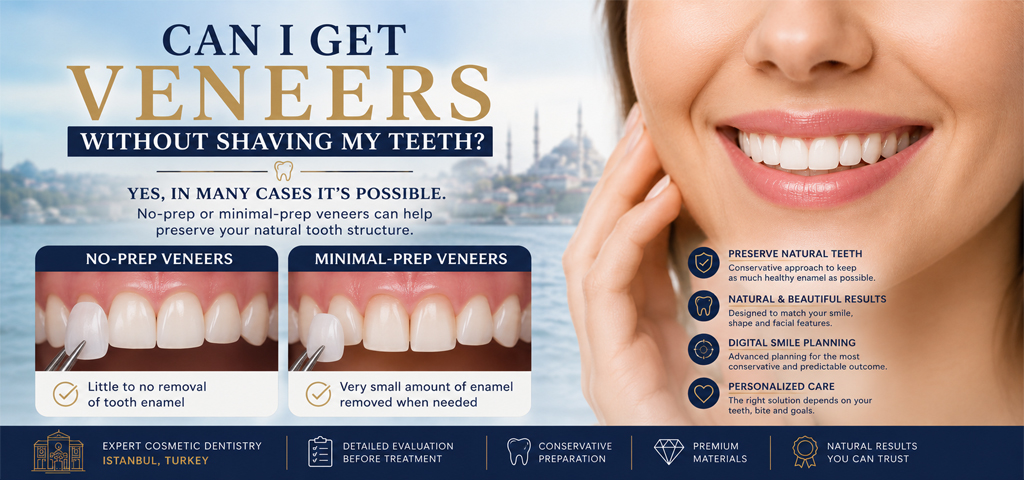
Some patients may be suitable for minimal-prep or, in selected situations, no-prep E-Max veneers. The amount of preparation depends on the position, shape and colour of the teeth and the intended final design. No-prep treatment is not suitable for every patient.
Do zirconium crowns require more shaving than veneers?
Generally, yes. A crown covers considerably more of the tooth than a veneer and therefore typically requires more extensive preparation. This can be appropriate when a tooth genuinely needs full coverage but may not be necessary for every healthy tooth undergoing cosmetic treatment.
Can I mix E-Max and zirconium in the same smile?
Yes. Different restoration types and materials can be combined when individual teeth have different needs. Careful shade, shape and translucency planning is required so the restorations appear harmonious together.
Which is better for a natural smile?
A natural result depends on more than the ceramic material. Appropriate treatment selection, conservative preparation where possible, tooth proportions, shade, translucency, texture and facial harmony all contribute to the final appearance.
Choosing the Right Treatment for Your Smile
The choice between E-Max veneers and zirconium crowns should not begin with deciding which material is more popular, stronger or more expensive. The first question is what each individual tooth actually needs.
Healthy teeth requiring mainly aesthetic changes may be suitable for conservative veneer treatment, while structurally compromised teeth may require the greater coverage of crowns. In some smile makeovers, using both approaches according to the condition of individual teeth may provide a more appropriate solution than applying the same treatment across the entire smile.
If you are considering cosmetic dental treatment in Istanbul, clear photographs of your teeth and smile together with recent dental X-rays, when available, can be used for an initial assessment. This can help determine whether your case appears more suitable for E-Max veneers, zirconium crowns or a combination before you travel. The final treatment plan should then be confirmed following an in-person clinical examination.