

How to Choose the Right Cosmetic Dentist in Turkey

What Makes a Natural Smile?
27 July 2026
Can I Fly Home After Dental Implants?
27 July 2026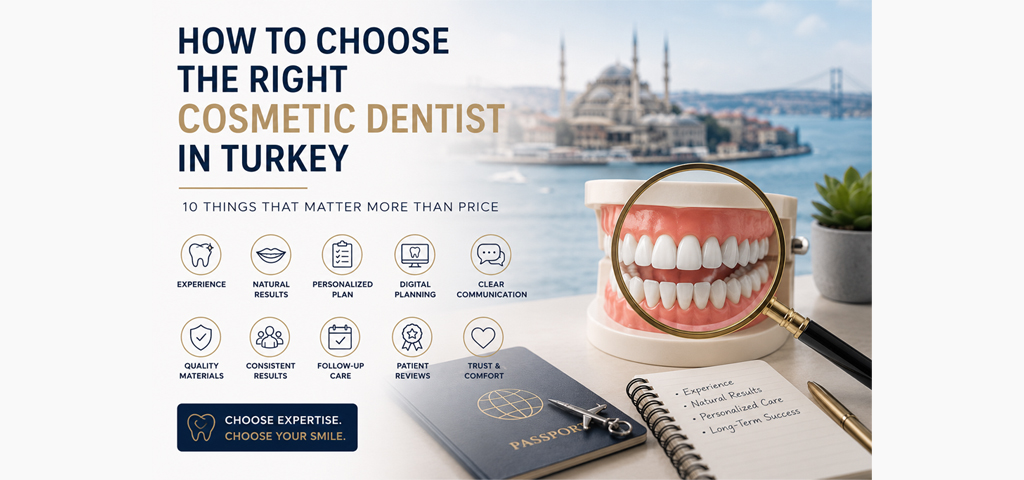
Choosing a cosmetic dentist is one of the most important decisions you’ll make when improving your smile. Whether you’re considering porcelain veneers, dental implants, crowns, or a complete smile makeover, the person performing your treatment has a greater impact on the final result than the clinic’s size, advertising, or promotional offers.
Turkey has become one of the world’s leading destinations for cosmetic dentistry. Thousands of international patients travel every year because they can access experienced dentists, modern technology, and comprehensive dental care while combining treatment with travel.
However, with so many options available, choosing the right cosmetic dentist can feel overwhelming.
Many patients begin by comparing prices or searching for the “best clinic.” While cost and facilities are certainly worth considering, they rarely determine whether your new smile will look natural, function properly, and remain healthy for many years.
Beautiful cosmetic dentistry is not created by expensive equipment alone. It is the result of careful diagnosis, detailed planning, artistic judgment, technical precision, and clear communication between the dentist and the patient.
Every smile is unique. The ideal treatment for one person may not be the right solution for someone else. Factors such as facial proportions, lip movement, tooth shape, bite alignment, gum symmetry, and personal expectations all influence the final outcome. This is why cosmetic dentistry should never follow a one-size-fits-all approach.
The right cosmetic dentist will take the time to understand your goals, explain your treatment options honestly, and recommend solutions that preserve both aesthetics and long-term oral health. Rather than focusing on creating the brightest or largest smile possible, experienced cosmetic dentists aim to design smiles that complement each patient’s natural facial features.
This guide explains what truly matters when choosing a cosmetic dentist in Turkey. Instead of focusing only on price, you’ll learn the factors that influence treatment quality, patient experience, and long-term satisfaction—helping you make a confident and well-informed decision.
Why Choosing the Dentist Matters More Than Choosing the Clinic
When people begin researching cosmetic dentistry in Turkey, many naturally search for the “best dental clinic.” While a modern clinic equipped with advanced technology is important, the clinic itself does not perform your treatment—the dentist does.
Cosmetic dentistry is both a medical discipline and an artistic one. Two dentists working in the same clinic, using the same materials and equipment, can achieve noticeably different results because experience, aesthetic judgment, and clinical philosophy vary from one practitioner to another.
Unlike many routine dental procedures, cosmetic treatments require hundreds of small decisions throughout the planning and treatment process. The ideal tooth shape, length, width, translucency, color, gum contour, and bite relationship must all work together to create a smile that looks balanced rather than artificial.
These decisions cannot be made by software or laboratory technicians alone. They rely on the dentist’s ability to evaluate facial harmony, understand natural dental anatomy, and translate a patient’s expectations into a realistic treatment plan.
Choosing a cosmetic dentist should therefore involve more than comparing clinic photographs or promotional packages. Patients benefit from learning about the dentist’s experience, reviewing consistent clinical cases, and understanding the treatment philosophy behind the results they see.
Another important consideration is continuity of care. Cosmetic dentistry often involves several appointments, adjustments, and discussions before treatment is complete. Working with the same dentist throughout the process allows for better communication, more consistent decision-making, and greater attention to detail.
Ultimately, successful cosmetic dentistry is built on trust. Patients should feel comfortable asking questions, discussing concerns, and understanding why a particular treatment is recommended. A dentist who listens carefully and explains each step clearly often contributes just as much to a positive experience as technical expertise itself.
A beautiful smile is not simply the product of a well-equipped clinic—it is the outcome of thoughtful planning, clinical experience, and a dentist who understands that every patient deserves an individualized approach.
What Makes a Great Cosmetic Dentist?
A great cosmetic dentist does much more than improve the appearance of teeth. The goal is to create a smile that looks attractive, functions comfortably, and remains healthy for years to come.
Unlike routine dental treatments, cosmetic dentistry combines science, technical precision, and artistic judgment. Every patient has different facial proportions, tooth characteristics, bite relationships, and aesthetic preferences. For this reason, successful treatment depends on careful planning rather than following a standard formula.
Extensive Experience in Cosmetic Dentistry
General dental experience is valuable, but cosmetic procedures require a specific set of skills developed through continuous practice and education.
Treatments such as porcelain veneers, smile makeovers, ceramic crowns, and aesthetic implant restorations demand a deep understanding of tooth anatomy, facial harmony, occlusion, and dental materials.
An experienced cosmetic dentist has usually treated patients with a wide variety of clinical situations. This experience helps them anticipate potential challenges, recommend appropriate solutions, and adapt treatment plans to each individual’s needs.
Rather than focusing on the number of years in practice alone, patients should consider whether the dentist regularly performs cosmetic procedures and demonstrates consistent aesthetic results.
A Conservative Treatment Philosophy
One of the strongest indicators of an experienced cosmetic dentist is a commitment to preserving healthy tooth structure whenever possible.
Modern cosmetic dentistry is no longer about making teeth excessively white or aggressively reducing natural enamel. Instead, the emphasis is on achieving the desired aesthetic improvement with the least invasive approach.
For some patients, professional whitening and minor bonding may provide excellent results without the need for veneers. Others may benefit from orthodontic treatment before considering restorative procedures. A trustworthy dentist evaluates all suitable options before recommending irreversible treatments.
The best cosmetic treatment is not always the most extensive one—it is the one that meets the patient’s goals while protecting long-term oral health.
An Eye for Natural Facial Harmony
Beautiful teeth alone do not automatically create a beautiful smile.
An attractive smile must complement the patient’s facial features, lip movement, age, and overall appearance. Tooth length, width, shape, color, and alignment should work together naturally rather than drawing attention to themselves.
Experienced cosmetic dentists assess the smile within the context of the entire face. They consider factors such as:
- Facial symmetry
- Lip support
- Smile line
- Gum display
- Tooth proportions
- Skin tone
- Age-related characteristics
The objective is not to create identical “Hollywood smiles” for every patient but to design a smile that appears authentic and individually tailored.
Attention to Detail
Cosmetic dentistry often involves details that many patients may never consciously notice—but these details significantly influence the final appearance.
Small differences in tooth translucency, surface texture, edge contour, spacing, or gum symmetry can determine whether veneers appear natural or artificial.
Experienced cosmetic dentists spend considerable time evaluating these subtle elements because they understand that realistic results depend on the accumulation of many small refinements rather than one dramatic change.
Strong Communication Skills
Successful cosmetic dentistry begins long before treatment starts.
Patients should feel comfortable discussing what they like, what concerns them, and what they hope to achieve. Likewise, the dentist should clearly explain what is possible, what may not be advisable, and what realistic outcomes can be expected.
Open communication helps prevent misunderstandings and allows treatment decisions to be made collaboratively rather than based on assumptions.
A dentist who listens carefully often creates results that better reflect the patient’s expectations because aesthetic success is highly personal.
A Long-Term Perspective
Cosmetic dentistry should not focus solely on how a smile looks immediately after treatment.
A well-planned smile should continue to function properly years later. Bite stability, gum health, oral hygiene, and material durability all play essential roles in long-term success.
Rather than chasing short-term cosmetic improvements, experienced dentists aim to create restorations that integrate naturally with the patient’s oral health and lifestyle.
This long-term perspective often influences decisions about treatment planning, material selection, maintenance recommendations, and follow-up care.
Ultimately, a great cosmetic dentist combines clinical expertise with careful planning, artistic vision, and a genuine commitment to individualized care. While modern technology and high-quality materials certainly contribute to excellent results, they are most effective when guided by knowledge, experience, and attention to detail.
10 Things to Look for Before Choosing a Cosmetic Dentist in Turkey
Choosing a cosmetic dentist is about much more than comparing prices or browsing attractive websites. A beautiful smile is the result of careful planning, clinical expertise, and a treatment approach tailored to the individual patient.
If you’re considering cosmetic dental treatment in Turkey, these ten factors can help you make a more informed decision.
1. Look for Consistent Results—Not Just One Perfect Case
Most dental clinics showcase their best smile transformations, but one impressive case doesn’t necessarily reflect everyday clinical quality.
Instead of focusing on a single dramatic before-and-after photo, look for consistency across many patients. Pay attention to whether the smiles appear natural, balanced, and suited to each person’s face rather than identical.
Consistent results often indicate a structured treatment philosophy rather than occasional success.
2. Make Sure Treatment Is Personalized
No two smiles are exactly alike.
Your facial proportions, bite, gum line, existing teeth, and aesthetic goals are unique. A cosmetic dentist should evaluate these factors before recommending treatment rather than suggesting the same solution for everyone.
If every patient appears to receive identical veneers, identical tooth shapes, or identical smile designs, personalization may not be a priority.
The best cosmetic dentistry reflects the individual—not a trend.
3. Ask About the Planning Process
Excellent cosmetic dentistry begins long before any treatment starts.
Planning may include:
- Clinical examination
- Digital photographs
- Smile analysis
- Bite evaluation
- Digital smile design
- Discussion of treatment options
The planning stage allows both the dentist and patient to establish realistic expectations before irreversible procedures begin.
Patients who understand their treatment plan are often more confident and satisfied throughout the process.
4. Consider the Dentist’s Communication Style
Cosmetic dentistry is a collaborative process.
Your dentist should take the time to understand your concerns, answer your questions, and explain why certain treatments are recommended.
Good communication also means being honest about limitations.
For example, an experienced cosmetic dentist may explain that achieving a completely white Hollywood smile is not always the best option if it would look unnatural or require unnecessary removal of healthy tooth structure.
A dentist who provides balanced advice is often focused on achieving the best long-term outcome rather than simply agreeing to every request.
5. Review Before-and-After Photos Carefully
Before-and-after galleries can provide valuable insight when viewed critically.
Instead of asking, “Do these smiles look beautiful?” ask:
- Do they suit each patient’s face?
- Are the teeth proportional?
- Does the smile appear natural?
- Is the gum line symmetrical?
- Are different types of cases represented?
- Do the results look consistent over time?
Natural cosmetic dentistry rarely attracts attention because it blends harmoniously with the patient’s overall appearance.
6. Ask Who Will Perform Your Treatment
In some larger dental centers, different dentists may be responsible for different stages of treatment.
One dentist may perform the consultation, another may prepare the teeth, while someone else places the final restorations.
For some patients, this team-based approach works well. Others prefer continuity by working with the same cosmetic dentist throughout the entire treatment journey.
Knowing who will actually plan and perform your treatment helps set clear expectations before you travel.
7. Quality Materials Matter—But So Does How They’re Used
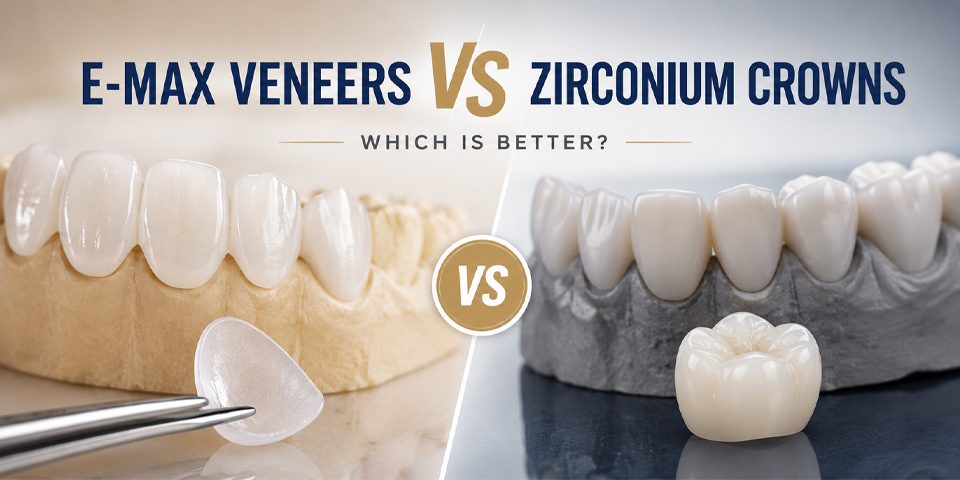
Patients often ask whether porcelain veneers, lithium disilicate restorations, zirconia crowns, or other premium materials are the “best.”
In reality, excellent materials cannot compensate for poor planning or inaccurate preparation.
The success of cosmetic dentistry depends on how appropriately materials are selected, designed, and placed for each individual case.
An experienced cosmetic dentist chooses materials based on your clinical needs—not simply because one material is currently popular.
8. Read Patient Reviews Thoughtfully
Online reviews can provide useful information, but they should be interpreted carefully.
Rather than focusing only on overall ratings, pay attention to recurring themes.
Patients frequently mention aspects such as:
- Clear communication
- Professionalism
- Comfort during treatment
- Attention to detail
- Honest recommendations
- Long-term satisfaction
Reviews that consistently describe similar positive experiences often provide more meaningful insight than isolated comments.
9. Don’t Let Price Be Your Only Decision
Cost is naturally an important consideration, especially for international patients.
However, cosmetic dentistry is an investment in both aesthetics and oral health.
Choosing treatment solely because it is the least expensive may overlook factors that significantly influence the final result, including planning, experience, precision, and long-term durability.
Rather than asking, “Who offers the lowest price?” consider asking:
“Who is most likely to provide the treatment that best suits my needs?”
A well-planned treatment that remains functional and attractive for many years often represents better value than correcting avoidable problems later.
10. Choose a Dentist You Trust
Perhaps the most important factor is trust.
You should feel comfortable asking questions, discussing concerns, and understanding every stage of your treatment.
A trustworthy cosmetic dentist will explain available options objectively, recommend treatment based on your individual needs, and never pressure you into making immediate decisions.
When patients feel informed, respected, and involved in the planning process, they are more likely to enjoy both the treatment experience and the final result.
Ultimately, choosing the right cosmetic dentist is about finding someone whose clinical expertise, communication style, and treatment philosophy align with your expectations. While technology, materials, and facilities all contribute to successful outcomes, the dentist’s knowledge, judgment, and attention to detail remain the most important factors in creating a healthy, natural-looking smile.
Why Personalized Treatment Always Creates Better Results
One of the biggest misconceptions about cosmetic dentistry is that there is a single definition of the “perfect smile.”
In reality, the most successful smile makeovers rarely follow a standard template. They are designed around the individual sitting in the dental chair.
Every patient has unique facial characteristics, different dental anatomy, personal preferences, and functional needs. A smile that looks natural on one person may appear completely out of proportion on someone else.
This is why personalized treatment planning is one of the defining characteristics of high-quality cosmetic dentistry.
Every Smile Starts with a Different Foundation
Before recommending veneers, crowns, or other cosmetic procedures, an experienced dentist evaluates far more than the appearance of the front teeth.
Important considerations include:
- Facial proportions
- Smile width
- Lip position during speech and smiling
- Gum symmetry
- Tooth size and shape
- Existing bite relationship
- Tooth wear
- Tooth color
- Overall oral health
These factors work together to determine what will look both beautiful and natural.
Without this evaluation, even technically well-made restorations may fail to blend harmoniously with the patient’s face.
Cosmetic Dentistry Is Not About Copying Someone Else’s Smile
Many patients save photographs of celebrities or influencers as inspiration.
While reference images can help communicate preferences, they should never become an exact blueprint.
The smile that suits one person’s face may not suit another’s.
For example, two people with the same height, age, and skin tone can still require completely different tooth proportions because of differences in facial structure, lip dynamics, and jaw position.
The goal of cosmetic dentistry is not to replicate another person’s smile—it is to create the best version of your own.
Treatment Should Match the Patient’s Goals
Not every patient wants the same outcome.
Some people hope for a brighter smile while maintaining their natural appearance.
Others wish to close spaces between teeth or improve symmetry.
Some seek a complete smile transformation, while others simply want small refinements that nobody else notices.
Understanding these expectations is just as important as performing the technical aspects of treatment.
A successful cosmetic dentist spends time discussing goals before recommending procedures, ensuring that treatment aligns with what the patient actually wants rather than making assumptions.
Less Treatment Can Sometimes Produce Better Results
One of the advantages of personalized dentistry is that it avoids unnecessary treatment.
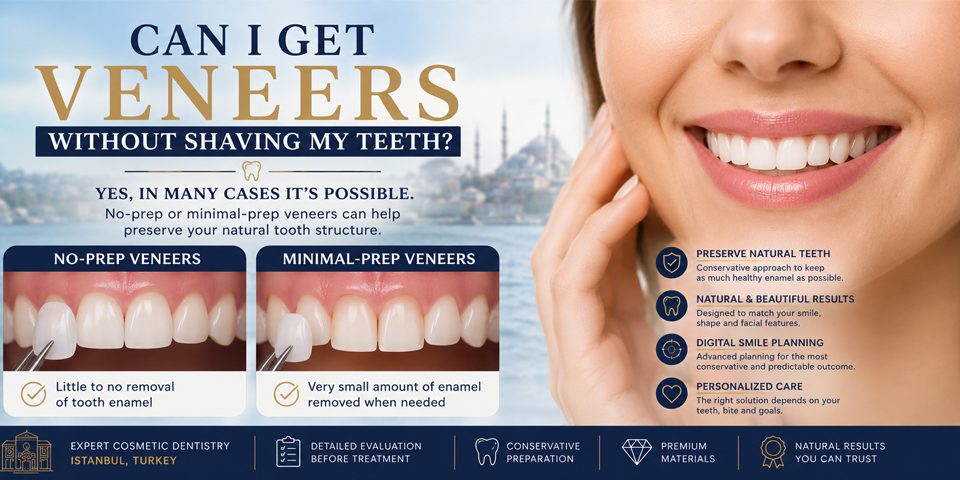
For example, a patient may initially believe veneers are the only solution, but after careful examination, the dentist may recommend:
- Professional whitening
- Minor composite bonding
- Orthodontic alignment
- Gum contouring
- A combination of conservative treatments
In many cases, these approaches achieve the desired improvement while preserving more of the patient’s natural tooth structure.
Personalized treatment focuses on solving the patient’s problem—not simply performing the most extensive procedure.
Functional Success Is Just as Important as Aesthetic Success
Beautiful teeth should also function comfortably.
A smile that looks attractive but interferes with chewing, speech, or bite stability cannot be considered truly successful.
Individualized planning considers how cosmetic restorations interact with the patient’s natural bite and jaw movement.
Balancing aesthetics with function helps reduce the risk of unnecessary wear, fractures, or discomfort over time.
Long-Term Satisfaction Depends on Personalization
Patients are generally happiest with cosmetic dentistry when their smile feels like a natural part of them.
Rather than hearing comments such as, “Your veneers look amazing,” many people appreciate hearing:
“You look refreshed.”
“Something looks different—but I can’t tell what.”
“Your smile really suits you.”
These reactions often indicate that cosmetic dentistry has achieved its highest goal: enhancing appearance without looking artificial.
Personalized treatment does not seek perfection according to a universal standard. Instead, it aims to create harmony between the smile, the face, and the individual behind it.