
'/%3E%3C/svg%3E)


Can I Get Veneers Without Shaving My Teeth?

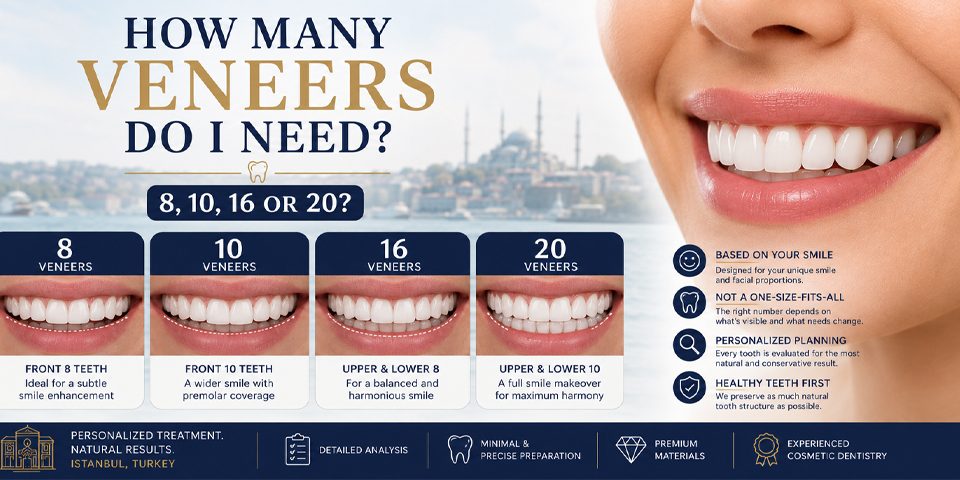
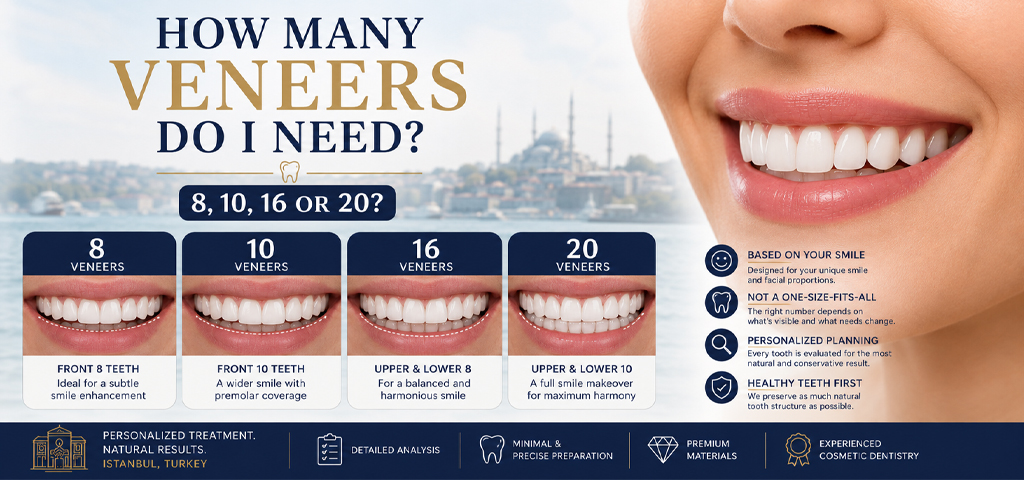
How Many Veneers Do I Need? 8, 10, 16 or 20?
10 August 2026
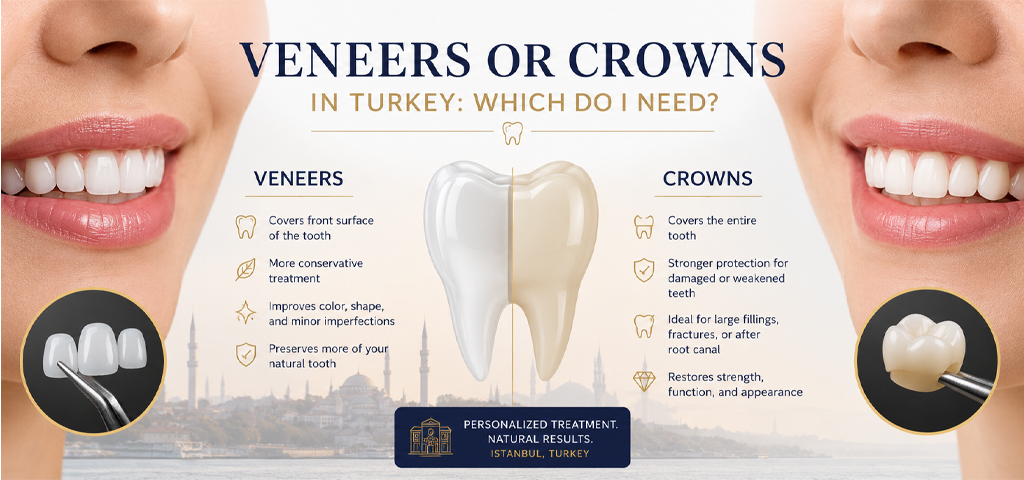
E-Max Veneers vs Zirconium Crowns: Which Is Better?
10 August 2026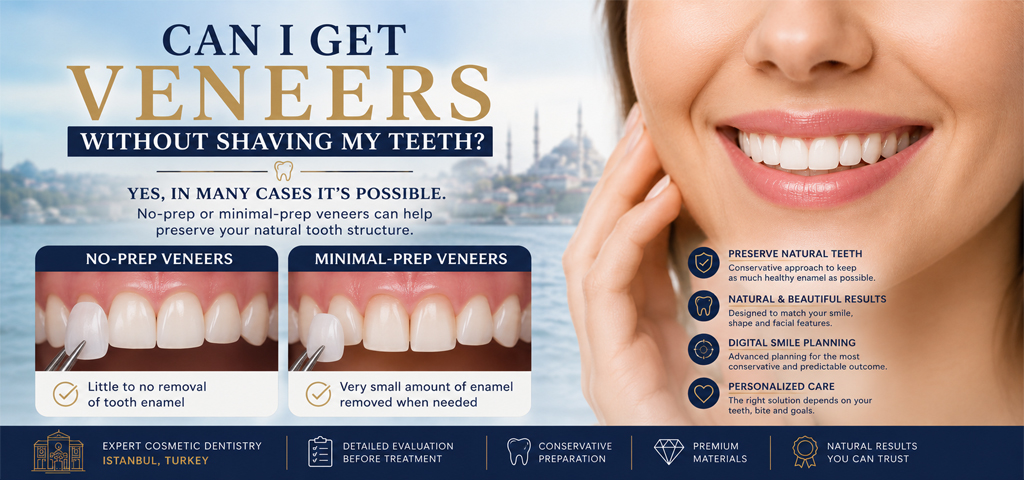
Yes, veneers can sometimes be placed with very little tooth preparation, and in carefully selected cases it may even be possible to use a no-prep approach. However, veneers without shaving are not suitable for everyone. Whether your teeth need preparation depends on their position, shape, colour, alignment, enamel thickness and the result you want to achieve.
The goal of modern veneer treatment should not simply be to avoid tooth preparation at all costs. It should be to preserve as much healthy natural tooth structure as reasonably possible while creating enough space for veneers that look natural and function correctly. Placing porcelain directly over teeth when there is not enough space can make the final smile appear bulky or overly prominent.
For this reason, patients considering veneers in Turkey should be cautious of both extremes: assuming that veneers always require teeth to be heavily shaved down, or assuming that no-prep veneers are automatically the best option. The appropriate amount of preparation should be determined individually for each tooth.
What Are No-Prep and Minimal-Prep Veneers?
No-prep veneers are thin restorations designed to be bonded to the tooth with little or, in selected cases, no removal of enamel. Minimal-prep veneers follow the same conservative principle but involve removing a small amount of tooth structure where necessary to create appropriate space, contours and margins for the restoration.
These approaches are most suitable when the existing tooth position provides enough room for additional ceramic. For example, slightly small, narrow or inward-positioned teeth may sometimes be favourable candidates because the veneer can add volume without making the tooth excessively prominent.
Minimal preparation may also allow the dentist to refine specific areas rather than reducing the entire front surface uniformly. The amount required can therefore differ from one tooth to another within the same smile.
The terms “no-prep” and “minimal-prep” should not be treated as guarantees before the teeth have been evaluated. A genuinely conservative treatment plan is based on the starting position of the teeth and the intended final design rather than applying the same preparation technique to every patient.
Do Traditional Veneers Require Teeth to Be Shaved Down?
Porcelain veneers usually require some degree of preparation, but this should not automatically be confused with the extensive reduction associated with preparing a tooth for a full crown. A veneer primarily covers the front surface of the tooth, so preparation can often remain within a more conservative range when the clinical conditions allow it.
The amount of enamel removed depends on how much space is required for the ceramic and what needs to be corrected. A tooth that is already positioned correctly and requires only a subtle change may need very little preparation. A tooth that protrudes outward, has significant discolouration or requires a substantial change in shape may require more.
Preserving enamel is particularly important because bonding porcelain to healthy enamel can provide a favourable foundation for veneer treatment. This is one reason why careful planning before preparation matters.
Patients should therefore ask not only whether their teeth will be “shaved,” but how much preparation is expected, why it is necessary and whether the proposed treatment remains primarily within enamel.
Who Is a Good Candidate for No-Prep Veneers?
No-prep or very minimal-prep veneers are most suitable when the existing teeth provide enough space for a thin layer of ceramic without making the final teeth look bulky. Patients with relatively small teeth, minor gaps or teeth positioned slightly inward may sometimes be good candidates because the veneer can add volume in a controlled way.
The existing enamel is also important. Veneers rely on adhesive bonding, and preserving healthy enamel can provide favourable conditions for bonding. The dentist must also evaluate the bite, gum health and forces placed on the teeth before deciding whether a minimal-preparation approach is appropriate.
A patient who wants subtle changes in tooth shape, proportion or size may be a better candidate than someone requesting major changes in tooth position or colour. The more dramatic the intended transformation, the more likely some preparation may be required to create enough space for the ceramic.
Even within the same patient, not every tooth necessarily requires the same preparation. One tooth may need almost no reduction, while an adjacent tooth may require minor reshaping because it sits further forward. A conservative treatment plan should therefore be designed tooth by tooth.
Who May Not Be Suitable for No-Prep Veneers?
No-prep veneers may not be appropriate when the teeth are already prominent, significantly rotated or positioned too far forward. Adding ceramic to these teeth without creating sufficient space could increase their volume and make them appear even more prominent.
Severe discolouration can also make treatment more challenging. Very thin ceramic may not provide enough control over the underlying colour, particularly when a substantially lighter final shade is desired. Some additional preparation or a different restorative approach may therefore be needed.
Patients with significant tooth wear, large existing restorations, structural damage or certain bite problems may require a different treatment plan altogether. In these situations, the primary question is not how to avoid preparation but which treatment can appropriately restore the teeth while maintaining function.
Teeth grinding and clenching also need to be considered. These habits do not automatically exclude a patient from veneer treatment, but the forces involved can affect treatment planning, ceramic design and long-term maintenance.
Can No-Prep Veneers Look Bulky?
Yes. No-prep veneers can look bulky if ceramic is added to teeth that do not have enough space for the additional thickness. This is one of the main reasons why avoiding tooth preparation should not become the only objective of veneer treatment.
Even very thin veneers add some volume. If a natural tooth is already appropriately sized or positioned toward the lips, adding ceramic directly over it can make the tooth appear too thick, long or prominent. The transition near the gum line may also become more difficult to design naturally when insufficient space is available.
A natural-looking smile depends on more than simply making veneers as thin as possible. Tooth proportions, contours, surface texture, translucency and the relationship between the teeth, lips and face all need to be considered.
In suitable cases, removing a very small and controlled amount of enamel may actually allow a more natural result than placing a completely no-prep veneer. The important principle is to remove only what is clinically necessary rather than avoiding preparation regardless of the final shape.
Are No-Prep Veneers Better Than Minimal-Prep Veneers?
No-prep veneers are not automatically better simply because no tooth structure is removed. Minimal-prep veneers may provide a better balance between preserving enamel and creating enough space for appropriate ceramic thickness and tooth contours.
For some patients, no preparation may be possible and produce an excellent result. For others, a small amount of enamel modification may help prevent excessive bulk, improve the emergence profile near the gums or allow better control over tooth proportions.
The more useful question is therefore not “Can my veneers be completely no-prep?” but “What is the least amount of preparation needed to achieve an appropriate result for my teeth?”
A conservative approach is personalised. Sometimes that means no preparation, sometimes minimal preparation, and in other cases veneers may not be the most appropriate treatment at all.
How Much Tooth Is Removed for Veneers?
There is no single amount of tooth structure that must be removed for every veneer. The amount of preparation depends on the position and shape of the natural tooth, the thickness required for the ceramic, the desired colour change and the final tooth design.
In a conservative veneer case, preparation may be limited mainly to enamel and can vary across different areas of the same tooth. Some surfaces may require minimal modification, while other areas may need slightly more space to achieve the planned contour. Certain teeth within the same smile may require almost no preparation at all.
This is why quoting a universal preparation depth can be misleading. The dentist should ideally plan the intended final tooth position and shape before deciding where and how much preparation is necessary.
The objective is to create sufficient space for the restoration without removing healthy tooth structure unnecessarily.
Is Tooth Shaving for Veneers Painful?
Tooth preparation for veneers is generally performed with local anaesthesia when necessary, so patients should not normally experience significant pain during the procedure. The experience can vary depending on how much preparation is required and the sensitivity of the individual teeth.
After preparation, some patients may experience temporary sensitivity, particularly to cold. This can vary from person to person and should be discussed with the dentist if it is persistent, severe or worsening.
The amount of preparation can influence the experience. A minimal-preparation case limited primarily to enamel is different from a tooth requiring more extensive restorative treatment. This is another reason why patients should understand exactly what type of treatment is being proposed rather than assuming all cosmetic dental procedures involve the same level of tooth reduction.
Does Enamel Grow Back After Veneer Preparation?
No. Enamel that is removed during tooth preparation does not naturally grow back. For this reason, removing healthy enamel is an irreversible step and should be performed only when it is necessary for the planned treatment.
This does not mean that veneer preparation should always be avoided. In appropriately selected cases, controlled enamel preparation can create the space needed for a restoration with suitable proportions and contours. The important principle is to preserve as much healthy tooth structure as possible while still meeting the clinical requirements of the treatment.
This is also why the decision to have veneers should be considered carefully. Veneers are not comparable to temporary cosmetic treatments that can simply be stopped without affecting the underlying tooth.
Are Veneers Reversible?
Veneers should generally be considered an irreversible or long-term restorative commitment, particularly when the natural teeth have been prepared. Once enamel has been removed, the tooth cannot simply return to its original condition by taking the veneer off.
Even when very little or no preparation is required, describing veneers as completely reversible can be misleading. The bonding process, removal of the restoration and condition of the underlying tooth all need to be considered.
Patients should therefore make the decision based on a clear understanding of the treatment rather than choosing veneers with the assumption that they can always be removed later without consequences.
Does Less Shaving Mean Better Veneers?
Not necessarily. Preserving healthy enamel is an important objective, but the smallest possible amount of preparation is not automatically the best treatment in every situation.
If insufficient space is created for the ceramic, the final restoration may need to be overcontoured to achieve the desired colour or shape. This can affect the appearance of the teeth and the way the restoration transitions near the gums.
Conversely, excessive preparation removes healthy tooth structure unnecessarily. Good treatment planning aims to avoid both extremes.
The appropriate amount of preparation is therefore the minimum required for the specific tooth and planned restoration—not simply zero preparation and not a predetermined amount applied to every patient.
Can Crooked Teeth Have No-Prep Veneers?
Mild irregularities may sometimes be improved with veneers, but significantly rotated or protruding teeth are generally more challenging for a no-prep approach. If a tooth already sits too far forward, adding ceramic without creating space may make it appear even more prominent.
The degree and direction of the misalignment therefore matter. A slightly inward-positioned tooth may provide space for ceramic to improve its appearance with minimal preparation, while an outward-positioned tooth may require a different approach.
For more significant alignment problems, orthodontic treatment may be worth considering before veneers. Moving the natural teeth into a more favourable position can sometimes reduce the amount of preparation required later or eliminate the need for veneers on certain teeth altogether.
The objective should not be to use veneers as a substitute for orthodontics in every case. The dentist needs to determine whether the desired change can be achieved conservatively without compromising tooth proportions, enamel or the bite.
Can Very Dark Teeth Have No-Prep Veneers?
Significantly discoloured teeth can make no-prep veneer treatment more difficult. Thin porcelain is valued partly for its ability to transmit and reflect light in a way that resembles natural enamel, but this translucency can also allow the underlying tooth colour to influence the final result.
If a very light final shade is requested over a dark tooth, the ceramic may need sufficient thickness or specific optical properties to control the underlying colour. Simply placing an extremely thin veneer over the tooth may not provide the desired result.
This does not mean that every dark tooth requires extensive preparation. The cause and severity of the discolouration, the desired final shade and the ceramic system being used all influence the treatment plan. Whitening before veneer treatment may also be considered in selected cases.
How Can Smile Planning Help Preserve Natural Teeth?
Planning the desired final tooth shape before preparation can help determine where additional space is actually required. Instead of reducing every tooth by the same amount, the dentist can evaluate the relationship between the existing tooth and the proposed final design.
Digital photographs, scans and other planning methods can be used to assess tooth proportions, alignment and the relationship of the smile to the lips and face. Depending on the case, a diagnostic design or mock-up may also help visualise the proposed changes before the definitive restorations are made.
This approach is particularly useful when tooth preservation is a priority. A tooth positioned slightly inward may require little or no facial reduction because the final design adds volume in that area. A neighbouring tooth positioned further outward may require more modification to reach the same planned smile line.
Conservative dentistry therefore does not necessarily mean performing identical minimal preparation on every tooth. It means planning carefully enough to understand where preparation is necessary and where healthy enamel can remain untouched.
Can I Know How Much My Teeth Will Be Shaved Before Turkey?
A preliminary assessment can provide an initial indication of whether your case appears suitable for no-prep, minimal-prep or conventional veneer treatment before you travel to Turkey. Clear photographs, information about previous dental treatment and recent X-rays can help the dentist understand your starting condition.
However, it is difficult to determine the exact amount of preparation from photographs alone. Tooth position, enamel, bite, existing restorations and other clinical factors need to be assessed directly before the final preparation plan is confirmed.
If preserving natural tooth structure is particularly important to you, make this clear during your initial consultation. Ask whether your teeth appear suitable for veneers, whether alternative treatments should be considered and how the proposed plan aims to preserve healthy enamel.
The final decision should be confirmed after an in-person examination rather than relying solely on a treatment package or a promise that every case can be completed without preparation.
What Should I Ask Before Getting Veneers in Turkey?
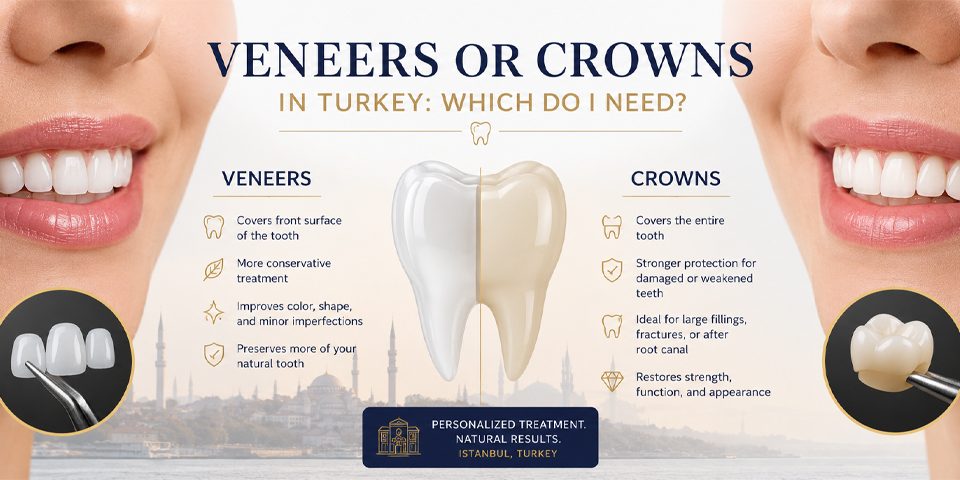
Before treatment, ask what type of restoration is being proposed and why it is appropriate for your teeth. A veneer and a crown involve different levels of coverage, so it is important to understand exactly what you are receiving.
You can also ask how much preparation is expected, whether the preparation is likely to remain primarily within enamel and whether any teeth can be treated more conservatively than others. If extensive reduction is proposed for teeth that appear healthy, asking why it is necessary can help you better understand the treatment plan.
It is equally important to discuss alternatives. Depending on your concerns, whitening, orthodontics, composite bonding or a combination of treatments may sometimes reduce the number of teeth requiring veneers or the amount of preparation needed.
The aim is not to insist on no-prep veneers regardless of your dental condition. It is to understand why treatment is recommended and whether the proposed approach balances aesthetics, function and preservation of healthy natural tooth structure.
Frequently Asked Questions
Can veneers be done without drilling?
In selected cases, veneers may be placed with little or no tooth preparation. This is more likely when the teeth are small, slightly inward-positioned or have enough space for additional ceramic. However, completely no-prep treatment is not suitable for every patient.
Do teeth look like pegs under veneers?
No. Teeth prepared conservatively for veneers should not automatically resemble the heavily reduced appearance sometimes associated with full crowns. Veneers primarily cover the front surface of the tooth, whereas crowns provide much more extensive coverage. The amount of preparation depends on the individual tooth and treatment plan.
Will veneers damage my natural teeth?
Veneer treatment involves an irreversible change when enamel is removed, so it should only be performed when appropriately indicated and carefully planned. Conservative preparation aims to preserve as much healthy enamel and natural tooth structure as reasonably possible.
Can I get veneers without removing enamel?
It may be possible in carefully selected no-prep cases, but many patients require at least minimal enamel preparation. Whether this is necessary depends on tooth position, shape, colour and the space available for the ceramic.
Are no-prep veneers thicker?
They are not necessarily manufactured as unusually thick restorations, but placing ceramic over an unprepared tooth adds volume to its existing shape. If there is insufficient space, the final tooth can therefore appear bulky even when the ceramic itself is relatively thin.
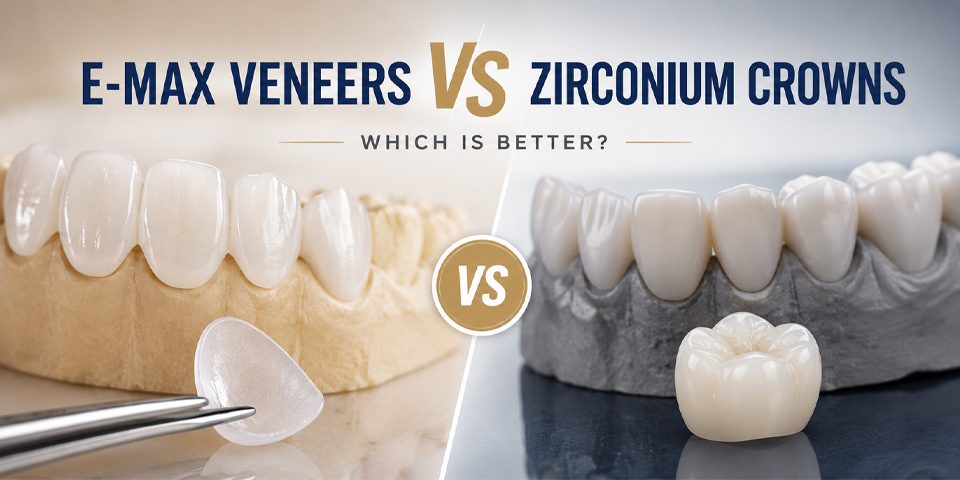
Can I get E-Max veneers without shaving my teeth?
E-Max veneers may be used with conservative preparation in suitable cases, but the material alone does not determine whether tooth preparation is necessary. The existing tooth position, colour, shape and intended final design determine how much space is required.
Can my teeth rot underneath veneers?
Natural teeth with veneers can still develop dental problems, including decay, particularly around restoration margins if oral hygiene is inadequate. Regular brushing, interdental cleaning and dental examinations remain important after veneer treatment.
Is minimal-prep better for natural-looking veneers?
Minimal preparation can help preserve enamel and may contribute to a conservative treatment approach, but natural appearance depends on many factors. Tooth proportions, ceramic thickness, translucency, colour, surface texture, gum relationship and the patient’s facial characteristics all contribute to the final result.
Can You Have a New Smile Without Aggressive Tooth Shaving?
For some patients, the answer is yes. Modern veneer treatment can often be planned conservatively, and selected teeth may require very little preparation. In specific cases, a no-prep approach may also be possible.
However, promising veneers without any tooth preparation before evaluating the teeth can be misleading. Some teeth require a small amount of controlled preparation to create sufficient space for porcelain and achieve appropriate proportions, while others may not be suitable for veneers at all.
The more useful goal is therefore not “zero shaving” at any cost. It is preserving as much healthy natural tooth structure as reasonably possible while achieving a result that is appropriate for your teeth, bite and smile.
If you are considering veneers in Istanbul and are concerned about tooth preparation, you can send clear photographs of your teeth and smile, together with recent dental X-rays if available, for an initial assessment. This can help determine whether your case appears suitable for a no-prep or minimal-prep approach before you travel. The final treatment and preparation plan should then be confirmed following an in-person clinical examination.