


Emergency Root Canal Treatment

Wisdom Tooth Pain: Causes and Treatment
17 September 2026
Emergency Tooth Extraction: What to Expect
17 September 2026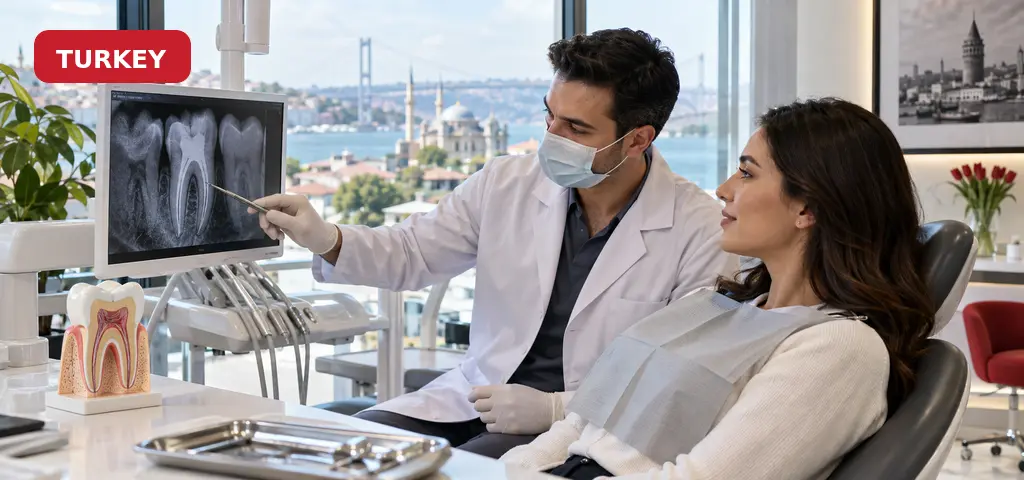
Emergency root canal care may be needed when inflamed or infected tissue inside a restorable tooth is causing an urgent problem. The first appointment may relieve the source of pain and protect the tooth temporarily; it does not always complete the root canal treatment or the final restoration.
Severe toothache needs assessment rather than a self-diagnosis. If swelling makes breathing or swallowing difficult, or spreads towards the eye, seek emergency medical care. Do not wait for a routine appointment or a message response.
Which symptoms need urgent dental assessment?
Contact a dentist promptly for severe or worsening tooth pain, pain that disrupts sleep, swelling, a gum lump or discharge. Pain on biting and sensitivity that persists after a hot or cold stimulus can also be relevant. Tell the clinic how long the symptoms have been present and whether pain relief is helping.
These symptoms do not prove that root canal treatment is required. A cracked tooth, gum problem, damaged restoration or another source of pain may need different care. The aim of an urgent examination is to identify the affected tooth and condition before choosing treatment.
Tell the clinician immediately about fever, feeling generally unwell, increasing facial swelling or difficulty opening your mouth. Breathing or swallowing difficulty requires emergency medical care, not waiting to see whether a painkiller helps.
How the dentist decides whether root canal treatment is appropriate
The dentist asks about the pain, previous treatment, injuries and relevant medical history. Examination can include checking the bite, gums, restorations and response to clinical tests. Radiographs may help assess decay, roots and the tissues around them.
Restorability matters as well as the pulp diagnosis. The dentist needs to consider whether enough suitable tooth remains for a durable restoration and whether there are cracks or supporting-tissue problems that change the outlook. Severe pain alone does not establish that a tooth should be extracted.
Ask which findings support the recommendation and whether referral to an endodontist is appropriate. For the complete procedure rather than urgent care, see the root canal treatment guide.
What can happen at the emergency appointment?
The dentist usually uses local anaesthesia and checks comfort before working. Tell the clinician if you remain uncomfortable so the approach can be reassessed. A promise that every urgent appointment will feel exactly the same would be misleading.
Depending on the diagnosis, treatment may involve removing inflamed pulp, beginning canal cleaning or draining an abscess when indicated. A dressing and temporary filling may protect the tooth until further treatment. Other situations may need different care or specialist referral.
Before leaving, establish what was done and what remains. Ask specifically whether the canals have been fully treated and filled, whether the surface filling is temporary, and when the next appointment should take place. Pain relief is an outcome of care, not proof that every stage is finished.
Antibiotics are not a substitute for treating the tooth
Antibiotics are not routinely needed for most pulp-related toothache when the appropriate dental treatment can be provided. They do not remove damaged pulp or repair a tooth. Taking them without addressing the dental cause can leave the underlying problem unresolved.
A dentist may prescribe antibiotics when there is systemic involvement, such as fever or malaise, or another clinical indication. Medical conditions and immune status can affect that decision. Do not use leftover antibiotics or someone else’s prescription.
While arranging care, ask a pharmacist or clinician which pain-relief medicine is safe for you and follow its instructions. Mention pregnancy, allergies, current medicines and relevant health conditions. Do not exceed label doses or place aspirin directly against the tooth or gum.
Protecting a tooth with a temporary filling
A temporary filling is part of a treatment plan, not a reason to postpone completion indefinitely. Avoid heavy chewing or hard, sticky foods on the affected tooth and follow the specific instructions you receive. Be careful while local anaesthesia is wearing off to avoid biting numb tissues.
Continue gentle cleaning around the tooth. Do not probe the filling, try to remove it or repair it with household glue. Contact the dentist if it falls out, becomes loose or breaks.
Arrange review if the tooth meets first when you bite, symptoms worsen or swelling develops. A dentist should assess these changes rather than assume they are normal after-effects. The need for an adjustment or further treatment depends on the findings.
Completing treatment and choosing the final restoration
Further appointments may be required to finish cleaning, disinfecting, filling and sealing the canals. Timing depends on the tooth and the treatment already provided. Ask the treating dentist how soon completion is needed in your case.
The tooth also needs an appropriate final restoration. A permanent filling, onlay or crown may be considered according to its position, remaining structure and biting forces. Not every root-treated tooth requires the same restoration, but leaving a vulnerable tooth without its planned protection can compromise the result.
If a crown is recommended, ask how it relates to the remaining tooth rather than treating it as an automatic package addition. The dental crown guide explains this type of restoration separately.
If treatment starts during a visit to Istanbul
Tell the dentist when you are due to leave and whether another dentist will complete the treatment. The clinical plan should determine what can be done safely; a departure date cannot establish that the tooth is ready for its final restoration.
Before a handover, request the diagnosis, tooth identification, relevant radiographs and a summary of completed and outstanding stages. Ask about any material or medicine placed inside the tooth and the recommended follow-up. Share those records with the clinician continuing your care.
Some tenderness can follow treatment, but severe or worsening pain, swelling or the return of previous symptoms needs reassessment. Arrange local care if necessary rather than waiting for another trip. Ask the treating dentist about travel in light of your symptoms and treatment status; there is no single timetable suitable for everyone.
Frequently asked questions
The distinction between emergency relief and completed treatment is important when planning the next appointment.
Does severe toothache always mean I need a root canal?
No. Several dental conditions can cause severe pain. Clinical tests and, when indicated, radiographs help identify the cause and whether root canal treatment is appropriate.
If the pain disappears before my appointment, can I cancel?
Do not assume the problem has resolved. Tell the dentist about the change and follow their advice. Reduced pain alone does not confirm that the pulp or surrounding tissues are healthy.
Can emergency treatment be completed in one visit?
Sometimes, but an urgent appointment may only provide the first stage. Ask whether the canals and final restoration are complete and what follow-up is required.
Should I take antibiotics before the dentist can treat me?
Only if a clinician prescribes them for your condition. Most pulp-related toothache needs dental treatment rather than routine antibiotics, and medical circumstances can change the recommendation.
How long can I leave a temporary filling in place?
Follow the timing given by your treating dentist. There is no universal safe waiting period for every temporary filling or treatment stage. Contact the clinic if the filling is lost or damaged.
Will I definitely need a crown afterwards?
Not every tooth needs the same final restoration. Remaining structure, cracks, tooth position and bite affect whether a filling, onlay or crown is appropriate.
Can another dentist finish treatment started abroad?
A dentist can assess whether they can continue the care. Provide the treatment summary and radiographs, and allow for reassessment rather than assuming the remaining work is already fully determined.
Which symptoms need urgent help after the first appointment?
Contact a dentist for worsening pain, swelling, fever or a lost temporary filling. Swelling affecting breathing or swallowing, or spreading towards the eye, needs emergency medical care.
Arrange assessment for urgent tooth pain
When contacting the clinic, describe the pain, swelling and any fever, and say whether treatment has already started. Have your current medicine list and previous dental records available if possible. Do not delay urgent care while collecting documents.
For assessment in Istanbul, call Dt. Özlem Özcan’s clinic on +90 212 288 76 48. For non-urgent follow-up questions, contact the clinic on WhatsApp at +90 552 288 76 48; if immediate care is needed and the clinic cannot be reached, seek another available emergency dental service.
Sources: NHS: Root canal treatment; Guy’s and St Thomas’ NHS Foundation Trust: Extirpation aftercare; American Dental Association: Antibiotics for dental pain and swelling; American Association of Endodontists: What is a root canal?; NHS: Toothache.