


Pediatric Dentistry in Turkey
Pediatric dentistry—also called children’s dentistry or pedodontics—focuses on oral health from infancy through adolescence. It includes early examinations, prevention, treatment of decay, monitoring tooth development, managing dental injuries and helping children build a comfortable relationship with dental care. Children are not simply small adults: their teeth, communication, growth, medical needs and ability to cooperate change with age.
Age-appropriate care based on prevention, development and cooperation
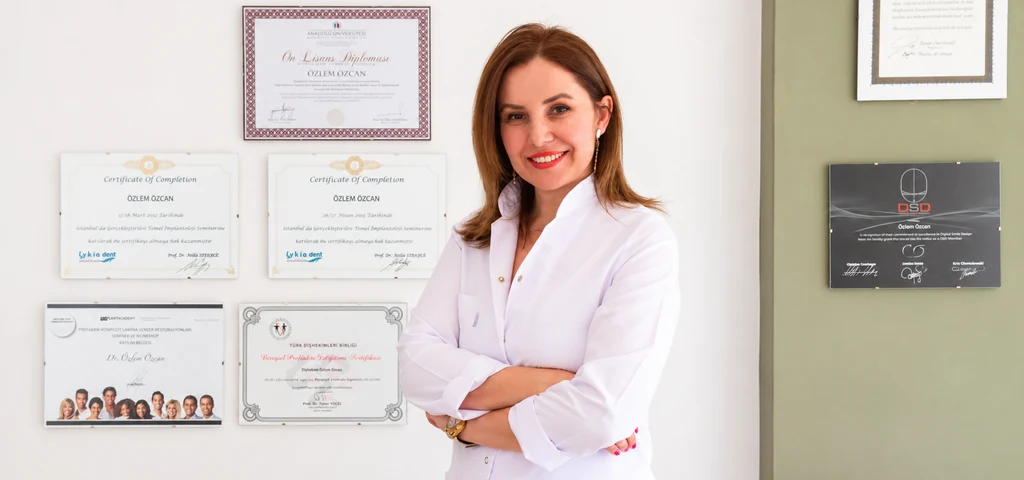
At her clinic in Şişli, Istanbul, Dt. Özlem Özcan assesses children’s oral health, provides care within the child’s needs and cooperation, and coordinates referral to a pediatric dental specialist or hospital service when complexity, behaviour, medical status, sedation or advanced treatment requires it. For families researching pediatric dentistry in Turkey, safe care begins with diagnosis and realistic behaviour planning—not forcing a long list of procedures into one visit. This guide explains first visits, home care, fluoride, sealants, decay treatment, trauma, anxiety, emergencies and travel planning.
When should a child first visit the dentist?
Professional guidance commonly recommends a first dental visit when the first tooth appears and no later than the first birthday. This early appointment is mainly preventive. It gives parents advice before decay develops, assesses feeding and brushing, checks development and establishes where to seek care if the child has pain or an injury.
A baby may sit on a parent’s lap for a knee-to-knee examination rather than in the dental chair alone. The visit can be brief and adapted to tolerance. Crying or limited cooperation at this age does not mean the appointment has failed; the clinician can still assess risk, demonstrate cleaning and help the family prepare for future visits.
Children who are older and have never attended should still begin without embarrassment or blame. The first priority is to understand symptoms, urgency and what the child can manage. A gradual introduction may be more productive than attempting elective treatment immediately.
Why baby teeth matter
Primary teeth support chewing, speech, appearance and space for permanent teeth. They also allow a child to eat and sleep comfortably. Some remain in the mouth into the early teenage years, so decay in a “tooth that will fall out” can still cause years of pain, infection or difficulty.
Untreated decay can progress to the pulp, create an abscess and affect general wellbeing. Infection around a primary tooth may require pulp treatment or extraction. Premature tooth loss can alter space and eruption, although the effect depends on the tooth, age and developing permanent successor.
Saving a primary tooth is not always the right choice. A tooth close to natural exfoliation, severely broken down, infected or unlikely to be restored may be removed. The decision considers symptoms, root development, the underlying permanent tooth, cooperation and whether space management is needed.
Daily oral care from infancy to adolescence
Before and after the first tooth
Parents can become familiar with the baby’s mouth and begin brushing as soon as the first tooth erupts. Use a small soft brush and an age-appropriate amount of fluoride toothpaste according to local professional guidance. The amount is kept small because young children cannot spit reliably.
Preschool children
An adult should brush twice daily, including before bed. Young children do not yet have the dexterity to clean effectively even when they want independence. A rice-grain smear is commonly advised for children under three, and a pea-sized amount for ages three to six, with supervision to minimise swallowing.
School-age children
Children can take a greater role, but parents should continue checking and helping until brushing is consistently effective. Cleaning between touching teeth is introduced with floss or another suitable aid. Orthodontic appliances, crowding and erupting molars can require additional techniques.
Teenagers
Adolescents may have increased exposure to sugary or acidic drinks, frequent snacks, vaping, tobacco, sports trauma or inconsistent hygiene. Advice should be respectful and practical rather than punitive. Confidentiality, medical history and consent are handled according to age and applicable clinical standards.
Food, drinks and early childhood decay
Decay risk is strongly influenced by how often teeth are exposed to fermentable carbohydrates. Repeated snacks, sweetened drinks and prolonged sipping create frequent acid attacks. Water and regular meal patterns generally reduce exposure compared with continuous grazing.
Putting a child to sleep with a bottle containing milk, formula, juice or sweetened liquid can leave sugars around the teeth when saliva flow is lower. A bottle should not become a continuous comfort source once teeth erupt. Feeding and weaning advice should also respect the child’s nutritional and medical needs, so parents can discuss concerns with dental and medical professionals.
Medicines can contain sugar or contribute to dry mouth. Parents should not stop prescribed medicine, but can ask the prescriber or pharmacist whether a sugar-free alternative is appropriate and request a preventive dental plan. Rinsing or drinking water when suitable and maintaining fluoride exposure may help.
Healthy foods can still expose teeth to natural sugars or acids when consumed frequently. The goal is not a forbidden-food list; it is an understandable routine that protects teeth while supporting nutrition. A child with feeding difficulties, sensory needs or restricted diet may require individual coordination.
Preventive care at the dental clinic
Caries-risk assessment
The dentist considers previous decay, plaque, diet, fluoride, enamel defects, dry mouth, medical conditions, family circumstances and cooperation. Recall intervals are then based on risk rather than one schedule for every child. A high-risk child may need more frequent prevention and review.
Fluoride varnish
Fluoride varnish is painted onto primary or permanent teeth to strengthen enamel and help prevent or control early decay. Frequency depends on age, local guidance and risk. Parents receive instructions about eating, drinking and brushing after application because products and protocols can vary.
Fissure sealants
Sealants flow into deep pits and grooves, commonly on permanent molars, creating a surface that is easier to keep clean. They can prevent decay or help manage selected early non-cavitated lesions. Sealants require review because wear or partial loss may need repair or replacement.
Professional cleaning and instruction
Cleaning removes plaque and deposits where needed, but its greatest value may be showing the child and parent where home care is missing. Disclosure, demonstrations and a manageable routine are more useful than simply telling a family to “brush better.”
| Preventive measure | What it does | Who may benefit | Follow-up need |
|---|---|---|---|
| Fluoride toothpaste | Supports enamel remineralisation during daily brushing | Children using an age-appropriate amount with supervision | Review amount, technique and swallowing ability |
| Fluoride varnish | Provides concentrated topical fluoride | Children according to age, local guidance and caries risk | Repeat frequency is risk-based |
| Fissure sealant | Covers plaque-retentive pits and grooves | Selected primary or permanent molars, especially deep fissures | Check retention and repair when necessary |
| Diet counselling | Reduces the frequency of sugar and acid exposure | Every family, adapted to nutrition and medical needs | Review achievable changes without blame |
| Mouthguard | Helps reduce dental injury during relevant sports | Children and teenagers participating in contact or collision sports | Replace as the child grows or the guard is damaged |
How tooth decay is treated in children
Treatment depends on whether the lesion is active, cavitated, painful and close to the pulp, as well as which tooth is involved and when it should naturally fall out. Early non-cavitated lesions may be managed through fluoride, plaque control, diet, sealants or other minimally invasive strategies. A cavity that traps plaque or has weakened the tooth may need restoration.
Tooth-coloured composite or glass ionomer may be used for selected fillings. The material choice considers moisture control, size, location, remaining tooth and cooperation. A child who cannot keep the area dry long enough for a sensitive adhesive technique may require a different material or approach. Families can review Dental Fillings in Turkey for an overview of restorative materials and aftercare.
A primary molar with extensive multi-surface decay may benefit from a preformed crown rather than a very large filling. Pulp treatment can be considered when inflammation or infection has reached deeper tissues but the tooth remains restorable. The exact procedure differs from adult root canal treatment and depends on primary-tooth anatomy and diagnosis.
Extraction may be required for an unrestorable or infected tooth, failed treatment or when keeping it presents greater risk. Space maintenance is considered after early loss, but not every extracted primary tooth needs an appliance. Tooth position, age, eruption and cooperation guide the decision.
Where treatment complexity, extensive disease, age, medical condition or inability to cooperate exceeds routine care, referral to a pediatric dentist or appropriate hospital service may be needed. Referral is part of safe planning and should occur before repeated unsuccessful appointments create more fear.
Helping a child feel safe at the dentist
Behaviour guidance starts with communication. The dental team uses age-appropriate words, shows instruments in a non-threatening way and divides care into manageable steps. Tell-show-do, positive reinforcement, distraction and clear choices can help a child understand what will happen without making false promises.
Parents can prepare the child with neutral language: the dentist will count and clean the teeth and help keep them healthy. Avoid sharing frightening stories, threatening injections or promising that “nothing will happen.” A child who later experiences an unexpected sensation may lose trust.
Appointment timing matters. A well-rested child often copes better than one who is hungry, tired or unwell. Short familiarisation visits may be useful, particularly after previous difficult care. The aim is not simply to complete treatment today but to support a relationship that allows future care.
Some children need advanced behaviour management, sedation or treatment under general anaesthesia. These options require specific training, facilities, medical assessment, consent and monitoring. They are not routine shortcuts and may require referral. The extent of disease and urgency are balanced against the safest setting.
Dental X-rays for children
Dental radiographs are prescribed when the expected information can affect care; they are not automatically taken at every appointment. They can reveal decay between teeth, root or bone changes, missing or developing teeth and injuries that cannot be fully assessed by looking in the mouth.
The type and interval depend on age, caries risk, symptoms, spacing and development. A child with open contacts and low risk may need different imaging from one with previous interproximal decay. Existing recent images are reviewed to avoid unnecessary duplication where they remain diagnostically useful.
Parents should share pregnancy concerns for adolescent patients, medical information and any difficulty tolerating previous X-rays. Modern techniques aim to use the information needed with appropriate exposure control. Avoiding clinically necessary imaging can also create risk if disease remains undetected.
Dental injuries in primary and permanent teeth
A dental injury should be assessed promptly because management depends on whether the tooth is primary or permanent, the type of displacement or fracture, root development and associated soft-tissue injury. Parents should contact a dentist and describe the child’s age, tooth, bleeding, movement, missing fragments and how the accident occurred.
A knocked-out primary tooth should not be replanted because of the risk to the developing permanent successor. A knocked-out permanent tooth is time-sensitive: hold it by the crown rather than the root, avoid scrubbing it and seek urgent professional guidance. Replantation or suitable storage may be advised depending on circumstances, child safety and current trauma guidance.
If a tooth fragment is found, keep it and bring it to the appointment. Soft-tissue wounds may contain embedded fragments and may need assessment. Head injury, loss of consciousness, vomiting, confusion, uncontrolled bleeding, suspected jaw fracture or other medical danger requires urgent medical evaluation as well as dental care.
Injured teeth need follow-up even when they appear comfortable. Colour change, pulp damage, infection, root changes or altered eruption can develop later. Primary-tooth trauma can also affect the permanent tooth developing nearby, so parents should report swelling, a gum pimple, pain or unexpected discolouration.
Eruption, spacing and orthodontic development
Children vary in when primary and permanent teeth erupt. A delayed tooth may reflect normal variation, lack of space, an unerupted or missing tooth, previous trauma or another obstruction. Examination and imaging are used only when the history and findings justify them.
The mixed-dentition period is assessed for crossbite, crowding, deep or open bite, protrusion and jaw relationships. Early recognition does not mean every child needs immediate braces. Some findings benefit from monitoring, while others require timely orthodontic assessment because growth or eruption offers a useful treatment window.
Premature primary-tooth loss, persistent primary teeth and ectopic eruption can affect space. Space maintainers may be fixed or removable and require cleaning and review. An appliance can loosen, trap plaque or interfere with eruption if forgotten, so it is not a place-and-ignore device.
When specialist orthodontic diagnosis is needed, care should be coordinated. Families can read Orthodontics in Turkey for information about braces, aligners, monitoring and retention. For selected chips or shape defects in erupted permanent teeth, the Composite Bonding in Turkey guide explains conservative restorative planning and maintenance.
Thumb sucking, pacifiers and other oral habits
Sucking is normal in infancy and often reduces naturally. Persistent, frequent and forceful thumb or pacifier habits can influence tooth position and bite, but the effect depends on intensity, duration, frequency, age and growth. Shaming or punishment can make habit change harder.
The dental visit can document current effects and help the family choose positive reminders, rewards and gradual goals. An appliance is not the first answer for every child and requires cooperation and hygiene. Speech, airway, emotional and developmental factors may need input from other professionals.
Nail biting, chewing objects and grinding can also affect teeth. Childhood grinding is not automatically treated with an adult-style night guard because dentition and growth are changing. Symptoms, wear, sleep and airway concerns are assessed individually.
Children with medical, developmental or sensory needs
Parents should share diagnoses, allergies, medicines, previous hospital care, communication preferences, sensory triggers and successful calming strategies. Some conditions affect enamel, saliva, bleeding, infection risk or the ability to tolerate care. Coordination with the child’s medical team may be appropriate.
A pre-visit conversation, visual schedule, quiet appointment, gradual desensitisation or additional time can make care more accessible. Not every clinic or procedure can safely meet every need; early discussion allows referral and setting to be planned before an urgent problem occurs.
Children who use hearing aids or have hearing differences may benefit from face-to-face speech before masks are placed, reduced background noise, visual demonstration and confirmation of understanding. Devices may need protection from water or equipment according to family instructions. Communication should be directed to the child as well as the parent.
Preventive care is especially important when treatment is difficult to tolerate. A realistic home routine, fluoride exposure and early review can reduce the need for complex procedures. Families should receive support rather than judgement when medical or sensory needs make oral care challenging.
When a child needs urgent dental care
Contact a dentist promptly for toothache that disturbs sleep, facial or gum swelling, a dental injury, uncontrolled bleeding, a broken tooth causing pain, or a permanent tooth that has been knocked out. Fever with dental swelling, increasing facial asymmetry and inability to eat or drink need timely assessment.
Difficulty breathing or swallowing, rapidly spreading swelling, severe systemic illness, significant head injury or uncontrolled bleeding is an emergency and should not wait for a routine clinic appointment. Seek urgent medical services according to the child’s condition and location.
Antibiotics do not repair a cavity or remove an infected pulp. They may be prescribed for spreading infection or systemic involvement after assessment, but definitive dental treatment is usually still needed. Do not use leftover medicine or place aspirin directly on the gum or tooth.
Planning children’s dental care in Istanbul from abroad
Families can send the child’s age, concern, symptoms, medical history, cooperation history and recent radiographs before travel. These help schedule the appropriate appointment but cannot confirm the diagnosis or promise that all treatment will be completed during the visit.
Children may need familiarisation before treatment, and complex care may require a specialist, sedation service or hospital setting. A compressed holiday schedule can conflict with behaviour and safety. Families should allow time for assessment, staged care and review rather than presenting a flight deadline as the treatment plan.
Bring a list of medicines, allergy information, relevant medical letters and the child’s usual communication or sensory supports. If a procedure is completed, obtain a written summary and arrange continuing care at home. Primary-tooth trauma, pulp treatment, space maintainers and developing teeth often require follow-up over time.
Urgent infection or trauma should be treated where the child is rather than delayed until international travel. Remote images can support triage but cannot assess every injury, swelling or pulp condition. When advanced pediatric care is needed, Dt. Özlem Özcan’s clinic can explain appropriate referral or coordination options.
Information to share before the appointment
- The child’s age, main concern and when symptoms began
- Pain, swelling, fever, injury, colour change or difficulty eating
- Previous dental experiences and what helped or caused distress
- Recent radiographs and details of fillings, crowns, extractions or trauma
- Medical conditions, allergies, medicines and hospital care
- Communication, hearing, developmental or sensory needs
- Travel dates and access to a regular dentist at home

Frequently asked questions
When should my child first see a dentist?
The first visit is commonly recommended when the first tooth erupts and no later than the first birthday. Early visits focus on prevention, development, feeding, brushing and establishing ongoing dental care.
Why treat a baby tooth if it will fall out?
Primary teeth support chewing, speech, comfort and space for permanent teeth. Untreated decay can cause pain and infection. Treatment still depends on restorability, symptoms and how close the tooth is to natural exfoliation.
How much fluoride toothpaste should a child use?
A rice-grain smear is commonly advised for children under three and a pea-sized amount for ages three to six, with adult supervision. Individual and local professional guidance should also be followed.
Are fluoride varnish and fissure sealants the same?
No. Fluoride varnish is painted onto tooth surfaces to strengthen enamel, while sealant material covers selected pits and grooves, usually on chewing surfaces, to reduce plaque retention.
What if my child is afraid of the dentist?
Tell the clinic before the visit. Age-appropriate explanation, demonstration, short appointments and gradual familiarisation can help. Some children need pediatric specialist or advanced behaviour-management referral.
Are dental X-rays safe for children?
Radiographs are selected only when expected information can affect care. Type and interval depend on symptoms, age, risk and development, with appropriate exposure-control practices.
What should I do if a baby tooth is knocked out?
Do not replant a primary tooth. Contact a dentist promptly for injury assessment and follow-up, and seek medical care if there are signs of significant head or facial injury.
What should I do if a permanent tooth is knocked out?
It is time-sensitive. Hold the tooth by the crown, avoid scrubbing the root and obtain urgent professional guidance about replantation or suitable storage while travelling to care.
Does every child need a space maintainer after extraction?
No. The need depends on the tooth, age, eruption stage, space and bite. When used, an appliance requires cleaning and regular review until it is adjusted or removed.
Can all of my child’s treatment be completed during one trip?
Not always. Cooperation, disease extent, healing and the need for pediatric specialist, sedation or hospital care can require staged treatment. Safety and the child’s trust take priority over a flight schedule.
Requesting a children’s dental appointment in Istanbul
If your child needs dental care in Istanbul, contact Dt. Özlem Özcan’s clinic with the child’s age, symptoms, medical information, previous dental experience and recent records where available. The first appointment can establish urgency, oral-health needs, cooperation and whether routine care or specialist referral is appropriate.
The goal is not only to treat today’s tooth. It is to prevent pain, protect development and help the child experience dental care through honest communication and manageable steps. A plan should respect both clinical need and the child’s ability to receive care safely.