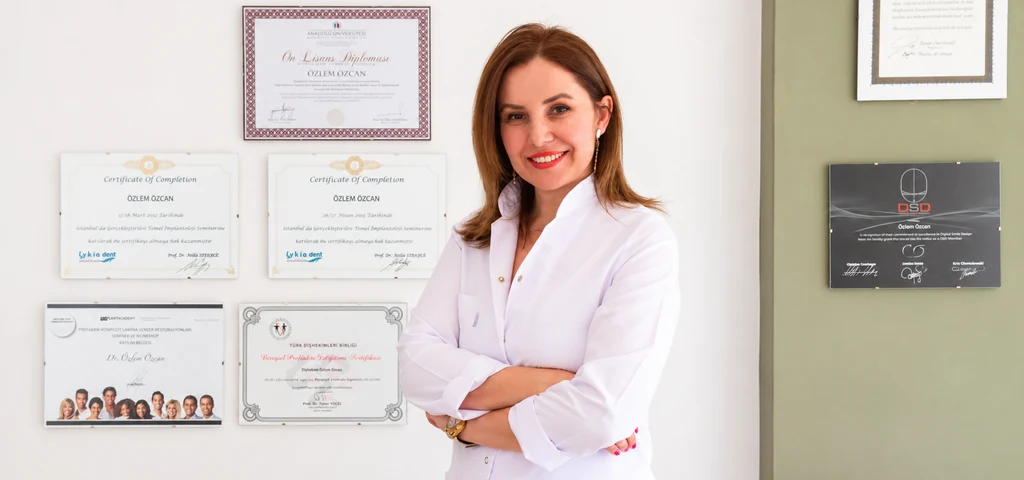


Orthodontics in Turkey
Orthodontic treatment moves teeth gradually to improve alignment, bite and the conditions for long-term oral health. Depending on the diagnosis, treatment may involve fixed braces, clear aligners or another appliance, followed by retainers that help maintain the result. The right choice cannot be made from photographs or appearance alone. Tooth position, jaw relationship, gum and bone health, growth, missing teeth, previous dental work and the patient’s ability to follow instructions all influence the plan.
Orthodontic planning based on diagnosis, monitoring and long-term retention
At her dental clinic in Istanbul, Dt. Özlem Özcan provides an initial dental assessment, considers the complete oral-health picture and discusses appropriate treatment pathways. Cases requiring specialist orthodontic diagnosis or management are coordinated or referred accordingly. For patients researching orthodontics in Turkey, this distinction matters: a convenient trip is not a substitute for accurate diagnosis, regular monitoring and continuity of care. This guide explains braces, clear aligners, treatment stages, limitations, retention and the practical questions international patients should ask before starting.

What does orthodontic treatment correct?
Orthodontics addresses the position of teeth and the way the upper and lower teeth meet. It can treat crowding, spacing, rotated teeth, protrusion and several types of bite discrepancy. Examples include an increased overjet, deep bite, open bite, crossbite and teeth that do not meet in a stable or functional way. Treatment may also create or close space before implants, bridges, crowns or other restorative procedures.
A straighter smile can be an important goal, but orthodontics is not only cosmetic. Crowded or poorly positioned teeth may be harder to clean, an unstable bite can complicate function, and an unerupted tooth may require guided movement. At the same time, not every irregular tooth position causes disease or requires treatment. The expected health and functional benefit should be balanced against treatment time, maintenance, risks and the patient’s priorities.
Orthodontics moves teeth within the supporting tissues; it does not change tooth colour, replace missing enamel or automatically correct every jaw discrepancy. In adults with a pronounced skeletal imbalance, tooth movement alone may offer camouflage rather than complete correction, and selected cases may require combined orthodontic and jaw-surgery assessment. Clear expectations begin with identifying whether the main concern comes from teeth, jaws, tooth shape, gums or a combination.
Who may be suitable for orthodontics?
Children, teenagers and adults can benefit from orthodontic care, provided the teeth and supporting tissues are healthy enough for movement. Age alone does not exclude an adult, but adult care may involve fillings, crowns, implants, missing teeth, gum recession or reduced bone support that changes the mechanics and goals. Children may be assessed while their jaws and teeth are developing, although an early assessment does not mean every child needs immediate treatment.
Active decay, uncontrolled gum disease and poor daily cleaning should normally be addressed before appliances are fitted. Brackets and aligner attachments create additional plaque-retentive areas, and moving teeth in unhealthy tissues can worsen problems. Patients who smoke, have dry mouth, take medicines affecting oral health or have a history of periodontal disease need an individual risk assessment and a coordinated maintenance plan.
Suitability also includes behaviour. Removable aligners work only when worn for the prescribed time; elastics work only when used as directed; and all appliance types require reviews. A patient who cannot attend monitoring visits, keep appliances clean or follow dietary instructions may need a different plan or may be advised to delay treatment. The most discreet appliance is not necessarily the most predictable choice for every person.
Braces or clear aligners: what is the difference?
Fixed braces use brackets attached to teeth and an archwire that guides movement. Because the appliance remains in place, it does not depend on the patient remembering to wear it, although elastics and oral hygiene still require cooperation. Braces can be used for many simple and complex movements, and their visibility varies with the type of bracket.
Clear aligners are a planned sequence of removable trays. Each tray applies controlled forces, sometimes with tooth-coloured attachments, elastics or other auxiliaries. They can be removed for eating and cleaning, which many adults value. However, removability creates a responsibility: insufficient wear can delay or derail the planned movement. Aligners are not invisible at close range, and attachments may be noticeable.
Neither system is universally superior. The diagnosis, required tooth movements, periodontal condition, clinician’s experience and patient adherence are more important than marketing claims. Some cases are efficiently treated with either system; others are better suited to fixed appliances, aligners or a combined approach. Refinements, additional aligners or changes in mechanics may be needed even when the digital plan initially looks straightforward.
| Consideration | Fixed braces | Clear aligners |
|---|---|---|
| Daily wear | Remain attached to the teeth | Must be worn for the prescribed daily time and replaced in sequence |
| Eating | Hard, sticky and appliance-damaging foods require care | Removed for meals; teeth should be cleaned before reinsertion |
| Cleaning | Requires careful brushing around brackets and cleaning under wires | Allows normal tooth cleaning, but trays and attachments also need care |
| Visibility | Metal braces are visible; ceramic brackets can be less prominent | Usually discreet, though trays and attachments can be seen |
| Cooperation | Appliance wear is built in; elastics and hygiene still depend on the patient | Consistent wear and correct tray changes are essential |
| Monitoring | Regular wire, bracket and progress reviews | Regular fit, tracking, attachment and progress reviews |
Types of orthodontic appliances
Metal fixed braces
Conventional metal brackets are durable and allow the clinician to control a broad range of movements. Modern brackets are smaller than many patients expect, but they remain visible. Wires are held by elastic modules, clips or other mechanisms depending on the system. Brand or bracket design does not remove the need for diagnosis, sound mechanics and regular reviews.
Ceramic fixed braces
Ceramic brackets are designed to blend with tooth colour and can be less conspicuous. The wire may still be visible, and modules can stain between appointments. Ceramic materials have different friction and breakage characteristics from metal, and contact with opposing teeth must be considered. They are an aesthetic option, not an assurance of faster treatment.
Clear aligners
Aligners are custom-made from digital or physical records and changed according to a prescribed schedule. Small composite attachments may be bonded to selected teeth to improve control. Some plans also use elastics, buttons or temporary anchorage. A simulated end position helps explain the plan, but it is a prediction rather than a guarantee of biological response.
Lingual braces and other appliances
Lingual braces are attached to the inner surfaces of the teeth and may be considered in selected cases. They can affect speech and tongue comfort initially and require specific expertise. Expanders, functional appliances, space maintainers and temporary anchorage devices serve particular diagnoses. The fact that an appliance exists does not make it appropriate without a full examination.
What records are needed before treatment?
An orthodontic assessment begins with concerns, medical and dental history, facial and smile examination, jaw function, tooth position, bite and periodontal health. The clinician checks decay, existing restorations, missing or unerupted teeth and signs of wear. Growth status is relevant in younger patients, while adults may require closer coordination with restorative, periodontal or surgical care.
Records commonly include intraoral and facial photographs and a digital scan or impressions. Radiographs are selected when clinically justified to assess roots, bone, unerupted teeth and other structures not visible in photographs. A panoramic image and a lateral cephalometric radiograph may be required for some cases; three-dimensional imaging is reserved for indications where the additional information is expected to affect care.
Digital scanning makes appliance manufacture and visual communication easier, but software does not diagnose the patient independently. Facial balance, root position, gum limits and bite must be integrated with the scan. An online quotation based only on smiling photographs cannot establish periodontal health, detect all decay or determine whether a movement is biologically safe.
The resulting problem list should be translated into clear objectives: which teeth will move, how space will be managed, what bite change is realistic, whether the midlines can be improved and what limitations may remain. Patients should understand alternatives, expected responsibilities and retention before authorising treatment.
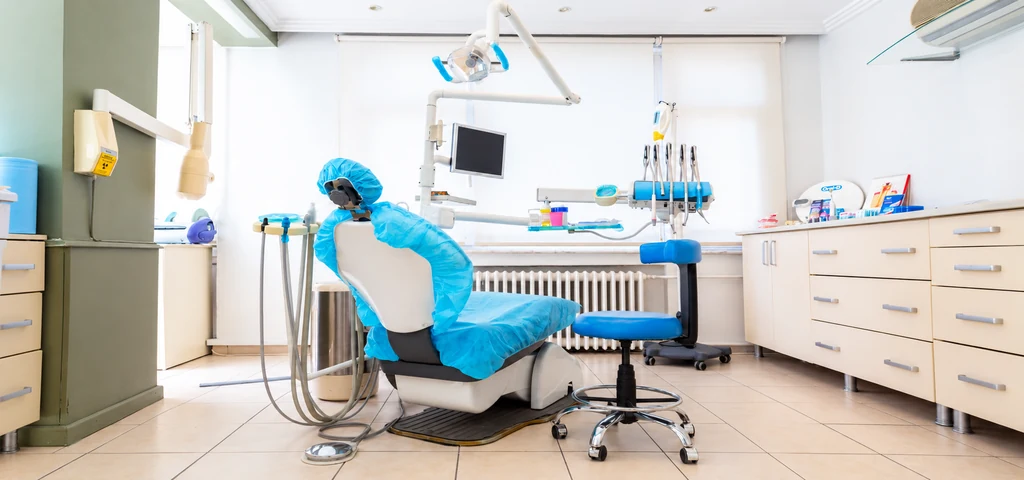
How orthodontic treatment is planned
Space is central to many plans. Mild crowding may be managed by aligning teeth within safe limits, carefully reshaping contact points through interproximal reduction, expanding selected areas or adjusting tooth inclination. More severe crowding or protrusion may lead to a discussion about extraction. No single method is automatically conservative: excessive expansion or proclination can move teeth toward the limits of their supporting tissues, while extraction changes space, anchorage and facial considerations.
Interproximal reduction, often called IPR, removes a small planned amount of enamel between selected teeth to create space or improve tooth-shape relationships. It should be measured, documented and performed only where appropriate. It is not the same as aggressively filing teeth for crowns, but it still requires consent and careful technique. Fluoride and hygiene advice may follow according to risk.
Extraction decisions consider tooth health, crowding, profile, overjet, bite, growth and anchorage. A treatment plan should not promise that extraction is always avoided or always necessary based on one photograph. If jaw relationships contribute substantially to the problem, orthognathic surgery or acceptance of a limited result may be discussed alongside orthodontic camouflage.
Restorative sequencing also matters. Implants do not move orthodontically, so their position may constrain treatment. Small or worn teeth might be aligned first and then refined with composite bonding or another restoration. Whitening is usually considered after active tooth movement and removal of attachments or brackets. Coordinated planning can preserve tooth structure and avoid placing restorations before the spaces and bite are ready.
What happens during treatment?
1. Oral-health preparation
Decay, active gum disease and urgent dental problems are managed first. A professional cleaning and personalised hygiene instruction may be recommended. Teeth that require extraction, periodontal treatment or restorative preparation are sequenced according to the orthodontic plan rather than treated in isolation.
2. Appliance fitting
For braces, teeth are cleaned and brackets are bonded before the initial wire is placed. For aligners, attachments may be bonded and the fit, insertion, removal and wear schedule are reviewed. Mild pressure or tenderness is common when forces begin. Instructions should cover eating, cleaning, breakages and whom to contact between appointments.
3. Active movement and regular monitoring
Fixed appliances are adjusted as wires and mechanics progress. Aligner patients move through their prescribed trays while the clinician checks whether teeth are tracking as planned. Reviews assess fit, oral health, bite and unwanted effects—not merely whether the next appliance can be issued. Elastics, power chains or other auxiliaries may be added when needed.
4. Mid-course changes
Biological response varies. A bracket can loosen, an aligner may stop fitting, spaces can reopen or the bite can develop differently from the digital simulation. The plan may require rebonding, a new scan, refinement aligners, altered elastics or a revised goal. Such changes do not automatically mean treatment has failed; they should be explained and monitored.
5. Finishing
Near the end, small positional and bite details are refined. The patient and clinician review the agreed objectives and any limitations. Removing appliances solely because the front teeth look straight can leave incomplete contacts or unresolved issues, while extending treatment without meaningful benefit can add burden. Finishing is a clinical decision shared with an informed patient.
6. Retention
After braces or attachments are removed, retainers are provided to hold the teeth. Retention is part of treatment, not an optional accessory. The type, wear schedule, cleaning, review and replacement arrangements should be explained before active treatment ends.
How long does orthodontic treatment take?
There is no responsible universal timeline. Limited alignment may take months, while comprehensive bite correction commonly takes longer. Complexity, age and growth, extraction or surgical requirements, periodontal condition, appliance choice, missed visits, breakages and cooperation all influence duration. Teeth also move at biologically limited rates; applying excessive force does not safely create an instant result.
Aligners are not automatically faster than braces. A simple case with excellent wear can progress efficiently, but poor tracking, missed wear or multiple refinements can extend treatment. Fixed appliances avoid the need to remember trays but can still be delayed by broken brackets, missed appointments, poor elastic use or hygiene problems.
A proposed timeframe is an estimate based on the initial records and assumed cooperation. Patients should ask what is included if additional visits or refinements become necessary and what happens if treatment must be paused. For a person living outside Turkey, the ability to attend reviews may be more important than the advertised active-treatment estimate.
Comfort, speech and daily life
Pressure or tenderness is common for several days after braces are fitted or adjusted and after changing aligners. Soft foods and the recommended pain-management advice can help. Sharp wire ends, loose brackets or rough aligner edges should be reported; orthodontic wax may offer temporary relief, but recurring or significant problems need clinical attention.
Aligners and lingual appliances can temporarily affect speech. Most patients adapt, although the degree and duration vary. Aligners should be removed for food and for drinks other than plain water unless the treating clinician advises otherwise. Hot liquids can distort trays, while frequent sugary or acidic drinks trapped around teeth increase risk.
With braces, hard or sticky foods can bend wires or loosen brackets. Foods can usually be adapted rather than eliminated—for example, cutting firm items into smaller pieces rather than biting directly with the front brackets. Contact-sport participants may need an appliance-compatible mouthguard. Musicians who play wind instruments should discuss adaptation and important performance dates.
Cleaning teeth with braces or aligners
Orthodontic appliances do not directly cause decay, but plaque left around brackets, attachments and gum margins increases the risk of cavities, gum inflammation and permanent white-spot lesions. Brushing must reach above, below and around fixed brackets, and interdental brushes or floss aids may be needed under wires. Fluoride toothpaste and additional preventive measures are recommended according to individual risk.
Aligners should not be placed over teeth that are coated with food or sugary drink. Teeth are cleaned before reinsertion where practical, and trays are cleaned with methods that do not scratch or deform them. Repeated snacking can become difficult when the aligner must be removed, teeth cleaned and wear time maintained.
Professional examinations and hygiene care continue throughout orthodontics. Bleeding gums, persistent swelling, new sensitivity or visible marks around brackets should be assessed early. If hygiene deteriorates significantly, active treatment may need to pause or stop to protect the teeth and supporting tissues. A straight result does not justify preventable damage.
Risks and limitations of orthodontic treatment
All orthodontic treatment involves benefits and risks. Temporary tenderness and minor soft-tissue irritation are common. Decay, white-spot lesions and gum inflammation are more likely when plaque control is inadequate. Gum recession or loss of supporting bone can occur, particularly where tissues are thin or already compromised, so periodontal condition and movement boundaries require attention.
Some shortening of tooth roots can occur during treatment. It is usually limited, but occasionally it is more significant; individual susceptibility is difficult to predict completely. Previous trauma, unusual root shape, long or complex treatment and biological response may affect risk. Appropriate radiographic monitoring is considered when indicated rather than promised as a way to eliminate uncertainty.
Teeth may not move exactly as planned. Ankylosed teeth, impacted teeth, restorations, bone limits or patient cooperation can alter the outcome. Existing jaw-joint symptoms require assessment, but orthodontics should not be sold as a guaranteed cure for temporomandibular disorders. Likewise, a mathematically perfect bite or permanent symmetry cannot be promised.
All teeth show a tendency to change position over time. Relapse can follow inadequate retainer wear, retainer damage, growth, ageing, gum disease or continuing oral habits. A stable result depends on retention and long-term dental care, and even well-maintained teeth may undergo minor changes.
Retainers: protecting the result
Removable retainers may be clear vacuum-formed trays or acrylic-and-wire designs. Fixed retainers use a thin wire bonded behind selected front teeth. Each has advantages and maintenance needs. Removable retainers rely on consistent wear; fixed retainers work continuously but require careful cleaning and can detach without the patient immediately noticing.
Some patients use both fixed and removable retention. The prescribed schedule may change from full-time wear to night-time wear, but it must be individualised. Retention is often long term because teeth continue to respond to ageing and oral forces. Stopping wear without advice increases the chance of unwanted movement.
Retainers do not last forever. Clear trays can crack, distort or loosen, and bonded wires can break or detach. Patients should keep retainers safe, avoid heat, follow cleaning instructions and arrange review promptly if fit changes. Forcing an old retainer over noticeably shifted teeth can be uncomfortable and may be inappropriate; a clinician should assess whether a replacement or limited correction is needed.
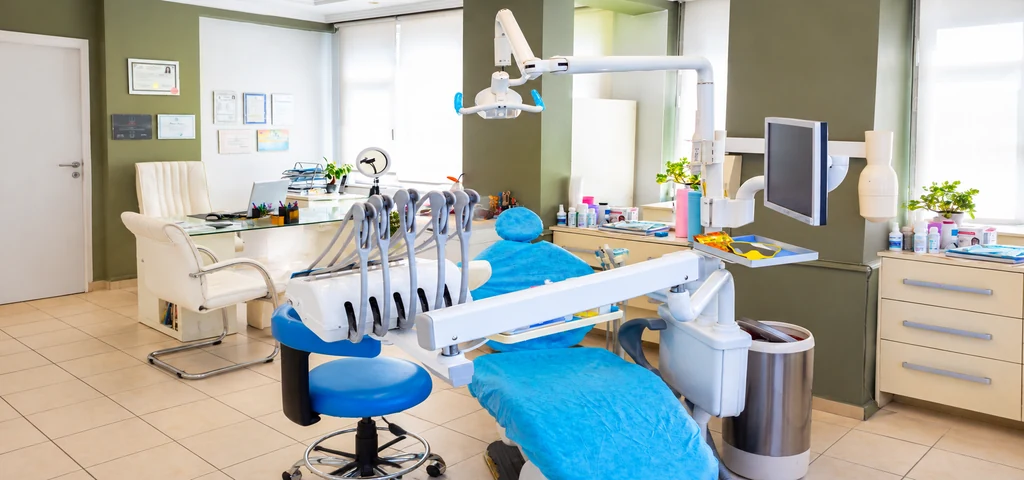
Orthodontic treatment in Istanbul for international patients
Orthodontics differs from a procedure completed during one short visit. Active treatment normally requires repeated clinical reviews over months or longer, followed by retention. A patient who starts braces or aligners in Istanbul must have a realistic plan for monitoring, emergencies, appliance adjustments and the end of treatment. Remote photographs can support communication but cannot replace every examination.
Before travelling, send relevant recent records if available, including radiographs, dental history and details of previous orthodontics. These can help prepare the consultation, but new records may still be needed. Do not begin treatment on the assumption that another dentist at home will automatically continue it; clinicians may use different systems, may need new records and are not obliged to accept responsibility for an externally designed plan.
For patients who live abroad, possible pathways include completing all regular reviews in Istanbul, arranging formal shared care with a named clinician near home or choosing treatment locally if continuity cannot be secured. The correct option depends on complexity and travel pattern. A box containing many aligners does not remove the need to check tracking, gums, attachments, bite and emerging problems.
Ask who is responsible for routine monitoring, emergency care, replacement aligners, refinements, retainer provision and post-treatment reviews. Confirm what happens if an attachment falls off, a bracket breaks, a tray is lost or travel is disrupted. Treatment should begin only when these responsibilities are clear enough to protect oral health.
Useful information to share before consultation
- Your main concern and what you hope treatment will change
- Previous braces or aligners, retainers and any history of relapse
- Recent radiographs, scans and dental treatment records if available
- Gum disease, tooth trauma, jaw-joint symptoms or impacted teeth
- Existing crowns, bridges, implants, veneers or planned restorations
- Your residence, realistic travel frequency and access to local dental care
- Medical conditions, allergies, medicines and smoking or vaping history
How orthodontics can support an aesthetic treatment plan
Orthodontics may reduce the amount of enamel that must be altered when the main concern is tooth position. Aligning rotated or crowded teeth before laminate veneers, bonding or crowns can create more balanced space and allow more conservative restorations. It may also position roots and create a suitable site before an implant.
Not every aesthetic concern needs movement. Small differences in tooth width, chipped edges or isolated spaces may be treated restoratively after bite assessment. Conversely, placing broad restorations over severely misaligned teeth without considering position can require unnecessary reduction or create unfavourable contours. An aesthetic dentistry consultation should compare movement, restoration and combined care rather than presenting one method as universally best.
Tooth whitening is generally planned after active orthodontics so colour can be evaluated without brackets or attachments. Bonding used to reshape teeth may also be completed after the final positions are stable. The sequence should account for retainer design: if restorations change tooth shape after retainers are made, new retainers may be required.
Questions to ask before choosing treatment
- What is my diagnosis, and which findings make treatment advisable?
- Which objectives are realistic, and what limitations may remain?
- Why are braces, aligners or another appliance recommended for my movements?
- Will treatment require IPR, extractions, elastics, anchorage devices or surgery?
- Who will plan, supervise and adjust treatment, and when is specialist care involved?
- How often must I attend in person, especially if I live outside Istanbul?
- What risks are particularly relevant to my roots, gums, restorations and oral hygiene?
- What happens if teeth do not track, treatment takes longer or refinements are needed?
- Which retainers are included, how long are they worn and who replaces them?
- How will emergency care and transfer of records be handled if I cannot travel?
Frequently asked questions
Am I too old for braces or clear aligners?
There is no simple upper age limit. Adults can undergo orthodontic treatment when teeth and supporting tissues are suitable. Gum health, bone support, missing teeth, implants and restorations may modify the goals and mechanics.
Are clear aligners better than braces?
Not universally. Aligners are removable and discreet, while braces provide continuous fixed mechanics. The diagnosis, required movements, oral health and ability to follow wear instructions determine which option is more suitable.
How many hours must clear aligners be worn?
Wear time is prescribed for the individual system and plan, commonly for most of the day apart from eating, drinking and cleaning. Follow the treating clinician’s exact instructions; insufficient wear can prevent trays from tracking.
Will orthodontic treatment require tooth extraction?
Not every case requires extraction. The decision depends on crowding, tooth and jaw relationships, facial considerations, periodontal limits and treatment objectives. Expansion or IPR may be alternatives in selected cases, but they also have limits.
Does orthodontic treatment hurt?
Pressure and tenderness are common after fitting, adjustment or a new aligner, usually settling as the mouth adapts. Persistent severe pain, swelling, trauma or an appliance cutting the tissues should be assessed.
How often are orthodontic reviews needed?
The interval varies with the appliance, treatment stage and risk. Reviews are necessary to check tooth movement, appliance condition, bite, gums and hygiene. A personalised schedule is confirmed by the treating clinician.
Can I complete orthodontic treatment during one trip to Turkey?
Usually not. Active tooth movement takes time and requires repeated monitoring. International patients need a documented plan for reviews, emergencies and retention, either in Istanbul or through formally coordinated continuing care.
What happens if I lose an aligner or break a bracket?
Contact the treating clinic promptly. Depending on the stage, you may be advised to use a previous or next tray, receive a replacement or attend for repair. Do not improvise without case-specific guidance.
Will my teeth stay straight permanently?
Teeth can move throughout life. Long-term retainer wear, retainer maintenance and regular dental reviews reduce relapse risk but cannot promise that no change will ever occur.
Can orthodontics fix jaw-joint pain?
Orthodontics is not a guaranteed treatment for temporomandibular disorders. Jaw pain can have several causes and should be assessed separately. Bite findings may form part of the evaluation, but cure claims are inappropriate.
Requesting an orthodontic assessment in Istanbul
If you are considering braces or clear aligners in Istanbul, contact Dt. Özlem Özcan’s clinic with your main concerns, previous orthodontic history, recent records if available and realistic travel schedule. The first discussion can clarify which records and consultations may be needed, but definitive suitability and treatment planning require a clinical assessment.
A successful orthodontic plan is not simply a choice between visible brackets and clear trays. It connects diagnosis, safe tooth movement, daily cooperation, regular monitoring and long-term retention. Where the case requires an orthodontist or another dental discipline, appropriate coordination should form part of that plan from the beginning.