

Dental Trauma: First Aid and Treatment

Emergency Tooth Extraction: What to Expect
17 September 2026
Bleeding Gums: When Is It Urgent?
17 September 2026
A knocked-out permanent tooth needs immediate dental care. A displaced tooth, deep fracture or changed bite after an injury also needs urgent assessment. If there is difficulty breathing, uncontrolled heavy bleeding or a serious head or facial injury, seek emergency medical care first.
The first-aid steps depend on whether the tooth is broken, moved or completely out of its socket, and whether it is a baby or permanent tooth. Do not wait for an online reply when immediate treatment is needed.
A permanent tooth has been knocked out: what to do now
If you are certain it is a permanent tooth, act immediately. Time outside the socket and how the tooth is stored affect the prospects of saving it.
- Pick it up by the crown, the white part normally visible in the mouth. Avoid touching the root.
- If dirty, rinse gently with milk or saline. Do not scrub, scrape or disinfect the root.
- If the person is fully conscious and cooperative and it is safe to do so, gently try to put the tooth back into its socket. Do not force it.
- If it goes in easily, bite gently on a clean cloth to hold it in place while seeking immediate dental care.
- If you cannot replace it safely, keep it in a clean container of milk and take it straight to a dentist. Do not let it dry out or wrap it in dry tissue.
Never replant a baby tooth. If unsure which type it is, keep it in milk and get immediate dental guidance. Do not place a loose tooth in a child’s mouth for storage because of the risk of swallowing or inhaling it.
A tooth is chipped, broken or displaced
For a broken tooth, keep any fragment you find in milk or saliva in a container and take it to the dentist. A fragment may sometimes be reattached. Do not use household glue, file the edge or test the damaged tooth by biting repeatedly.
A small chip without pain or movement usually needs dental review rather than a hospital visit. A large fracture, marked sensitivity, visible pink tissue, a loose tooth or a bite that no longer meets normally needs more urgent attention. Tell the clinic what happened so it can advise on the timing of assessment.
If a tooth has moved sideways, looks longer or appears pushed into the gum, do not try to push or pull it into place yourself. These injuries differ from a tooth that is completely knocked out. Avoid biting with it and seek urgent dental assessment.
Baby teeth and permanent teeth need different care
A knocked-out baby tooth must not be put back because replantation can harm the developing permanent tooth. A dentist should still assess the injury, surrounding tissues and the child’s other teeth.
A missing tooth after a fall has not necessarily fallen out: it may have been pushed into the gum. Tell the clinician if you cannot find the tooth or a fragment. Coughing, choking or breathing problems after an injury require immediate medical attention.
Children can have a mixture of baby and permanent teeth. Tell the clinic the child’s age, but do not rely on age alone to identify an injured tooth. Developing permanent teeth may need different pulp treatment and monitoring from fully mature teeth.
When a mouth injury needs emergency medical care
Do not focus on the tooth at the expense of a more serious injury. Difficulty breathing or swallowing, severe bleeding that does not stop, major facial trauma or a suspected jaw injury requires emergency medical assessment.
After a blow to the head, loss of consciousness, repeated vomiting, confusion or unusual drowsiness also needs urgent medical assessment. A person with possible head or neck injury should not be treated as a routine dental appointment.
For a minor soft-tissue bleed, gentle pressure with clean gauze can help while care is arranged. Persistent or heavy bleeding needs professional attention. Tell the clinician about medicines that affect bleeding; do not stop prescribed medicines on your own.
What the dentist checks after dental trauma
Explain when and how the injury happened, which teeth were involved and whether any tooth or fragment was kept dry, in milk or replanted. Give the approximate timings as accurately as you can. Bring recovered fragments and relevant medical information.
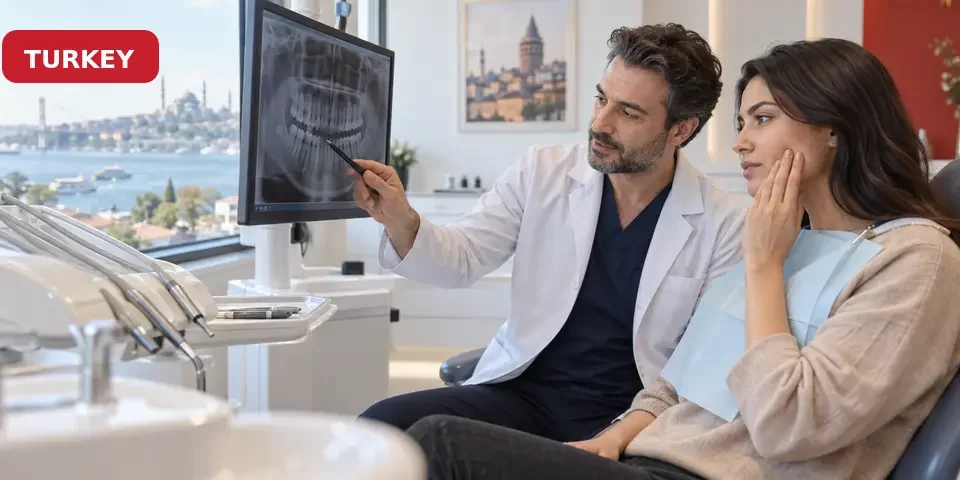
The examination may include tooth position, mobility, fractures, the bite, gum wounds and neighbouring teeth. Radiographs and pulp sensibility tests may be needed. A tooth that looks intact can have an injury that is not obvious from a photograph.
The dentist may repeat tests during follow-up rather than decide the long-term outcome from one early response. Report previous trauma to the same tooth, even if it happened years earlier.
Possible treatment and why some decisions are staged
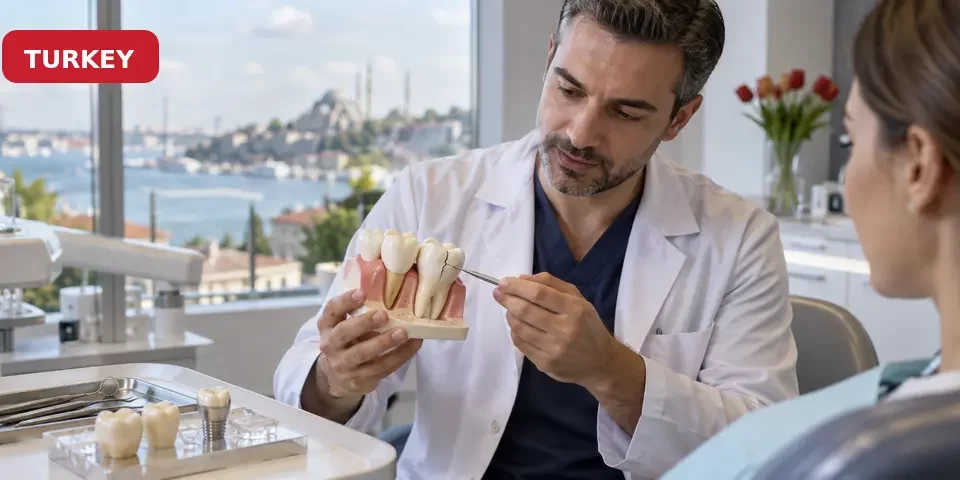
A limited fracture may be repaired by reattaching the fragment or using composite bonding. More extensive damage may require a different restoration. The choice depends on the remaining tooth and the injury, not just the size of the visible chip.
Displaced or replanted permanent teeth may need repositioning and a stabilising splint. Splint design and duration depend on the injury. Do not remove, adjust or repair a splint yourself if it becomes loose; contact the treating dentist.
Some injuries need pulp-preserving treatment or root canal treatment. Others need observation. Root development, injury type and healing findings influence that decision. Urgent stabilisation and the final restoration may therefore take place at different appointments.
Follow-up even when the pain has stopped
Relief from pain does not by itself establish that the tooth has healed. Pulp changes, infection or root resorption can become apparent later. Attend the review appointments arranged for your particular injury, even if the tooth feels comfortable.
Follow the written instructions for cleaning, food, activity and any prescribed medicine. Avoid biting hard foods with an injured tooth or disturbing a splint. Ask when it is appropriate to resume contact sports and whether a suitable sports mouthguard is needed.
Report increasing pain, swelling, a gum lump, discharge, new mobility, a loose splint or a changed bite. A tooth that becomes darker should also be reviewed; colour alone does not establish the cause or automatically mean the tooth needs extraction.
If the injury is treated while you are in Istanbul, obtain a treatment summary and copies of relevant records for ongoing care at home. Do not postpone an urgent local review until your next trip.
Frequently asked questions
These answers clarify common first-aid decisions. A dental examination is needed to identify the injury and plan further care.
Can a permanent tooth still be assessed if it has been out for some time?
Yes. Seek care immediately and bring the tooth, even after a delay. The dentist must assess storage, time outside the socket and the injury; do not assume it is beyond assessment or discard it.
Should I put a knocked-out baby tooth back?
No. Never replant a baby tooth. Arrange dental assessment to check the injury and surrounding tissues.
What if I cannot tell whether it is a baby or permanent tooth?
Keep the tooth in milk and get immediate dental guidance rather than guessing. Do not delay seeking care while trying to identify it online.
Does a tooth that moved but stayed in the mouth need urgent care?
Yes. A displaced tooth needs prompt assessment even if it is not painful. Do not force it back or repeatedly test its movement.
Can the dentist reuse a broken tooth fragment?
Sometimes. Keep the fragment moist in milk or saliva in a container and take it to the appointment. Whether reattachment is appropriate depends on the fracture and the condition of the pieces.
Will every injured tooth need root canal treatment?
No. The injury, pulp findings and stage of root development determine the plan. Some teeth need pulp-preserving care or monitoring; others require root canal treatment.
Do antibiotics repair a dental injury?
No. A clinician may prescribe them for particular injuries, but they do not reposition a tooth, repair a fracture or replace necessary dental treatment. Do not use leftover antibiotics.
Can I wait for the clinic to reply on WhatsApp after a tooth is knocked out?
Do not wait for a message response. Seek immediate dental care locally. Use emergency medical services if there are breathing problems, major bleeding or serious associated injuries.
Contacting a dentist after an injury
When contacting a clinic, say that a dental injury has occurred, give the time of the accident and explain whether a tooth is broken, displaced or completely out. Mention associated head injuries and any first aid already given. A description or photograph can help communication but must not delay urgent care.
For dental assessment in Istanbul, call Dt. Özlem Özcan’s clinic on +90 212 288 76 48; for non-urgent follow-up questions, contact the clinic on WhatsApp at +90 552 288 76 48. If immediate care is needed and the clinic cannot be reached, seek another available emergency dental service without waiting.
Sources: NHS: Knocked-out tooth; NHS: Chipped, broken or cracked tooth; American Association of Endodontists: Traumatic dental injuries; Royal Children’s Hospital Melbourne: Dental trauma; International Association of Dental Traumatology: ToothSOS.