

Why Some Veneers Look Fake (And How to Avoid It)

Top 10 Dentist in Istanbul
15 December 2025
What Makes a Natural Smile?
27 July 2026
A beautiful smile should enhance your appearance—not draw attention to the fact that you’ve had dental treatment. Yet one of the biggest concerns people have before getting veneers is the fear that their new teeth will look artificial.
This concern is understandable. Social media is filled with extremely bright, perfectly identical smiles that many people associate with veneers. While some patients deliberately choose that style, others are surprised when the final result looks less natural than they expected. In most cases, the issue is not the veneers themselves but the decisions made during planning, design, and fabrication.
Modern cosmetic dentistry has made it possible to create veneers that closely mimic the appearance of natural enamel. The best results blend with a person’s facial features, age, smile, and overall appearance rather than standing out as obvious dental work.
Natural-looking veneers are rarely achieved by chance. They are the result of careful planning, appropriate material selection, accurate communication between the dentist and dental laboratory, and a clear understanding of the patient’s expectations.
Whether you are considering porcelain veneers, Emax veneers, or a complete smile makeover in Turkey, understanding why some veneers look fake can help you make informed decisions and avoid disappointing results.
What Do People Mean by “Fake Veneers”?
When people describe veneers as “fake,” they are usually referring to how they look—not whether they are genuine dental restorations. In other words, the concern is almost always about appearance rather than the authenticity of the material.
Several visual characteristics can make veneers appear artificial:
- Teeth that are excessively white compared with the person’s complexion.
- Every tooth having the exact same size and shape.
- Veneers that appear bulky or overly thick.
- Teeth that are too long or too wide for the face.
- A smile that lacks natural variation and depth.
- Poor balance between the teeth, gums, and lips.
Natural teeth are never perfectly identical. Small differences in shape, surface texture, and the way light reflects from enamel create the subtle imperfections that make a smile look real. When veneers eliminate all of these characteristics, the result can appear flat or overly uniform.
Another common misconception is that a “Hollywood smile” automatically means unnaturally white teeth. In reality, many celebrities have cosmetic dental work that goes unnoticed because it has been designed to complement their facial features rather than dominate them.
The goal of cosmetic veneers should not be to create a perfect smile in isolation. Instead, they should create a smile that looks as though it naturally belongs to the person wearing it.
Why Do Some Veneers Look Unnatural?
A veneer rarely looks artificial because of a single mistake. More often, several small decisions combine to create a smile that feels out of proportion or out of place. Understanding these factors can help patients recognise the difference between a cosmetic treatment that simply looks white and one that genuinely looks natural.
Poor Smile Planning
Successful veneers begin long before any tooth is prepared. If the overall smile is not planned carefully, even high-quality porcelain can produce disappointing results.
A well-designed smile considers how the teeth will appear when speaking, laughing, and resting—not just when viewed in a close-up photograph. Without this broader perspective, veneers may appear attractive on their own but fail to harmonise with the patient’s facial features.
Planning also helps determine whether veneers are the right solution for every tooth. In some cases, treating fewer teeth creates a more balanced and natural appearance than placing veneers across the entire visible smile.
Ignoring Facial Proportions
Teeth should complement the face rather than compete with it.
The width of the smile, the position of the lips, facial symmetry, and even the distance between the nose and chin all influence how veneers are perceived. A tooth shape that looks attractive on one person may appear oversized or unnatural on another.
For example, very large front teeth can overwhelm a smaller face, while narrow veneers may leave a broad smile looking incomplete. The goal is not to create identical smiles for every patient but to achieve harmony between the teeth and the individual’s facial characteristics.
Choosing the Wrong Tooth Shape
Shape has a greater influence on the overall appearance of veneers than many patients realise.
Natural teeth contain gentle curves, subtle asymmetries, and small variations from one tooth to the next. If every veneer is designed with identical edges and contours, the smile can appear manufactured rather than natural.
Even slight differences in the corners, surface anatomy, and incisal edges contribute to a more lifelike result. These details are often unnoticed individually, yet together they make a significant difference in how authentic a smile appears.
Selecting an Inappropriate Shade
Colour is one of the first things people notice about a smile.
A shade that is significantly brighter than the surrounding facial features may draw attention for the wrong reasons. Likewise, a colour that lacks depth or translucency can make teeth resemble opaque porcelain instead of natural enamel.
The most attractive smiles usually combine brightness with subtle variation. Natural teeth are not a single solid colour; they reflect light differently across various areas of the tooth. Replicating these optical properties is an important part of creating veneers that blend seamlessly with the rest of the smile.
Gum Symmetry and Soft Tissue Balance
Beautiful veneers cannot compensate for uneven gum contours.
If one tooth appears much shorter because the gum covers more of its surface, or if the gum line is irregular from one side to the other, the smile may still look unbalanced even when the veneers themselves are well made.
When appropriate, improving gum symmetry before veneer placement can help create more consistent proportions and allow each restoration to appear more natural.
Incorrect Tooth Length
Longer teeth are not always better.
Some cosmetic makeovers increase tooth length in an attempt to create a youthful appearance, but excessive length can make the smile appear forced or disproportionate.
The ideal length depends on several factors, including the patient’s age, facial proportions, lip movement, and the amount of tooth normally visible when speaking and smiling. Achieving the right balance often produces a more elegant result than simply making every tooth longer.
Laboratory Craftsmanship
A veneer is only as good as the collaboration behind it.
After the treatment has been planned, the dental laboratory transforms the design into the final restoration. Precision at this stage is essential. Fine surface texture, natural contours, and realistic translucency require both technical expertise and attention to detail.
Two veneers made from the same material can look completely different depending on how they are fabricated. The quality of the laboratory work often determines whether a restoration blends naturally with neighbouring teeth or immediately stands out.
Over-Treatment
One of the most common reasons veneers look artificial is that more teeth are treated than necessary.
Some patients believe every visible tooth needs a veneer to achieve an attractive smile. In reality, many smile improvements can be achieved by restoring only the teeth that significantly affect appearance.
Treating additional healthy teeth without a clear aesthetic reason may create an overly uniform look and reduce the natural variation that makes a smile appear genuine. Sometimes, a more conservative approach delivers the most convincing result.
At the heart of every natural-looking smile is thoughtful decision-making rather than dramatic transformation. When facial proportions, tooth anatomy, colour, gum contours, and craftsmanship are considered together, veneers are far more likely to enhance a person’s appearance without revealing that cosmetic treatment has taken place.
Can Veneers Look Completely Natural?
Yes—they can. In fact, one of the primary goals of modern cosmetic dentistry is to create veneers that are virtually indistinguishable from natural teeth.
Many people assume veneers are meant to create an obviously “perfect” smile. However, the most successful results are often the ones that go unnoticed. Friends and family may comment that someone looks healthier, younger, or more confident without immediately realising they have had cosmetic dental treatment.
Achieving this level of realism depends on combining several design principles rather than focusing on a single feature such as colour.
Natural Smiles Are Not Perfectly Symmetrical
Human faces are naturally asymmetrical, and so are natural teeth.
The central incisors may look almost identical, but the neighbouring teeth often have subtle differences in shape, edge contours, and surface characteristics. These variations create depth and authenticity.
If every veneer is made with identical dimensions and perfectly matching edges, the smile can lose this natural character and begin to resemble a set of artificial teeth.
Experienced cosmetic dentists often introduce controlled variations that mimic the way natural teeth develop over time without making the smile appear uneven.
Individual Tooth Anatomy Makes a Difference
Natural teeth are not flat.
Each tooth has gentle curves, shallow developmental grooves, rounded transitions, and slight changes in thickness. These details influence how light interacts with the enamel and how the teeth appear from different angles.
Well-crafted veneers reproduce these anatomical features instead of creating smooth, featureless surfaces. Although patients may not consciously notice these details, they play a significant role in making the smile feel authentic.
Light Reflection Creates Realism
One of the easiest ways to recognise an artificial-looking veneer is the way it reflects light.
Natural enamel does not reflect light evenly across its entire surface. Depending on the viewing angle, some areas appear brighter while others display subtle shadows. This dynamic interaction creates depth and dimension.
When veneers are overly flat or highly polished without appropriate surface texture, they may reflect light uniformly, giving the teeth a plastic or porcelain-like appearance.
Creating realistic light behaviour is just as important as choosing the correct shade.
Texture Is Often More Important Than Patients Expect
Many patients focus almost entirely on colour before treatment, yet texture has an equally important role.
Natural enamel contains microscopic irregularities that soften reflections and create visual depth. Veneers that include carefully designed surface texture tend to blend more naturally with neighbouring teeth.
If the surface is completely smooth and glossy, even an appropriate colour may still look artificial under bright lighting or in photographs.
Translucency Adds Depth
Natural teeth are not completely opaque.
Especially near the biting edges, enamel allows a small amount of light to pass through before it is reflected back. This optical property is known as translucency, and it is one of the defining characteristics of a healthy, natural smile.
High-quality ceramic materials can reproduce this effect to varying degrees, helping veneers avoid the dense, solid-white appearance that many people associate with fake smiles.
The goal is not transparency but subtle depth that makes each tooth appear alive rather than flat.
Natural Results Are Designed for the Individual
A smile that looks beautiful on one person may not suit another.
Age, facial shape, lip position, skin tone, and even personality influence what feels natural. A smile designed for a young patient seeking a brighter appearance may differ considerably from one created for someone who prefers a more understated result.
Rather than following a universal template, natural-looking veneers are designed to complement the individual’s overall appearance.
The most convincing veneers rarely attract attention because of the dentistry itself. Instead, they enhance facial harmony so effectively that the smile appears as though it has always belonged to the person.
The Biggest Mistakes That Create Fake Smiles
Most artificial-looking veneers are not caused by poor-quality materials. They are the result of aesthetic decisions that do not suit the individual. Many of these choices are avoidable with realistic expectations and careful planning.
Choosing the Whitest Shade Available
One of the most common misconceptions is that the whitest teeth automatically create the most attractive smile.
Extremely bright shades can look striking in studio lighting or heavily edited photographs, but they may appear unnatural in everyday life. Teeth that are significantly lighter than the whites of the eyes or contrast sharply with the skin tone often become the first thing people notice.
A naturally attractive smile usually appears bright without looking fluorescent. The objective is to create freshness and vitality rather than an artificial level of whiteness.
Trying to Copy a Celebrity Smile
Patients sometimes bring photographs of actors, influencers, or public figures and ask for an identical smile.
While these images can help communicate general preferences, copying another person’s teeth rarely produces the same aesthetic result. Facial proportions, lip shape, smile width, and natural tooth position differ from one individual to another.
A smile that perfectly suits one face may appear oversized, too square, or out of balance on someone else.
The best cosmetic results are inspired by the patient’s own facial characteristics rather than replicated from someone else’s appearance.
Assuming Every Visible Tooth Needs a Veneer
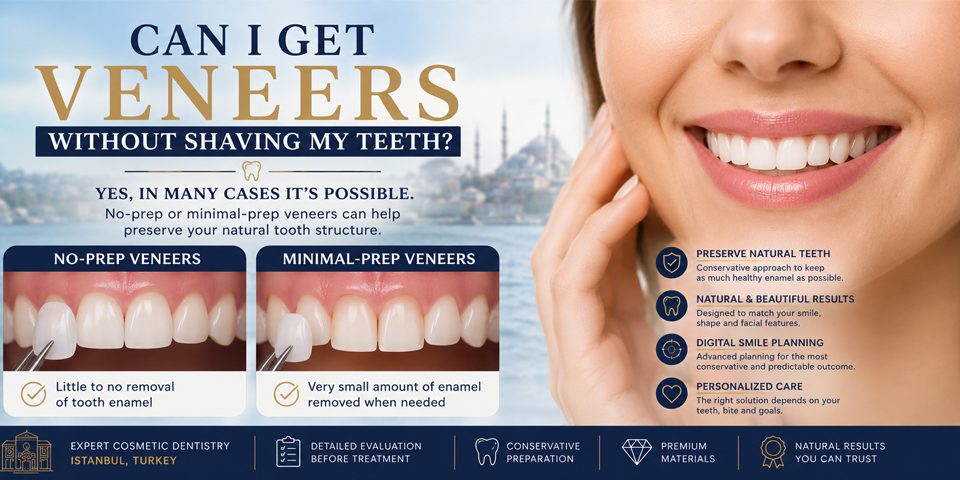
Some patients believe a complete smile makeover always means placing veneers on every tooth that shows when smiling.
In reality, cosmetic treatment should address specific aesthetic concerns rather than follow a fixed number of restorations. Depending on the existing smile, improving only the most noticeable teeth may create a result that looks more natural and balanced.
Adding veneers unnecessarily can make the smile appear overly uniform and reduce the subtle differences that naturally exist between teeth.
Ignoring Facial Features
Teeth should never be designed in isolation.
A smile is part of the entire face, and its appearance changes with facial expressions, speech, and movement. Veneers that look attractive on a model or in a digital image may not complement another person’s facial proportions.
Factors such as lip mobility, smile line, facial width, and the relationship between the upper and lower face all influence how veneers will be perceived.
When these features are overlooked, the smile can appear disconnected from the rest of the face.
Rushing Cosmetic Treatment
Creating natural-looking veneers requires time and attention to detail.
Patients occasionally hope for an immediate transformation, particularly when travelling for treatment. While efficient treatment schedules are possible, aesthetic decisions should not be rushed simply to shorten the process.
Reviewing provisional designs, confirming shape preferences, and making small refinements before the final veneers are produced can significantly improve the overall result.
Careful planning often prevents the need for future adjustments or replacements.
Following Short-Term Trends
Cosmetic trends change over time.
Over the years, extremely square teeth, ultra-bright shades, and exaggerated “Hollywood smiles” have all experienced periods of popularity. While some patients genuinely prefer these styles, trends rarely suit everyone.
A smile designed around timeless proportions is more likely to remain attractive for many years than one created to match a temporary fashion.
Choosing veneers that complement your natural appearance rather than current social media trends often leads to greater long-term satisfaction.
Artificial-looking smiles are rarely the result of a single poor decision. More often, they develop when aesthetics are driven by trends, unrealistic expectations, or a one-size-fits-all approach instead of thoughtful design. The most successful veneer treatments focus on balance, proportion, and individuality rather than creating the brightest or most dramatic smile possible.
Does Veneer Material Matter?
The material used for veneers plays an important role in durability, aesthetics, and long-term performance. However, many patients overestimate its influence on the final appearance.
A common misconception is that choosing a premium material automatically guarantees a natural-looking smile. In reality, the material is only one part of the equation. The design, craftsmanship, and how the veneers are integrated with the patient’s facial features often have a greater impact on whether the result looks natural.
Different materials offer different characteristics, and the most suitable option depends on the clinical situation rather than a universal ranking.
Porcelain Veneers
Porcelain veneers have been used in cosmetic dentistry for decades and remain one of the most widely selected options for improving the appearance of front teeth.
They are valued for their ability to reproduce many of the optical qualities of natural enamel, including brightness, depth, and subtle light reflection. Porcelain is also resistant to staining from common foods and beverages, helping the colour remain stable over time.
Because porcelain can be carefully shaped and characterised, it allows technicians to create restorations that blend naturally with neighbouring teeth when the case is planned appropriately.
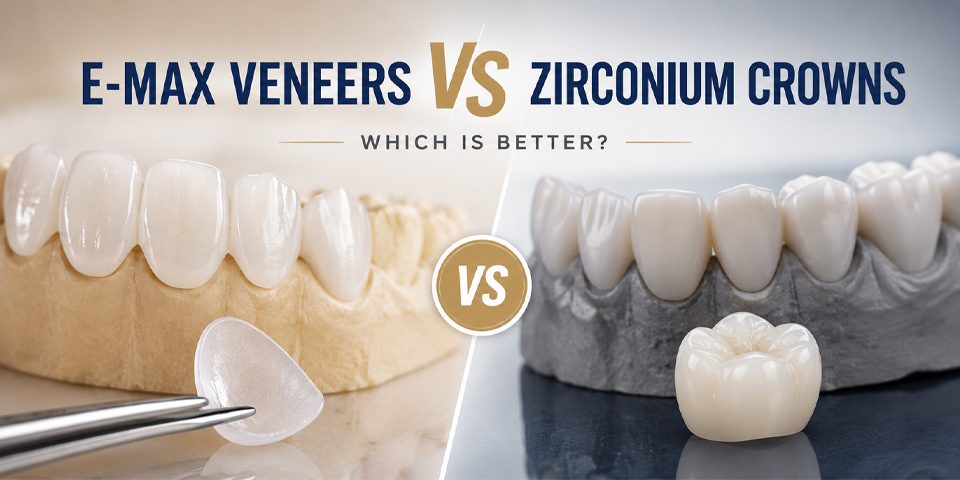
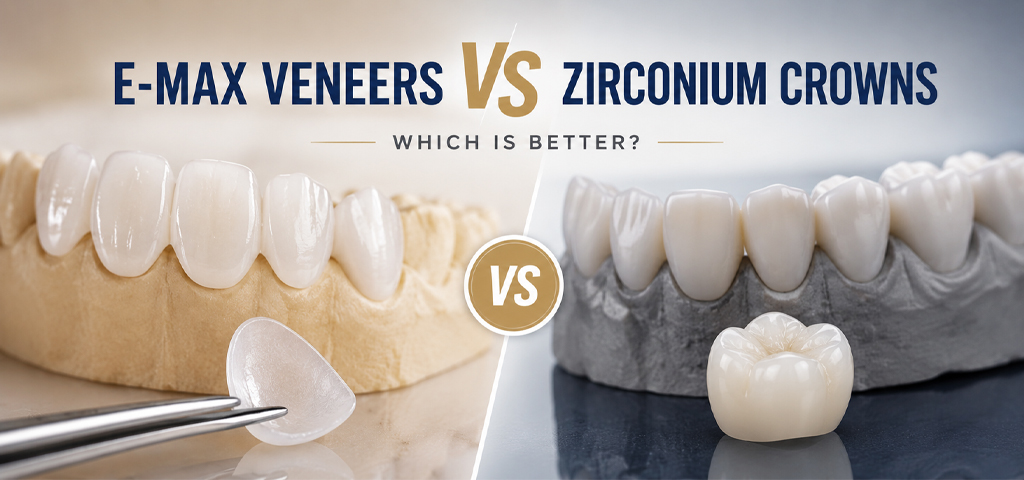
Emax Veneers
Emax veneers are fabricated from lithium disilicate glass ceramic, a material known for combining strength with excellent aesthetic properties.
One reason Emax veneers are popular is their ability to reproduce natural translucency without appearing overly opaque. This can create a smile that looks vibrant while maintaining the depth typically seen in healthy enamel.
Emax is frequently selected for cosmetic cases involving the front teeth because it allows highly detailed shaping and surface characterisation. However, like any material, its success depends on appropriate case selection and careful fabrication rather than the material alone.
Composite Veneers
Composite veneers are created using tooth-coloured resin instead of ceramic.
They can often be completed in a shorter time and may be appropriate for correcting smaller cosmetic concerns such as minor chips, uneven edges, or slight spacing between teeth.
Although modern composite materials have improved significantly, they generally differ from ceramic in the way they reflect light and resist long-term staining. Over time, they may require polishing, repair, or replacement more frequently than porcelain alternatives.
For some patients, composite veneers provide an effective and conservative solution. For others, ceramic materials may offer advantages depending on their aesthetic goals and the condition of their teeth.
Is One Material Always Better?
No.
There is no single veneer material that is ideal for every patient.
Someone seeking a subtle improvement to one or two teeth may benefit from a different approach than someone undergoing a full smile makeover. Existing tooth colour, bite, enamel condition, functional habits, and aesthetic expectations all influence material selection.
Focusing exclusively on the name of the material can distract from the factors that have a greater influence on the final appearance.
Material Cannot Replace Good Design
Even the highest-quality ceramic cannot compensate for poor aesthetic planning.
A veneer made from premium material may still look artificial if the tooth proportions are incorrect, the shade is unsuitable, or the contours do not match the patient’s smile.
Conversely, carefully designed veneers made with appropriate materials often appear far more natural because every element works together to create harmony.
For patients researching veneers in Turkey or elsewhere, it is helpful to view material as one component of a much larger process. The most successful smiles result from combining suitable materials with thoughtful design, precise craftsmanship, and aesthetic judgement rather than relying on the material itself to achieve a natural result.
Tooth Shape Matters More Than Tooth Colour
When patients imagine a beautiful smile, they often think first about white teeth. However, cosmetic dentists frequently pay even closer attention to shape.
The outline, proportions, and contours of each tooth have a profound effect on how a smile is perceived. A well-chosen shape can make veneers appear completely natural, while an unsuitable shape may look artificial even if the colour is ideal.
This is why two people can choose the same veneer shade but achieve very different results.
Square Teeth
Square-shaped teeth have straighter sides and flatter biting edges.
They tend to create a bold, structured appearance and are often associated with a stronger smile. While this shape may suit some individuals, using it indiscriminately can make veneers appear rigid or overly uniform.
When every front tooth is designed with perfectly straight lines and sharp corners, the smile may lose the subtle softness found in natural dentition.
Oval Teeth
Oval teeth feature gently curved edges and softer transitions.
This shape often creates a relaxed and approachable appearance because the contours reflect the natural rounding seen in many healthy teeth. Oval veneers can blend particularly well with facial features that have softer lines.
Rather than dominating the smile, they tend to complement the overall expression.
Rounded Teeth
Rounded tooth shapes are characterised by smoother corners and less angular anatomy.
They are commonly seen in younger natural smiles but can also be appropriate for adults when balanced correctly with facial proportions.
Excessive rounding, however, may make teeth appear shorter or less defined, so the degree of curvature should always be carefully considered.
Masculine and Feminine Characteristics
Tooth shape can subtly influence the character of a smile.
Smiles traditionally described as more masculine often feature slightly squarer central incisors with stronger line angles. Smiles considered more feminine may include softer curves and more rounded contours.
These are aesthetic tendencies rather than strict rules. Many patients prefer a balance between the two, depending on their facial features and personal preferences.
The objective is not to create a stereotypical appearance but to design teeth that feel appropriate for the individual.
Age-Appropriate Design
Natural teeth change gradually over time.
As people age, the biting edges often become smoother through normal wear, and the overall appearance of the teeth evolves. Designing veneers without considering these natural characteristics can produce a smile that appears inconsistent with the rest of the face.
For example, extremely youthful tooth anatomy may look less convincing if it contrasts sharply with mature facial features. A more balanced design often creates a result that feels authentic rather than exaggerated.
Matching Tooth Shape to the Face
There is no universal tooth shape that suits everyone.
Aesthetic design considers how the teeth relate to the face as a whole. The width of the smile, facial proportions, lip shape, and the way the upper teeth are displayed during speech and smiling all contribute to this relationship.
Long, narrow teeth may complement one face but appear out of place on another. Likewise, broad square teeth may enhance some smiles while making others feel heavy or disproportionate.
Instead of selecting a shape from a catalogue, experienced cosmetic dentists evaluate how each design will integrate with the patient’s overall appearance.
Small Details Create the Most Natural Smiles
The most realistic veneers rarely rely on one specific tooth shape.
Instead, they combine subtle variations in contour, edge design, and proportion to create a smile that looks effortless. These details are often impossible to identify individually, yet together they prevent veneers from appearing artificial.
When tooth shape is chosen with facial harmony in mind rather than following trends, the final result is more likely to enhance the person’s natural features rather than overshadow them.
Choosing the Right Shade
When patients think about veneers, colour is often their first concern. Many arrive with a specific shade in mind, believing that brighter automatically means better.
In reality, selecting the right shade is one of the most nuanced parts of cosmetic dentistry. The most attractive veneers are not necessarily the whitest—they are the ones that look believable in everyday life.
A successful shade complements the patient’s facial features and blends naturally with the way light interacts with the teeth.
Natural Whiteness Looks Different for Everyone
There is no single shade that can be described as the perfect natural white.
What looks fresh and vibrant on one person may appear overly bright on someone else. Natural teeth vary considerably in colour, even among people with excellent oral health.
Rather than aiming for maximum whiteness, cosmetic treatment focuses on creating a smile that appears healthy, clean, and proportionate to the individual.
Brightness Should Be Balanced
A brighter smile can certainly enhance appearance, but excessive brightness often draws attention away from the face.
If the teeth become the first thing people notice, the overall balance of the smile may be lost.
The goal is to create a smile that enhances facial expressions rather than dominating them. When brightness is carefully balanced, veneers can make the entire face appear more refreshed without looking artificial.
Translucency Creates Depth
Natural enamel is not a flat block of colour.
Light passes through the outer enamel before reflecting back, creating depth and subtle variation across the tooth surface. This optical behaviour is difficult to replicate if veneers are designed to appear completely opaque.
Appropriate translucency allows ceramic veneers to capture the same sense of depth seen in healthy natural teeth, helping them blend seamlessly into the smile.
Age Influences Shade Selection
The colour of natural teeth changes gradually over the years.
Younger teeth often appear slightly brighter because the enamel is thicker and reflects light differently. As time passes, normal changes within the tooth can produce warmer tones.
This does not mean mature patients should avoid brighter smiles. Instead, shade selection should create a result that feels harmonious with the person’s overall appearance rather than attempting to imitate an unrealistic level of whiteness.
Skin Tone Plays an Important Role
The same veneer shade can appear very different depending on skin tone.
A colour that looks soft and natural against one complexion may seem noticeably brighter against another. This is why selecting veneers solely from photographs or online examples can be misleading.
Viewing shade options in relation to the patient’s own facial features provides a far more accurate impression of the final result.
Lip Colour and Smile Framing
The lips naturally frame the smile.
Their colour, shape, and movement influence how bright the teeth appear during conversation and when smiling. Even subtle differences in lip tone can change the perceived whiteness of veneers.
Considering this relationship helps create a smile that looks balanced in motion as well as in photographs.
The Best Shade Is the One People Don’t Notice
Patients often ask which veneer shade looks the most natural.
There is no universal answer because natural aesthetics are based on harmony rather than a specific colour code.
The most successful veneers rarely prompt comments such as, “Your teeth are so white.” Instead, people tend to notice that the smile looks healthy, attractive, and well suited to the face.
Choosing the right shade is therefore less about achieving the brightest possible smile and more about creating one that feels authentic in every setting—from daylight and casual conversations to professional photographs and close-up interactions.
The Importance of Smile Design
Natural-looking veneers are rarely the result of improvisation. They are created through a structured design process that allows both the patient and the dental team to visualise the intended outcome before the final restorations are made.
Smile design is not about creating a standard template. It is about translating aesthetic goals into a smile that fits the individual.
Understanding the Patient’s Expectations
Every patient has a different idea of what an attractive smile looks like.
Some prefer a subtle improvement that is difficult for others to detect. Others want a brighter, more noticeable transformation while still maintaining a natural appearance.
Understanding these expectations at the beginning of treatment helps ensure that aesthetic decisions align with the patient’s goals rather than assumptions.
Clear communication also reduces the risk of disappointment by establishing a shared vision of the desired result.
Digital Smile Design
Digital smile design has become an important planning tool in modern cosmetic dentistry.
Using clinical photographs and digital software, the proposed tooth shapes and proportions can be evaluated in relation to the patient’s face, lips, and smile line. This allows adjustments to be explored before the veneers are fabricated.
Although digital planning is not intended to predict the exact final appearance, it provides a valuable reference for both the dentist and the patient during the design process.
Planning Before Treatment Begins
One of the biggest advantages of smile design is that important decisions are made before treatment progresses.
Instead of choosing tooth shape, length, or general aesthetics during the procedure, these elements are carefully considered in advance. This creates a more predictable workflow and allows refinements to be made without unnecessary pressure.
Planning also helps identify whether the proposed changes will complement the patient’s natural facial proportions.
The Value of Mock-Ups
In some cases, a temporary mock-up can provide a realistic preview of the planned smile.
This allows patients to see how the proposed tooth shape and proportions look when speaking, smiling, and interacting naturally. Small adjustments can often be made at this stage before the definitive veneers are produced.
A mock-up is not simply a cosmetic preview. It also serves as a practical communication tool, ensuring that everyone involved shares the same aesthetic expectations.
Communication Between Dentist and Laboratory
Even the most detailed treatment plan depends on accurate communication.
The dental laboratory relies on clinical information, photographs, measurements, and design instructions to reproduce the planned smile as precisely as possible.
When this collaboration is thorough, the laboratory can focus on creating restorations that reflect the intended proportions, contours, and optical characteristics rather than interpreting the case with limited information.
Smile Design Is About Balance, Not Perfection
Many patients associate cosmetic dentistry with achieving perfect teeth.
In reality, successful smile design aims for balance rather than perfection. Small, natural variations often make veneers appear more convincing because they reflect the individuality seen in natural smiles.
A well-designed smile should complement facial expressions, appear comfortable during speech, and enhance the overall appearance without looking overly engineered.
Thoughtful smile design provides the foundation for every natural-looking veneer case. By carefully planning shape, proportion, and harmony before treatment begins, cosmetic dentistry becomes far more predictable and helps create results that feel authentic rather than artificial.
Before-and-After Photos: What Should You Look For?
Before-and-after galleries are one of the most useful resources when researching veneers. They allow patients to see real treatment outcomes and understand what is realistically achievable.
However, not every impressive-looking transformation represents excellent cosmetic dentistry. Bright white teeth can attract attention in photographs, but they do not necessarily indicate that the veneers look natural in everyday life.
Knowing what to evaluate can help you distinguish between dramatic cosmetic changes and genuinely well-executed smile design.
Look Beyond the Whiteness
The first thing many people notice in before-and-after photos is colour.
While a brighter smile can certainly improve appearance, colour alone says very little about the quality of the treatment.
Instead of asking, “How white are the teeth?” ask whether the brightness looks believable for that person’s age, complexion, and facial features.
If the teeth immediately dominate the photograph, the shade may have been prioritised over overall harmony.
Evaluate Facial Harmony
The smile should improve the appearance of the entire face rather than becoming its focal point.
When reviewing clinical photographs, notice how the teeth relate to the lips, smile width, and facial proportions. Well-designed veneers usually create a balanced appearance that feels effortless.
The best cosmetic dentistry often makes people look healthier or more refreshed without making it obvious that dental treatment has been performed.
Consistency Across Multiple Cases
A single impressive result does not necessarily reflect the overall quality of cosmetic treatment.
When reviewing a dentist’s portfolio, look for consistency across different patients with varying facial features, ages, and smile types.
If each case appears individually designed rather than following the same formula, it suggests that aesthetic decisions are being tailored to the person instead of repeating a standard design.
How Dt. Özlem Özcan Plans Natural-Looking Veneers
Creating veneers that look natural begins with understanding the person behind the smile. Rather than following a standard design or aiming for the brightest possible result, Dt. Özlem Özcan approaches each case by evaluating how the new smile will complement the patient’s facial features, expressions, and overall appearance.
The planning process focuses on harmony rather than uniformity. Tooth shape, visible tooth display during smiling, lip support, smile line, and facial proportions are considered together so the final restorations enhance the face instead of drawing attention to themselves.
Whenever appropriate, digital planning tools and photographic analysis are used to help visualise the proposed outcome before the final veneers are fabricated. This allows aesthetic details such as tooth length, contour, and overall balance to be refined while expectations remain aligned throughout the process.
Material selection is based on the clinical needs of each patient rather than a one-size-fits-all approach. The objective is to choose a solution that supports both long-term function and a natural appearance, while maintaining realistic expectations about what cosmetic dentistry can achieve.
Close collaboration with the dental laboratory is another important part of the process. Careful communication regarding tooth anatomy, surface texture, translucency, and overall smile design helps ensure that the final veneers reflect the planned aesthetic rather than relying solely on standard laboratory templates.
The philosophy is simple: successful veneers should look like healthy, attractive natural teeth—not like veneers. When every stage of planning is guided by facial harmony and individual aesthetics, the result is a smile that feels authentic, comfortable, and timeless rather than driven by short-term cosmetic trends.
Conclusion
Natural-looking veneers are not defined by a specific material, shade, or cosmetic trend. They are the result of thoughtful planning, careful design, and attention to the small details that make every smile unique.
When veneers appear artificial, the reason is rarely the veneer itself. More often, it is a combination of factors such as unsuitable tooth proportions, an overly bright shade, poor facial harmony, or a design that prioritises uniformity over individuality.
The most successful cosmetic dentistry does not aim to create the same smile for every patient. Instead, it enhances each person’s natural features while respecting facial balance, age, and personal preferences. This approach allows veneers to improve a smile without making it obvious that cosmetic treatment has taken place.
If you are considering veneers in Turkey, take time to understand the planning process rather than focusing only on the final photographs or the material being used. Looking beyond dramatic transformations and asking the right questions will help you make a more informed decision.
A beautiful smile should feel like a natural extension of your appearance—not a feature that draws attention for the wrong reasons. With careful planning and realistic expectations, veneers can provide results that are elegant, balanced, and timeless.
Frequently Asked Questions
Why do some veneers look fake?
Veneers usually look fake when their shape, size, colour, or proportions do not suit the patient’s face. Overly white shades, identical tooth shapes, bulky restorations, and poor smile planning are among the most common reasons a smile appears artificial.
Can veneers look completely natural?
Yes. Modern veneers can closely replicate the appearance of natural enamel when they are designed with appropriate tooth proportions, realistic translucency, natural surface texture, and harmony with the patient’s facial features.
Are Emax veneers more natural than porcelain veneers?
Not necessarily. Both Emax and other high-quality porcelain veneers can produce highly aesthetic results. The final appearance depends more on the treatment planning, veneer design, and laboratory craftsmanship than on the material alone.
What colour should natural-looking veneers be?
Natural-looking veneers are usually bright without appearing unnaturally white. The most suitable shade depends on factors such as skin tone, facial features, age, and the overall balance of the smile rather than choosing the brightest available option.
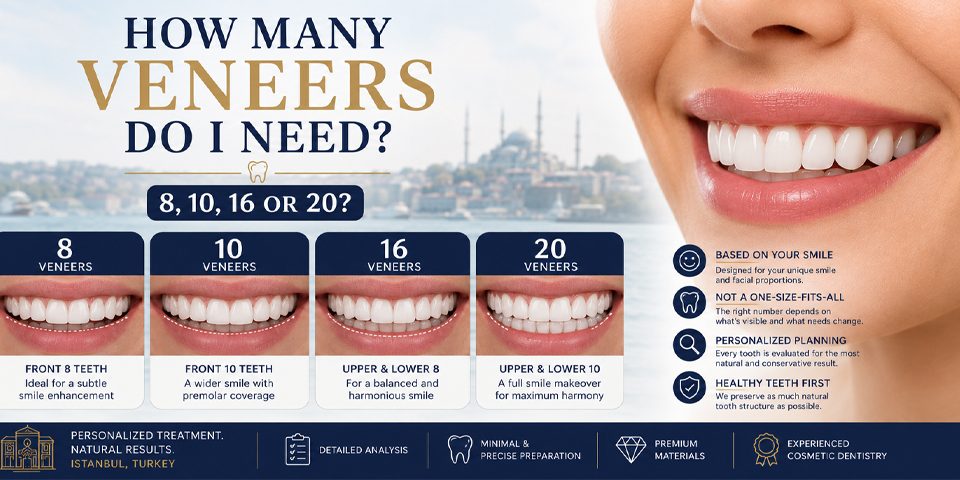
Do all front teeth need veneers?
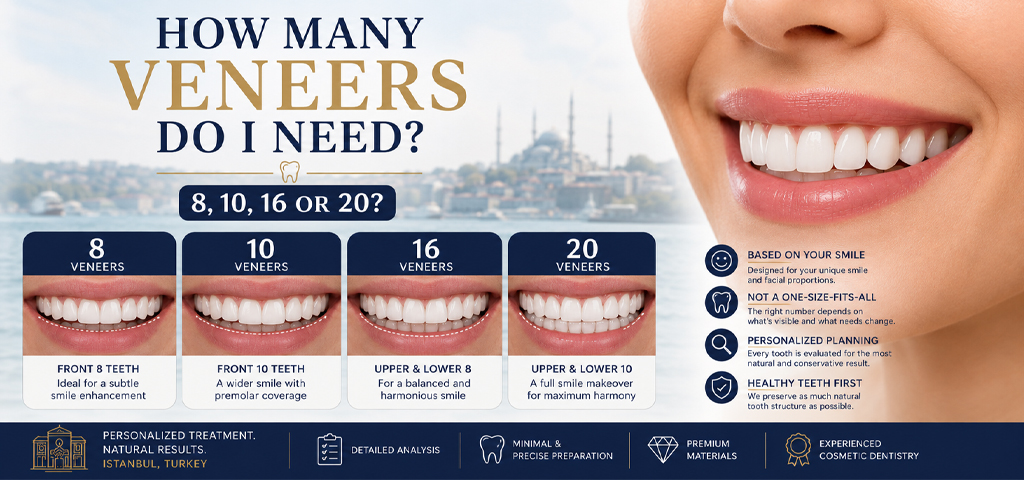
No. Many patients achieve excellent cosmetic improvements by treating only the teeth that most affect the appearance of the smile. The appropriate number of veneers varies according to individual needs and aesthetic goals.
Can people tell if you have veneers?
Well-designed veneers often go unnoticed because they closely resemble healthy natural teeth. Most people simply notice an attractive smile rather than recognising that cosmetic dental treatment has been performed.
Are composite veneers more likely to look artificial?
Composite veneers can produce attractive results, particularly for smaller cosmetic corrections. However, ceramic materials often provide greater depth, translucency, and long-term colour stability, which may contribute to a more natural appearance in suitable cases.
Can fake-looking veneers be replaced?
Yes. In many situations, veneers that appear too white, bulky, or disproportionate can be replaced with restorations that better suit the patient’s facial features and aesthetic expectations. The appropriate approach depends on the condition of the existing veneers and supporting teeth.
How long do natural-looking porcelain veneers last?
The lifespan of porcelain veneers varies according to oral hygiene, bite forces, and regular dental care. With appropriate maintenance, many patients enjoy stable function and aesthetics for many years.
Is Turkey a good place for natural-looking veneers?
Turkey has become a popular destination for cosmetic dentistry because many clinics offer advanced digital technologies and experienced dental teams. As with treatment in any country, the quality of the final result depends on careful case planning, clinical expertise, and individualised smile design rather than location alone.