

All-on-4 vs All-on-6: Which Is Better?

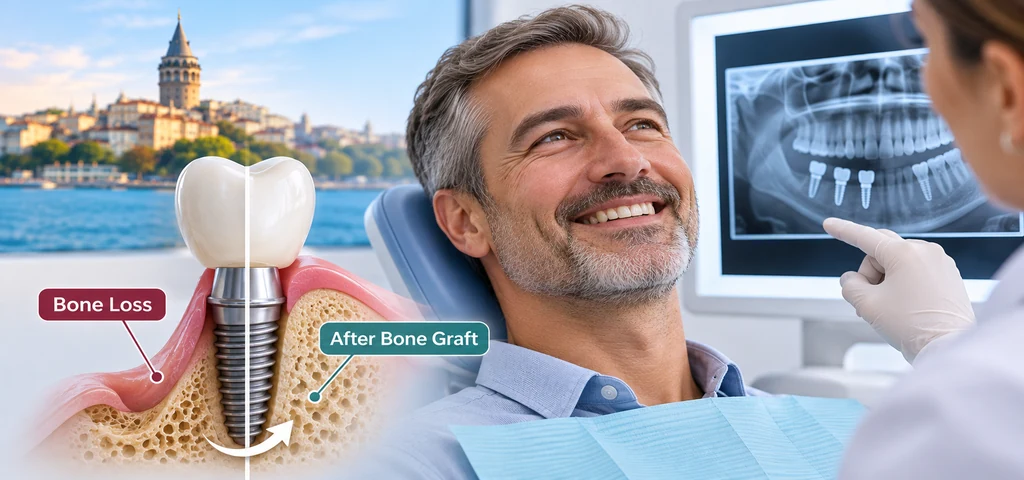
Can I Get Dental Implants With Bone Loss?
4 November 2026
Do I Need a Bone Graft Before Dental Implants?
4 November 2026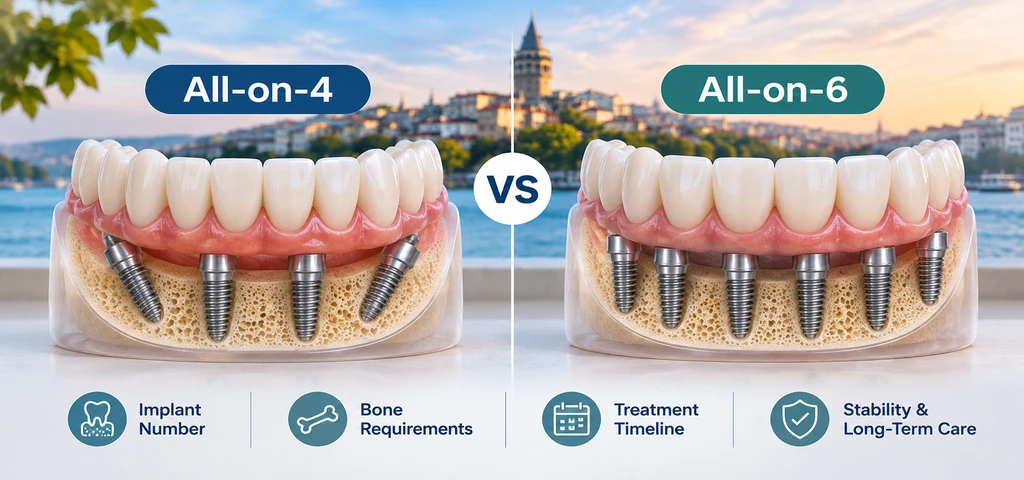
All-on-4 and All-on-6 are both full-arch dental implant treatment approaches, but neither is automatically better for every patient. The main difference is the number of implants used to support a full-arch restoration: four implants in an All-on-4 configuration and six in an All-on-6 configuration.
The most suitable approach depends on the available jawbone, implant positions, bite forces, opposing teeth, medical history and the type of final restoration being planned. Some patients may be suitable for a four-implant configuration, while others may benefit from a different distribution of support or a larger number of implants.
If you are missing most or all of your teeth, you may have encountered both terms while researching dental treatment in Turkey. They are frequently presented as competing options, sometimes with the suggestion that more implants automatically provide a stronger or longer-lasting result.
However, full-arch implant treatment is more complex than simply comparing four screws with six. The design of the restoration, the distribution of chewing forces, the condition of the surrounding bone and the patient’s ability to maintain the prosthesis all influence the treatment plan.
At the practice of Dt. Özlem Özcan in Istanbul, patients considering extensive tooth replacement can discuss their dental concerns and undergo an assessment to determine which restorative options may be appropriate. Whether a particular full-arch implant protocol is suitable, available or requires referral must be established individually.
This guide explains the differences between All-on-4 and All-on-6, the circumstances in which each configuration may be considered, how bone loss affects treatment and what international patients should understand before arranging dental treatment in Turkey.
What Is the Difference Between All-on-4 and All-on-6?
Both approaches use dental implants to support a restoration replacing an entire arch of missing teeth.
In an All-on-4 configuration, four implants are positioned strategically within the jaw. The posterior implants may be angled to make use of available bone and support the planned restoration.
In an All-on-6 configuration, six implants are used to support the full-arch prosthesis. The exact positions and angulations depend on the patient’s anatomy and the restorative design.
The additional implants in a six-implant configuration may allow forces to be distributed across more supporting units. However, the clinical benefit depends on implant position, bone quality, prosthesis design and the way the patient bites.
A poorly planned six-implant restoration is not necessarily preferable to a well-planned four-implant restoration.
Likewise, using four implants is not automatically the most conservative or appropriate option simply because fewer implants are involved.
The dentist must assess the full restorative system, including the implants, connecting components, prosthetic framework, artificial teeth and surrounding tissues.
It is also important to understand that All-on-4 is associated with a specific full-arch treatment concept, while the term All-on-6 is often used more generally to describe a restoration supported by six implants. The exact surgical and restorative protocol can therefore vary between practices.
All-on-4 vs All-on-6 at a Glance
| Feature | All-on-4 | All-on-6 |
|---|---|---|
| Implant number | Four per arch | Six per arch |
| Main purpose | Full-arch tooth replacement | Full-arch tooth replacement |
| Implant positioning | Often includes angled posterior implants | Positions depend on anatomy and design |
| Bone requirements | Depends on available bone and implant distribution | Depends on space, bone and planned positions |
| Load distribution | Across four supporting implants | Across six supporting implants |
| Temporary fixed teeth | Possible in selected cases | Possible in selected cases |
| Healing period | Depends on clinical conditions | Depends on clinical conditions |
| Suitability | Individual assessment required | Individual assessment required |
| Long-term maintenance | Essential | Essential |
The table illustrates general differences, but it cannot determine which approach is appropriate for an individual patient.
How Does All-on-4 Dental Implant Treatment Work?
The All-on-4 concept is designed to support a complete arch of replacement teeth using four strategically positioned implants.
In a commonly used configuration, two implants are placed toward the front of the jaw and two toward the back. The posterior implants may be angled to improve the use of available bone and help support the restoration.
This arrangement can sometimes reduce the need for certain augmentation procedures, particularly when the existing bone anatomy is favourable.
However, the approach does not eliminate the need for adequate bone support. Each implant must achieve appropriate stability, and the final prosthesis must be designed to function within the patient’s bite.
Clinical Assessment and Planning
Before treatment, the dentist evaluates the remaining teeth, gums, jawbone and overall oral condition.
Appropriate imaging, which may include CBCT when indicated, helps assess bone dimensions and important anatomical structures.
The dentist also considers the patient’s medical history, smoking habits, periodontal condition and ability to maintain the restoration.
A restorative plan is developed to establish where the replacement teeth should be positioned and how the implants can support them.
This prosthetically driven planning is essential. Implant positions should support the intended restoration rather than being selected solely according to where bone is easiest to access.
Implant Placement
If the patient is suitable for treatment, four implants are surgically placed in the planned positions.
The surgical approach depends on the available bone, the condition of the tissues and whether any remaining teeth need to be extracted.
The dentist evaluates the primary stability achieved during surgery because it can influence whether a temporary fixed restoration may be attached immediately.
Temporary and Definitive Restorations
In selected cases, a provisional fixed bridge may be provided shortly after implant placement.
This is often described as immediate loading, but it does not mean that biological healing has finished.
The temporary restoration may have restrictions on chewing forces while the implants integrate with the bone.
After an appropriate healing period and clinical assessment, the definitive restoration may be fabricated and fitted.
The final prosthesis must be evaluated for fit, bite, appearance, hygiene access and the patient’s ability to maintain it.
How Does All-on-6 Dental Implant Treatment Work?
All-on-6 treatment uses six implants to support a full-arch restoration.
The additional implants may provide more supporting positions for the prosthesis, but their placement requires sufficient anatomical space and suitable bone.
The dentist must determine whether six implants can be positioned appropriately without compromising important anatomical structures or the restorative design.
Planning the Implant Distribution
The position of each implant influences the forces acting on the prosthesis.
Six implants may allow support to be distributed across a greater number of locations, depending on the jaw anatomy.
However, implant number alone does not determine how effectively forces are shared.
The length of unsupported sections of the restoration, the relationship between the implants and the opposing teeth, and the patient’s bite can all affect mechanical behaviour.
For example, a restoration with excessive posterior extension may experience unfavourable forces even when supported by several implants.
Surgical Placement
During surgery, the implants are positioned according to the planned configuration.
If the bone is suitable and adequate stability is achieved, an immediate provisional restoration may be considered.
Otherwise, a staged approach may be recommended.
The presence of six implants does not automatically make immediate loading appropriate.
Restorative Phase
After the required healing period, the dentist assesses implant stability and the condition of the surrounding tissues.
The definitive restoration is then designed and manufactured according to the patient’s functional and aesthetic needs.
As with four-implant treatment, accurate fit, appropriate bite relationships and effective cleaning access are important for long-term maintenance.
Is All-on-6 Stronger Than All-on-4?
Using six implants can provide additional supporting units, but it is not accurate to state that All-on-6 is always stronger or more durable.
The mechanical behaviour of a full-arch restoration depends on several interacting factors.
These include the position and angulation of the implants, bone support, implant dimensions, prosthesis materials, framework rigidity, bite forces and the relationship with the opposing arch.
A patient who has natural teeth in the opposing jaw may generate different functional forces from someone wearing a conventional removable denture.
Grinding or clenching can also increase mechanical demands on a restoration.
In some cases, distributing support across six implants may offer a useful biomechanical advantage. In others, a carefully planned four-implant configuration may provide appropriate support.
It is also important to distinguish between the stability of an individual implant and the overall mechanical performance of the full-arch prosthesis.
An implant can be biologically integrated while the restoration still experiences mechanical complications, such as wear, fracture or loosening of a component.
For this reason, treatment planning should consider the entire restorative system rather than treating implant number as the sole indicator of strength.
Which Option Is Better if You Have Bone Loss?
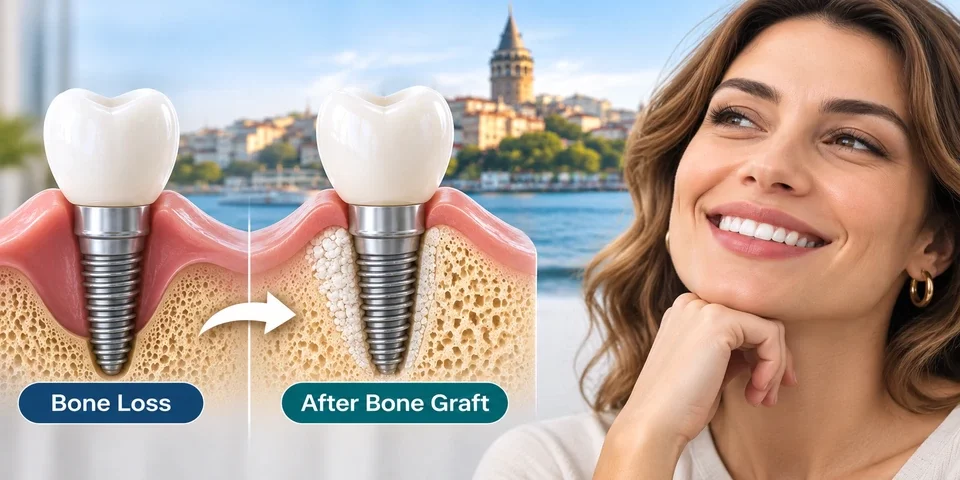
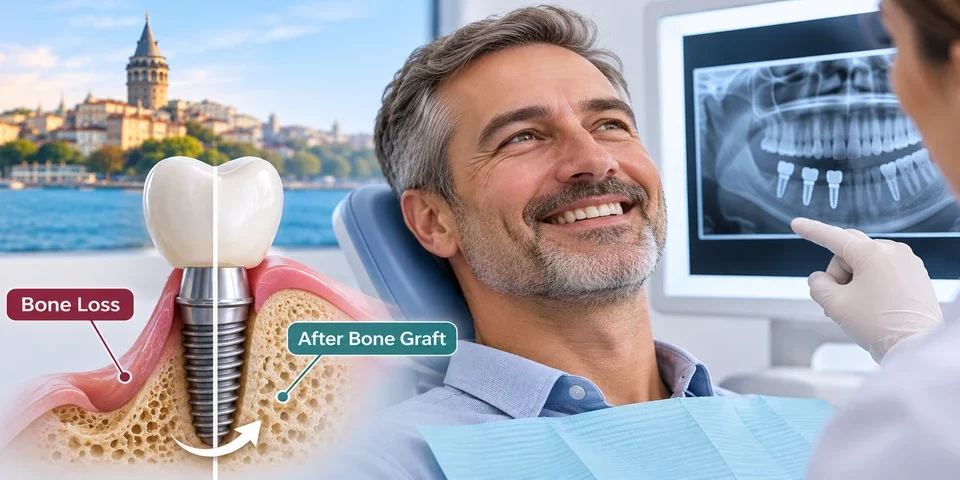
Bone loss is one of the most important factors when planning full-arch implant treatment.
Patients who have been missing teeth for many years may have reduced jawbone height or width. Previous periodontal disease, infections and long-term denture use can also contribute to bone resorption.
The distribution of remaining bone determines which implant positions may be possible.
In some patients, an angled posterior implant configuration can help make use of available bone and may reduce the need for certain grafting procedures.
This is one of the reasons the All-on-4 concept may be considered in selected cases.
However, severe bone loss can make either a four-implant or six-implant configuration unsuitable without additional treatment.
Six implants require six appropriate supporting sites. If the available bone does not permit safe and useful positioning, simply increasing the implant number is not necessarily beneficial.
Conversely, a patient with favourable bone anatomy may be suitable for a six-implant configuration if the additional support aligns with the restorative plan.
Can All-on-4 Avoid Bone Grafting?
In selected cases, strategic implant positioning may reduce the need for bone augmentation.
However, All-on-4 should not be described as a universally graft-free procedure.
Some patients may still require augmentation or another treatment approach.
The dentist must evaluate the amount and location of bone, implant stability and the proposed restoration before deciding whether grafting is necessary.
Can All-on-6 Be Used With Reduced Bone Volume?
Possibly, but the available bone must support the proposed implant positions.
A six-implant plan may be inappropriate if adequate bone is not available in the necessary locations.
Alternative implant arrangements, augmentation or other restorative solutions may need to be considered.
Patients who have been told that they have insufficient bone can read Can I Get Dental Implants With Bone Loss? for a more detailed explanation of the assessment and treatment options.
Does All-on-4 or All-on-6 Last Longer?
There is no reliable universal rule that six implants will always last longer than four.
Long-term outcomes depend on the patient’s health, implant placement, prosthetic design, oral hygiene and ongoing professional maintenance.
Clinical studies have reported favourable outcomes for several full-arch implant approaches, but results vary between populations, treatment protocols and follow-up periods.
Comparing studies is not always straightforward because patients may differ in bone anatomy, smoking status, medical conditions, opposing dentition and the materials used for their restorations.
The type of complication being measured also matters.
Implant survival refers to whether the implant remains in place. It does not necessarily mean that the patient has experienced no complications or that the prosthesis has required no maintenance.
A full-arch restoration may remain functional while needing repairs, replacement of worn components or professional adjustments.
Likewise, an implant may remain integrated while inflammation develops in the surrounding tissues.
Patients should therefore be cautious about promises of lifetime durability or claims that a particular implant number guarantees a specific outcome.
The more useful questions concern the suitability of the treatment design, the expected maintenance requirements and how complications would be managed if they occurred.
Can You Get Fixed Teeth on the Same Day?
Some full-arch implant treatment protocols allow a temporary fixed restoration to be attached shortly after implant placement.
This is often described as immediate loading or same-day teeth.
The possibility depends on the stability of the implants, the available bone, the restorative design and the forces that will act on the temporary prosthesis.
It is not determined solely by whether four or six implants are placed.
For example, a four-implant configuration may be suitable for immediate loading in one patient, while a six-implant configuration may require delayed loading in another.
The dentist must evaluate the surgical findings before confirming whether immediate loading is appropriate.
Temporary Teeth Are Not Always Final Teeth
Patients should understand the difference between a provisional full-arch restoration and the definitive prosthesis.
A temporary bridge may provide an appearance and level of function during healing, but it may be designed with specific limitations.
The final restoration is generally planned after the implants have undergone sufficient healing and the dentist has assessed their condition.
The definitive prosthesis may use different materials and require additional fitting appointments.
Patients should ask which type of restoration is included at each stage and whether further visits will be necessary.
What if Immediate Loading Is Not Suitable?
If the implants do not achieve the required stability or the clinical conditions are unfavourable, a delayed-loading approach may be recommended.
The patient may receive an alternative temporary prosthesis during healing.
This decision should be based on the biological and mechanical conditions rather than a fixed promise that permanent-looking teeth will be attached on the day of surgery.
How Long Does All-on-4 or All-on-6 Treatment Take?
Both approaches can involve several stages separated by a period of healing.
The initial visit may include examination, imaging, extractions where necessary, implant surgery and a provisional restoration if appropriate.
The definitive restoration is often completed after a healing period, although the exact timing depends on the treatment protocol.
For conventional implant healing, several months may be required before final restoration.
Patients who need bone grafting, management of infection or other preliminary procedures may require additional stages.
The Initial Surgical Visit
International patients may need to allow several days in Istanbul for examination, surgery, early recovery and any recommended postoperative review.
The appropriate duration depends on the extent of treatment and the patient’s condition.
Full-arch surgery may involve more extensive postoperative symptoms than a straightforward single-implant procedure.
Swelling, tenderness and temporary dietary restrictions should be anticipated.
Healing Between Visits
After surgery, the implants undergo biological healing.
Patients may return to their home country during this period, provided their condition is suitable for travel and appropriate follow-up arrangements are in place.
If a temporary fixed restoration has been provided, the dentist may recommend dietary precautions to reduce excessive forces during healing.
The Final Restorative Visit
The final visit may involve assessment of implant stability, digital scans or impressions, laboratory fabrication, fitting and adjustment of the definitive prosthesis.
Complex full-arch restorations can require multiple appointments.
Patients should not assume that the number of days required for the restorative stage will be identical for every case.
For a detailed discussion of international treatment schedules, see How Long Should I Stay in Turkey for Dental Implants?.
How Do Bite Forces Affect Full-Arch Implant Treatment?
Bite forces play an important role in the design of full-arch implant restorations.
Natural teeth are supported by periodontal ligaments, which provide a degree of movement and sensory feedback.
Dental implants are supported differently because they integrate directly with the surrounding bone.
This difference influences how forces are transmitted during chewing and other jaw movements.
The dentist must evaluate the patient’s bite, jaw relationships and any habits that may place excessive pressure on the restoration.
Teeth Grinding and Clenching
Bruxism can increase mechanical demands on implant-supported prostheses.
Patients who grind or clench their teeth may be at greater risk of certain prosthetic complications, although the individual risk depends on multiple factors.
The dentist may recommend adjustments to the restorative design or protective measures such as an occlusal appliance.
The presence of bruxism does not automatically determine whether four or six implants should be used.
Opposing Natural Teeth or Restorations
The type of teeth or prosthesis in the opposing jaw affects functional loading.
A patient with natural teeth in one arch and a full-arch implant restoration in the other may have different biomechanical requirements from someone with implant-supported restorations in both arches.
The dentist should consider the entire bite rather than planning each arch independently.
Prosthesis Materials
Full-arch restorations may be manufactured using different frameworks and tooth materials.
Material selection influences factors such as rigidity, wear, appearance, repairability and maintenance.
The appropriate material should be selected alongside the implant configuration and restorative design.
No material eliminates the possibility of complications.
What Are the Risks of All-on-4 and All-on-6?
Both approaches involve surgical and restorative risks.
Possible surgical complications include bleeding, infection, swelling, nerve-related symptoms and problems involving nearby anatomical structures.
In the upper jaw, the relationship between implants and the maxillary sinus may require particular attention.
Implants may fail to integrate with the bone, and some may develop complications after initially successful healing.
Inflammation around implants can affect the surrounding soft tissues and supporting bone.
Restorative complications may include fracture or wear of prosthetic teeth, loosening of screws, damage to components or problems with the bite.
The number of implants does not remove these risks.
A six-implant configuration may provide additional support in selected circumstances, but it also involves placing more implants.
A four-implant configuration involves fewer supporting units, making the position and function of each implant particularly important.
The clinical implications of an implant complication depend on the overall design.
Patients should discuss how the treatment plan would be affected if an implant failed or if the restoration required repair.
A thorough informed-consent discussion should include reasonable alternatives, expected maintenance and the limitations of the proposed treatment.
How Do You Maintain All-on-4 or All-on-6 Implants?
Maintenance is essential for both configurations.
Although implants cannot develop tooth decay, the surrounding tissues can become inflamed.
Peri-implant mucositis affects the soft tissues around an implant, while peri-implantitis involves inflammation associated with progressive loss of supporting bone.
Effective plaque control and professional monitoring help identify problems before they become more advanced.
Full-arch restorations can create cleaning challenges because food and plaque may accumulate beneath the prosthesis or around implant components.
Patients need to understand how to clean these areas using appropriate tools and techniques.
Depending on the design, interdental brushes, specialised floss or other cleaning aids may be recommended.
The dentist or dental hygienist should demonstrate a cleaning method suitable for the specific restoration.
Professional reviews are also important for assessing the tissues, bite, prosthetic components and the condition of the restoration.
Some prostheses may require periodic removal by a dental professional for maintenance, depending on the design and clinical circumstances.
Patients should not attempt to remove a fixed screw-retained prosthesis themselves.
Does Having More Implants Make Cleaning Harder?
The number of implants can influence the number of areas that require cleaning, but hygiene access depends heavily on the prosthesis design.
A well-designed restoration should allow the patient to clean around the supporting implants and beneath the prosthesis.
If the restoration is difficult to maintain, inflammation may develop regardless of whether four or six implants are present.
Long-term planning should therefore consider the patient’s manual dexterity, oral hygiene habits and ability to attend regular professional reviews.
What Are the Alternatives to All-on-4 and All-on-6?
Not every patient with extensive tooth loss needs or is suitable for a fixed full-arch implant restoration.
Alternative options may include implant-supported removable overdentures, conventional removable dentures or other implant-supported prosthetic designs.
An implant-supported overdenture can provide improved retention compared with some conventional dentures while remaining removable for cleaning.
The number of implants and attachment system depend on the jaw, bone conditions and restorative plan.
Conventional dentures may also be appropriate for patients who prefer a non-surgical option or for whom implant surgery is unsuitable.
If some natural teeth remain, the dentist should assess whether they can be preserved.
Restorable teeth should not automatically be removed simply to create a full-arch implant treatment plan.
Depending on their condition, dental crowns, root canal treatment or other restorative procedures may help retain natural teeth.
The decision should consider periodontal support, structural integrity, bite, long-term prognosis and patient preferences.
A comprehensive assessment helps determine whether full-arch implant treatment is appropriate or whether a different combination of treatments would better address the patient’s needs.
What Should International Patients Consider Before Choosing?
Patients travelling to Turkey for full-arch dental treatment should understand that the number of implants is only one part of the treatment plan.
Before arranging travel, it is important to clarify which procedures are being proposed, how many visits may be required and whether temporary or definitive teeth will be provided at each stage.
Patients should also ask how the condition of their remaining teeth has been assessed and whether extraction is genuinely necessary.
If bone loss is present, the dentist should explain whether grafting or another surgical approach is being considered.
Ask About the Restorative Design
The final restoration may differ in materials, appearance, cleaning access and maintenance requirements.
Patients should understand whether the prosthesis is fixed or removable and how it will be maintained.
A fixed restoration may offer certain functional advantages, but it also requires appropriate hygiene and professional care.
Clarify the Treatment Stages
Terms such as immediate loading, same-day teeth and permanent teeth can be used inconsistently in promotional material.
Ask whether the restoration fitted immediately after surgery is temporary and when the definitive prosthesis is expected.
The treatment schedule should allow for biological healing and any necessary adjustments.
Plan for Follow-Up Care
Patients returning to the United Kingdom or another country should know how postoperative concerns will be managed.
Some problems can be discussed remotely, but pain, swelling, implant mobility or a damaged prosthesis may require an in-person examination.
Ongoing dental care should be arranged close to home when appropriate.
Consider the Long-Term Maintenance Requirements
Full-arch implant treatment is not maintenance-free.
Patients should understand the expected cleaning routine, frequency of professional reviews and possibility of future repairs.
These practical considerations can be just as important as the initial choice between four and six implants.
Frequently Asked Questions About All-on-4 and All-on-6
Is All-on-6 always better than All-on-4?
No. Six implants may offer advantages in certain restorative situations, but a properly planned four-implant configuration may be appropriate for other patients. The decision depends on bone anatomy, implant distribution, bite forces and the intended prosthesis.
Can All-on-4 implants support a full set of teeth?
Yes. The All-on-4 concept is designed to support a full-arch restoration using four strategically positioned implants. However, suitability depends on achieving appropriate implant stability and meeting the clinical requirements of the treatment protocol.
Does All-on-6 require more jawbone?
Six implants require six suitable implant positions, but the overall bone requirements depend on the planned configuration. A patient with reduced bone volume may not have appropriate sites for every implant. Clinical imaging and restorative planning are necessary.
Can I choose All-on-6 instead of All-on-4?
You can discuss your preferences with the dentist, but the implant number should be determined by clinical suitability. Additional implants are not automatically beneficial if they cannot be positioned appropriately or do not improve the restorative design.
Can All-on-4 and All-on-6 be used in the upper jaw?
Both configurations may be considered for upper-jaw rehabilitation in suitable patients. The maxillary sinus, available bone and other anatomical factors influence planning. Some patients may require additional procedures or alternative treatment approaches.
Are All-on-4 and All-on-6 procedures painful?
The procedures are commonly performed using local anaesthesia, with other anaesthetic options considered when appropriate. Postoperative swelling, tenderness and discomfort can occur. The extent of recovery depends on the surgery and the patient’s individual response.
Can I get All-on-4 or All-on-6 if I have gum disease?
Active periodontal disease should be assessed and managed before implant treatment. A history of periodontitis does not automatically exclude implants, but it is relevant to risk assessment and long-term maintenance.
What happens if one implant fails in a full-arch restoration?
The consequences depend on the implant configuration, prosthesis design and timing of the failure. The dentist must assess whether the restoration can be modified, whether additional treatment is needed or whether the plan must be revised.
Do All-on-4 and All-on-6 implants need regular check-ups?
Yes. Both approaches require ongoing professional monitoring and effective daily cleaning. Reviews help assess gum health, supporting bone, bite contacts and the condition of the prosthetic components.
How do I know which full-arch treatment is suitable for me?
An appropriate clinical examination, assessment of the remaining teeth and gums, and imaging when indicated are needed. The dentist must also evaluate your medical history, bone anatomy, bite and restorative expectations before recommending a treatment approach.
Discuss Full-Arch Tooth Replacement With Dt. Özlem Özcan
All-on-4 and All-on-6 are both approaches to replacing a complete arch of missing teeth, but the most suitable treatment is not determined by implant number alone.
Bone support, implant positioning, bite forces, restorative design and long-term maintenance all influence the decision. In some cases, a fixed implant-supported restoration may be appropriate, while other patients may benefit from a removable prosthesis or preservation of remaining natural teeth.
If you are considering extensive tooth replacement in Istanbul, the practice of Dt. Özlem Özcan can help you discuss your dental history, concerns and expectations and arrange an assessment of the available restorative options.
You can learn more about the general principles of implant treatment on the dental implants service page.
For appointment enquiries and international patient communication, contact the practice through WhatsApp at +90 552 288 76 48 or call +90 212 288 76 48.
A personalised examination can help determine whether implant-supported full-arch rehabilitation is appropriate and which treatment approach should be considered for your individual dental needs.