

How Long Should I Stay in Turkey for Dental Implants?

How Long Should I Stay in Turkey for Veneers?
4 November 2026
Can I Get Dental Implants With Bone Loss?
4 November 2026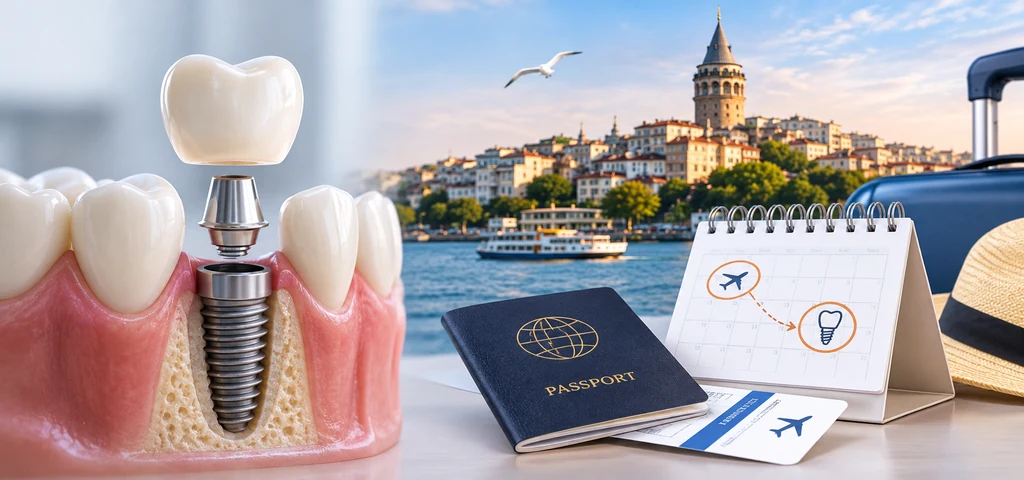
If you are considering dental implants in Turkey, understanding how long you need to stay is an important part of planning your treatment. International patients often want to know whether implants can be completed during one visit, how soon they can fly home after surgery and whether they will need to return to Istanbul.
The answer depends on the type of implant treatment, the condition of your jawbone, the number of missing teeth and the healing process. Unlike some restorative dental procedures, conventional dental implant treatment often involves several stages separated by a period of biological healing.
For straightforward implant placement, international patients may be advised to allow approximately three to seven days in Turkey for the initial surgical visit. However, this is a general travel-planning range, not a universal clinical requirement or a confirmed schedule for every patient. Some patients may need a shorter stay, while others require additional appointments or more complex procedures.
Importantly, the length of the first visit is not the same as the total duration of implant treatment. In conventional cases, implants often need several months to integrate with the surrounding bone before the final restoration can be completed. This means that patients travelling from abroad may need two or more separate visits.
At the practice of Dt. Özlem Özcan in Istanbul, implant treatment planning should begin with an assessment of oral health, bone support and the patient’s individual needs. For international patients, this assessment also helps establish a realistic treatment sequence before flights and accommodation are finalised.
This guide explains the different stages of dental implant treatment, how long each stage may take, what can extend the treatment schedule and how to prepare for travelling to Turkey.
How Many Days Do You Need in Turkey for Dental Implants?
The number of days required in Turkey depends on what is planned during your visit. A patient receiving a single implant in a healthy, healed jawbone may have a different schedule from someone requiring multiple extractions, bone grafting or full-arch rehabilitation.
For uncomplicated implant placement, an initial stay of approximately three to seven days may provide time for the clinical examination, surgery and an early postoperative assessment. This is a practical planning estimate rather than a guarantee that every patient must stay for that period.
The surgery itself may take considerably less time than the total visit. However, patients travelling internationally need to consider more than the duration of the operation.
Before surgery, the dentist must evaluate whether the implant can be placed safely and whether sufficient bone is available. After surgery, the patient may experience swelling, tenderness or other temporary postoperative symptoms. The treating clinician may also want to review healing before the patient leaves Turkey.
If additional procedures are necessary, the schedule can change substantially.
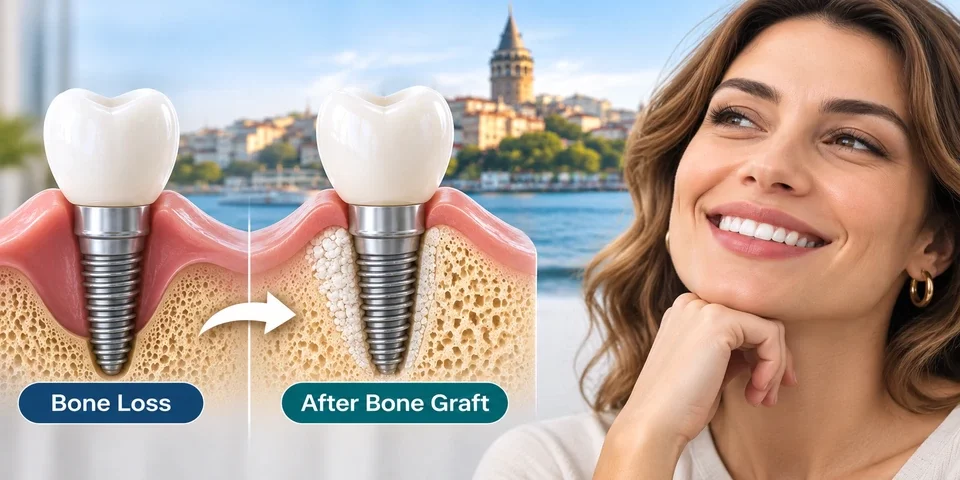
For example, a patient who requires bone augmentation may need a staged treatment plan. In some circumstances, the grafting procedure can be performed at the same time as implant placement. In others, a separate healing period is required before the implant can be inserted.
Patients considering dental implants in Istanbul should therefore distinguish between the time needed for the surgical visit and the time needed to complete the entire restoration.
A short visit may be sufficient for one stage of treatment, but it does not necessarily mean that the implant process is finished.
Why Does Dental Implant Treatment Often Require Two Visits?
Dental implants are designed to function as artificial tooth roots. They are placed in the jawbone and, when healing is successful, become supported by the surrounding bone through a biological process called osseointegration.
This process is one of the main reasons conventional implant treatment cannot always be completed during a single short trip.
After an implant is placed, the surrounding bone undergoes healing and remodelling. The time required varies according to the patient’s health, bone quality, implant stability, surgical conditions and other clinical factors.
In many conventional treatment plans, a healing period of approximately three to six months may be anticipated before the definitive restoration is fitted. Some patients may require a different interval, and certain treatment protocols permit earlier loading when strict clinical criteria are met.
A typical international treatment journey may therefore involve two principal visits.
First Visit: Implant Surgery
During the first visit, the dentist examines the mouth, reviews appropriate imaging and confirms the treatment plan.
If implant placement is suitable, the surgical procedure is performed. Depending on the case, a healing abutment, temporary restoration or other provisional solution may be provided.
The patient receives postoperative instructions and may attend an early review before returning home.
The implant then heals during the following weeks and months.
Second Visit: Final Restoration
After sufficient healing and clinical assessment, the patient may return for the restorative stage.
This can involve checking the implant, recording its position with an impression or digital scan and manufacturing the definitive crown, bridge or implant-supported prosthesis.
The final restoration must be assessed for fit, appearance, bite and accessibility for cleaning.
The second visit may require several days, depending on the number and complexity of the restorations and the laboratory workflow. The exact schedule should be confirmed with the treating practice.
Not every patient follows the same two-visit pathway. Some treatments involve additional surgical or restorative stages, while selected cases may use immediate or early-loading protocols.
The appropriate sequence should be determined by clinical findings rather than by a preference to minimise travel.
What Happens During Your First Dental Implant Visit?
The first visit is an important stage because it establishes whether implant treatment is appropriate and, when indicated, allows the surgical procedure to take place.
International patients should understand the clinical steps involved before deciding how long to stay in Istanbul.
Clinical Examination and Treatment Planning
The dentist begins by assessing the teeth, gums, jawbone and overall oral condition.
This examination may include a review of medical history, current medications, previous dental treatment and any conditions that could influence healing.
Dental imaging is used when clinically appropriate. Three-dimensional cone-beam computed tomography, commonly called CBCT, may be recommended when additional information about bone dimensions or anatomical structures is needed.
The dentist evaluates the proposed implant position, available bone and proximity to important structures such as nerves and the maxillary sinus.
The examination also considers the condition of neighbouring teeth, the bite and the type of restoration that will eventually be attached to the implant.
If untreated gum disease, infection or other dental problems are identified, they may need to be addressed before surgery.
Implant Placement Surgery
Once the treatment plan is confirmed, the implant is surgically positioned in the jawbone.
The procedure is commonly performed under local anaesthesia, although other anaesthetic approaches may be considered according to the patient’s needs and the complexity of treatment.
The surgical technique depends on the implant location, bone anatomy and whether additional procedures are required.
After placement, the implant may be covered by gum tissue or fitted with a healing component. The choice depends on the treatment protocol and the stability achieved during surgery.
Patients should expect a period of postoperative recovery, even when the operation is uncomplicated.
Early Healing and Postoperative Review
Swelling, tenderness, minor bleeding and temporary discomfort can occur after implant surgery.
These symptoms often improve during the first several days, although the extent and duration vary. More extensive surgery may involve a longer recovery.
The dentist provides instructions about oral hygiene, medication where prescribed, eating, physical activity and recognising possible complications.
An early review may be recommended to assess the surgical site and determine whether healing is progressing as expected.
For patients travelling internationally, this review can be an important consideration when deciding when to leave Istanbul.
Returning Home During Osseointegration
After the initial surgical stage, many patients return to their home country while the implant heals.
During this period, it is important to follow the dentist’s instructions and maintain appropriate oral hygiene.
The implant should not be assumed to be fully integrated simply because discomfort has resolved. Clinical healing and biological integration are different processes.
The dentist determines when the implant is ready for the next stage based on the treatment protocol and clinical assessment.
Patients should also understand what to do if they develop pain, swelling, loosening of a temporary restoration or another concern while abroad.
Can Dental Implants Be Completed in One Trip to Turkey?
Some patients encounter descriptions of same-day implants or teeth fitted immediately after surgery. These terms can be confusing because they may refer to different stages of treatment.
An implant may sometimes be placed immediately after tooth extraction, provided the clinical conditions are suitable. This is called immediate implant placement.
In other cases, a temporary restoration may be attached soon after implant surgery. This is known as immediate loading or immediate provisionalisation, depending on the treatment protocol.
However, placing an implant and attaching a temporary tooth on the same day does not necessarily mean that the definitive treatment is complete.
The implant still requires biological healing, and a final restoration may be planned for a later stage.
Immediate-loading approaches are not appropriate for every patient. Their suitability depends on factors such as primary implant stability, bone quality, the planned bite and the extent of the restoration.
For some patients, a conventional staged approach is preferable.
It is also important to distinguish between a temporary tooth used for appearance and a restoration designed to withstand normal chewing forces. Temporary restorations may have specific restrictions while healing takes place.
If you are considering treatment advertised as a single-trip procedure, ask whether the proposed teeth are temporary or definitive, whether a second visit is expected and what happens if healing does not proceed as planned.
These questions help clarify the actual treatment journey and avoid misunderstandings about the number of visits required.
How Long Should You Wait Before Flying After Implant Surgery?
Flying after dental implant surgery is a common concern for international patients.
There is no single departure interval that applies to every patient. The appropriate timing depends on the surgical procedure, postoperative symptoms, medical history and whether additional treatment was performed.
After uncomplicated implant placement under local anaesthesia, some patients may be able to travel within a relatively short period. However, flying immediately after surgery may be inconvenient if swelling, bleeding, pain or another issue develops.
For this reason, allowing several days between surgery and the return flight can provide an opportunity for early recovery and any recommended postoperative review.
The situation may be different if the treatment involves sinus augmentation, extensive bone grafting, multiple extractions or sedation.
Procedures involving the maxillary sinus can require particular attention to pressure-related precautions and postoperative restrictions. Patients should obtain individual advice from the surgeon before flying.
If intravenous sedation or general anaesthesia is used, the associated recovery and travel instructions must also be considered.
The safest approach is to discuss your proposed flight date before surgery and obtain confirmation from the treating clinician that your postoperative condition is compatible with travel.
Patients who would like a more detailed discussion of this subject can read Can I Fly Home After Dental Implants?.
What Can Make Dental Implant Treatment Take Longer?
Several factors can extend implant treatment beyond the initial schedule. Some can be identified during preliminary planning, while others become apparent only after clinical examination or surgery.
Insufficient Jawbone
Dental implants require adequate bone support in an appropriate anatomical position.
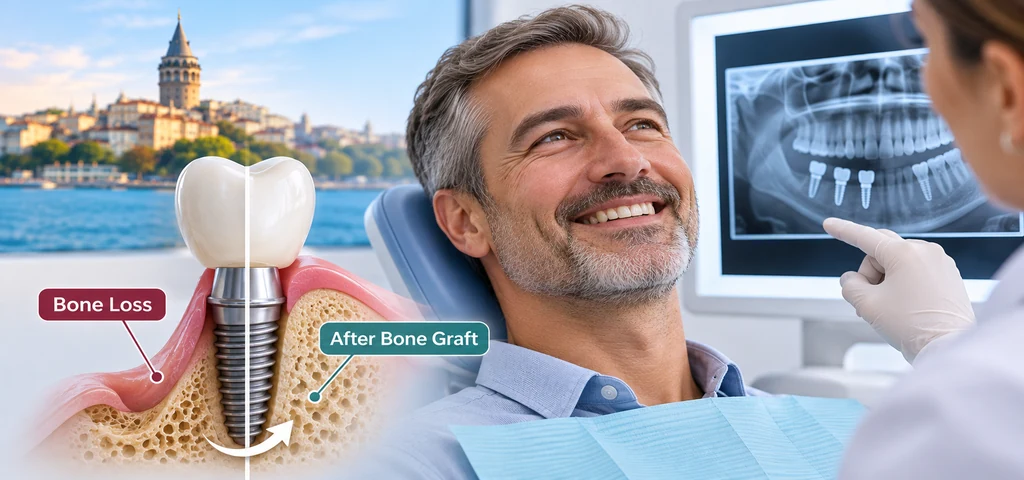
When a tooth has been missing for a long time, the surrounding jawbone may lose volume. Periodontal disease, trauma and previous infections can also contribute to bone loss.
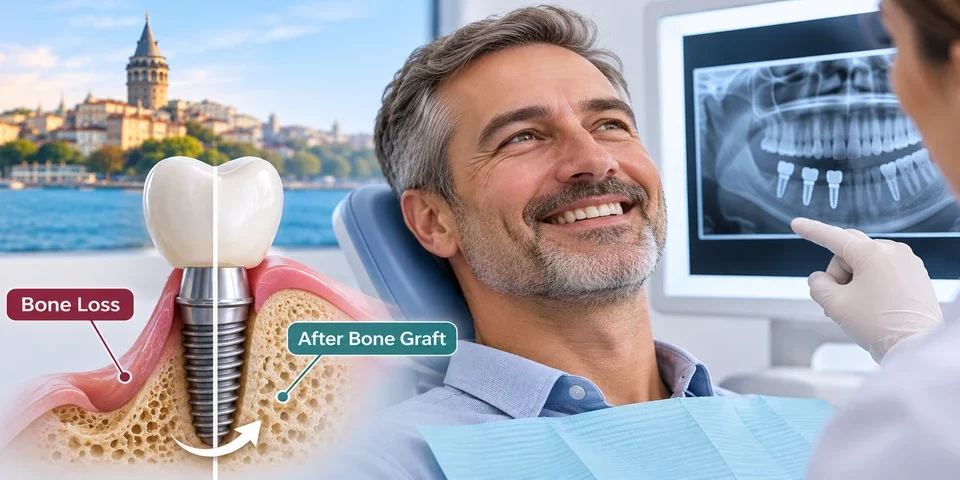
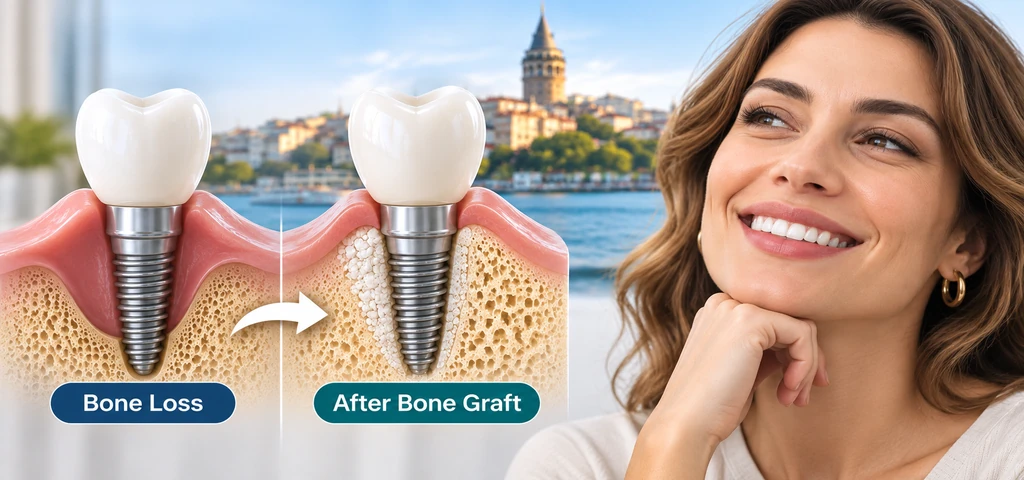
If the remaining bone is insufficient, the dentist may recommend a grafting procedure or another approach to improve the treatment conditions.
In some cases, bone augmentation can be performed at the same time as implant placement. In others, the graft must heal before implant surgery can proceed.
Staged grafting may add several months to the overall treatment timeline.
Tooth Extractions
If a damaged tooth must be removed, the timing of implant placement depends on the condition of the extraction site.
Immediate placement may be possible in selected cases, but it is not always appropriate.
Where infection, bone defects or other concerns are present, the dentist may recommend allowing the extraction site to heal before placing the implant.
The required healing interval varies, and the decision should be based on the clinical findings rather than travel convenience.
Gum Disease and Oral Infection
Active periodontal disease or unresolved infection can affect the suitability and prognosis of implant treatment.
The dentist may recommend periodontal treatment, improved plaque control or management of an infection before proceeding.
Patients should not assume that an implant can be placed safely without addressing the underlying cause of tooth loss.
Maintaining healthy gums and adequate oral hygiene is also essential after implants are placed.
Medical Conditions and Medications
General health can influence surgical planning and healing.
Conditions affecting immune function, wound healing or bone metabolism may require additional assessment. Smoking and certain medications can also influence treatment decisions.
Patients should provide an accurate medical history and disclose all prescribed and non-prescribed medications.
In some circumstances, coordination with the patient’s physician may be necessary before surgery.
Complex Restorative Requirements
Replacing one missing tooth is not the same as reconstructing an entire dental arch.
Patients with multiple missing teeth, extensive tooth wear, an altered bite or a history of unsuccessful dental treatment may require more detailed planning.
Complex cases may involve several implants, provisional restorations and staged evaluation before definitive prosthetic work.
The number of days required in Istanbul should reflect the actual complexity of the proposed treatment.
How Long Does Full-Mouth Implant Treatment Take?
Full-mouth implant treatment can involve a substantially different schedule from replacing a single missing tooth.
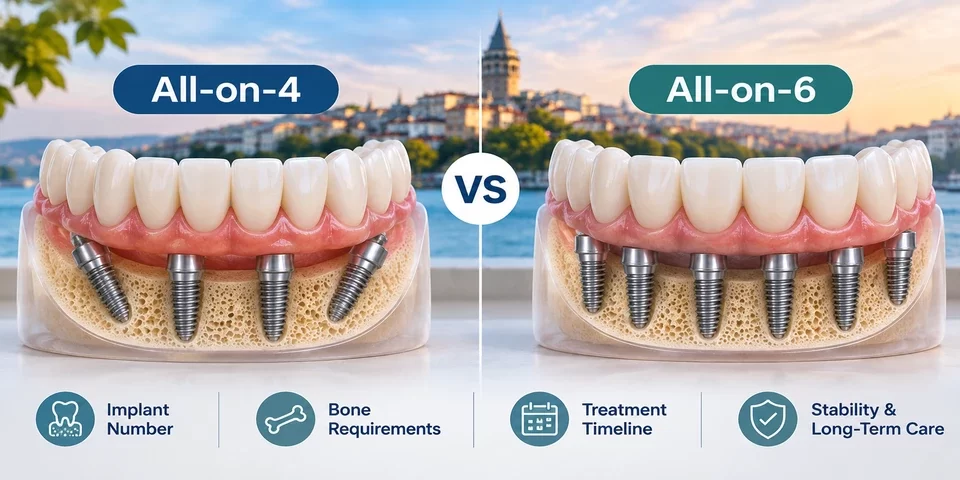
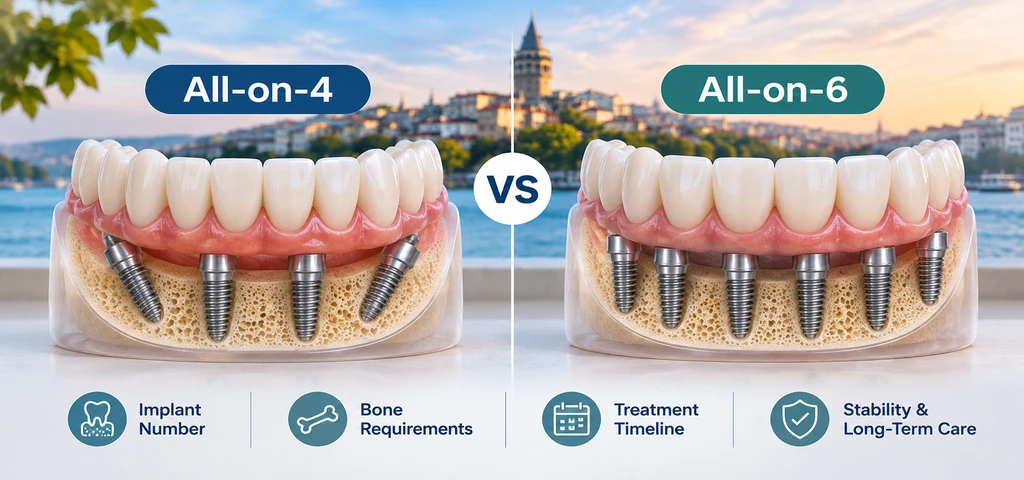
Depending on the patient’s condition, the dentist may recommend implant-supported bridges, fixed full-arch restorations or removable implant-supported prostheses.
Some full-arch treatment protocols allow a fixed temporary restoration to be provided shortly after implant placement when sufficient implant stability and other clinical criteria are achieved.
However, the definitive restoration is often planned after a healing and evaluation period.
Patients should understand that an immediate temporary bridge and a final full-arch prosthesis are not necessarily the same thing.
The overall treatment plan may include extractions, management of gum disease, implant placement, provisional restorations, healing, assessment of the bite and final prosthetic fabrication.
Where significant bone loss is present, additional procedures or alternative implant configurations may be considered.
For patients with extensive tooth loss, the dentist may also discuss whether conventional dentures or another restorative option would better meet their needs.
The decision depends on oral health, anatomy, expectations and the patient’s ability to maintain the proposed restoration.
Because full-mouth treatment is highly individualised, patients should obtain a written explanation of the stages and expected number of visits before arranging international travel.
How Should UK Patients Plan Their Implant Treatment in Istanbul?
Patients travelling from the United Kingdom often need to coordinate implant treatment with work commitments, flights and accommodation.
The first step is to understand whether the planned visit is for examination, implant surgery, restorative treatment or a combination of these stages.
A patient travelling for a straightforward implant placement may need only a short initial stay, whereas someone undergoing extensive surgery may need additional recovery time.
Before booking flights, ask the practice to explain the anticipated appointments, the expected recovery period and whether a review is recommended before departure.
If the treatment is expected to involve two visits, discuss the approximate interval between them and how the second stage will be arranged.
It is also worth considering how postoperative care will be managed once you return to the UK.
For example, you should know whom to contact if you develop persistent pain, swelling, a problem with a temporary restoration or another unexpected symptom.
Although the treating practice can provide advice remotely, some problems require an examination by a dentist in person.
Patients should also plan for routine dental care at home after implant treatment is completed.
For people travelling from London, Manchester, Birmingham or other UK cities, the convenience of flights to Istanbul can make treatment logistics easier. Nevertheless, clinical healing should determine the treatment schedule, not the availability of a particular return flight.
Can You Arrange Implant Treatment Before Arriving in Turkey?
An initial discussion may be possible before travelling.
You can explain which teeth are missing, whether you have existing implants or dentures, and what difficulties you are experiencing with eating or speaking.
The practice may ask about your medical history, previous dental treatment and any recent X-rays or scans.
Where available, appropriate clinical records can help the dentist understand your circumstances and identify areas that require closer examination.
However, a remote assessment has important limitations.
Photographs cannot reliably establish the quantity and quality of jawbone, the presence of all dental infections or the precise anatomical conditions required for implant placement.
Even when a patient provides existing imaging, additional examination or updated scans may be needed.
The final decision about implant placement, bone grafting, the number of implants and the treatment sequence should therefore follow an appropriate clinical assessment.
International patients should treat a preliminary schedule as provisional until the dentist has confirmed the findings.
This approach helps prevent situations in which travel arrangements are based on assumptions that cannot be supported by the patient’s actual oral condition.
What Should You Do Between Your First and Second Visits?
The period between implant placement and final restoration is an active part of treatment, even if you are no longer attending appointments in Istanbul.
During this time, the implant site needs to heal and the surrounding bone must develop an appropriate relationship with the implant surface.
Following postoperative instructions is important for protecting the surgical area and reducing avoidable complications.
Maintain Appropriate Oral Hygiene
Your dentist will explain how to clean around the surgical site during the early healing period.
Once healing allows, maintaining effective plaque control around the implant and neighbouring teeth becomes essential.
Implants are not affected by dental decay in the same way as natural teeth, but the surrounding tissues can develop inflammatory conditions.
Poor plaque control may contribute to peri-implant disease and threaten the long-term health of the implant.
Follow Dietary and Activity Advice
Temporary dietary restrictions may be recommended after surgery.
If a provisional restoration has been fitted, the dentist may advise avoiding excessive chewing pressure on the implant during healing.
Physical activity restrictions can also apply during the early postoperative period, particularly after more extensive surgery.
The duration of these precautions depends on the procedure and should be confirmed with the treating clinician.
Monitor Symptoms
Some tenderness and swelling can be expected after implant surgery, but symptoms should generally improve rather than progressively worsen.
Contact a dentist promptly if you experience increasing pain, persistent or worsening swelling, fever, pus, uncontrolled bleeding or a restoration that becomes unstable.
Seek urgent medical attention for severe symptoms such as difficulty breathing or swallowing.
If you are back in your home country, do not delay necessary local care while waiting for remote advice from the original practice.
Attend Recommended Reviews
Depending on the treatment plan, a dentist may recommend follow-up examinations during the healing period.
These appointments help assess tissue health, oral hygiene and any concerns before the definitive restoration is fitted.
If you cannot return to Istanbul for an interim review, discuss whether an appropriate local dental assessment is needed.
The treating dentist should also explain how readiness for the next stage will be established.
What Happens During Your Second Visit to Turkey?
The second visit commonly focuses on assessing the implant and completing the restorative phase.
Before proceeding, the dentist evaluates whether healing has progressed sufficiently and whether the implant is suitable for restoration.
The assessment may include clinical examination, imaging where indicated and other checks appropriate to the implant system and treatment protocol.
If the implant has been covered by gum tissue, a minor procedure may be necessary to expose it and attach a healing component. In some treatment plans, this stage is completed before the final restorative visit.
The dentist then records the implant position and the relationship with the surrounding teeth or opposing arch.
A dental laboratory uses this information to manufacture the definitive restoration.
For a single missing tooth, this may be an implant-supported crown. For several missing teeth, the restoration may be a bridge or another type of implant-supported prosthesis.
The final restoration is assessed for fit, bite, appearance and accessibility for cleaning.
Patients should also receive instructions on maintenance and the importance of ongoing dental reviews.
The duration of the second visit varies according to the restoration and laboratory requirements. More complex work may require additional fitting appointments or adjustments.
If the implant has not healed as expected, the dentist may recommend delaying restoration or revising the treatment plan.
How Long Do Dental Implants Need to Heal?
Dental implant healing is not determined by a fixed calendar alone.
The surrounding bone must respond to the implant surface and develop sufficient biological support for the intended restoration.
In conventional protocols, several months may be allowed for this process. Approximately three to six months is a commonly discussed planning range, but individual treatment schedules can be shorter or longer.
Healing is influenced by factors such as bone quality, surgical conditions, implant stability, grafting procedures and general health.
It is also important to distinguish between soft-tissue healing and osseointegration.
The gums may appear healed relatively soon after surgery, while the underlying bone continues to remodel around the implant.
For this reason, the absence of pain does not establish that an implant is ready to support its definitive restoration.
Some implants may be suitable for earlier loading, but this depends on specific clinical criteria and careful control of the forces applied to the restoration.
The treating dentist determines the appropriate timing through examination and assessment of the implant’s condition.
Patients should avoid assuming that returning for the second visit on a predetermined date automatically means the final restoration can be fitted.
Frequently Asked Questions About Dental Implant Travel
Is three days enough for dental implants in Turkey?
Three days may be sufficient for selected uncomplicated surgical visits, depending on the treatment plan and postoperative condition. However, it provides limited flexibility if additional assessment or recovery time is needed. Your dentist should confirm the appropriate stay before you book flights.
Do I need to stay in Turkey until my implants heal?
Usually, patients do not need to remain in Turkey throughout the osseointegration period. Many return home after the initial surgical stage and travel back when the implant is ready for further treatment. Follow-up arrangements should be discussed in advance.
Can I get a dental implant and crown in one week?
In conventional implant treatment, the definitive crown is often placed after a healing period of several months. Selected immediate-loading protocols may allow a temporary restoration earlier, but these are not suitable for every patient.
How many trips to Turkey are needed for implants?
Two visits are common in conventional treatment plans: one for implant placement and another for the definitive restoration. Additional visits may be needed for bone grafting, staged surgery, complications or complex restorative work.
Can I fly home two days after implant surgery?
Some patients may be able to travel within two days after uncomplicated surgery, but this depends on their symptoms and the procedures performed. More extensive surgery or sinus-related treatment may require different precautions. Obtain individual clearance from your treating clinician.
Will I have a temporary tooth while my implant heals?
A temporary restoration may be possible, depending on the implant’s stability, location and treatment plan. Alternatives may include a removable provisional tooth or another solution that avoids excessive pressure on the healing implant.
What if I need a bone graft before my implant?
Bone grafting can change the treatment schedule. Some grafts can be placed alongside an implant, while others need a separate healing period before implant surgery. The appropriate approach depends on the bone defect and clinical assessment.
Can I have several implants placed during one visit?
Multiple implants can sometimes be placed during the same surgical visit. However, the feasibility depends on the patient’s oral health, anatomy, treatment complexity and medical condition. Extensive surgery may require additional recovery and follow-up arrangements.
What happens if my implant does not integrate with the bone?
If an implant fails to integrate, the dentist must assess the cause and determine whether removal, healing, additional treatment or later replacement is appropriate. The original restorative schedule may need to change.
Do I need dental check-ups after returning to the UK?
Yes. Implant patients require ongoing preventive care and periodic professional assessment. Your local dentist can help monitor oral hygiene, gum health and the condition of the restorations, while the treating practice should provide information about the implant system and treatment performed.
Plan Your Dental Implant Visits With Dt. Özlem Özcan
Dental implant treatment in Turkey should be planned around the patient’s clinical needs rather than a fixed travel package or an assumed number of days.
For some patients, a short initial visit may be appropriate for implant placement and early postoperative care. Others may require additional procedures, longer recovery or several separate appointments. Conventional treatment often includes a healing period before the final restoration can be completed.
If you are considering dental implants in Istanbul, the practice of Dt. Özlem Özcan can help you discuss your dental concerns, existing records and proposed travel dates before an in-person clinical assessment.
You can learn more about the treatment process on the dental implants service page.
For appointment enquiries and international treatment planning, contact the practice through WhatsApp at +90 552 288 76 48 or call +90 212 288 76 48.
A personalised examination will help determine whether implants are suitable, which treatment stages may be necessary and how much time you should allow for each visit to Istanbul.