

Root Canal Treatment in Turkey
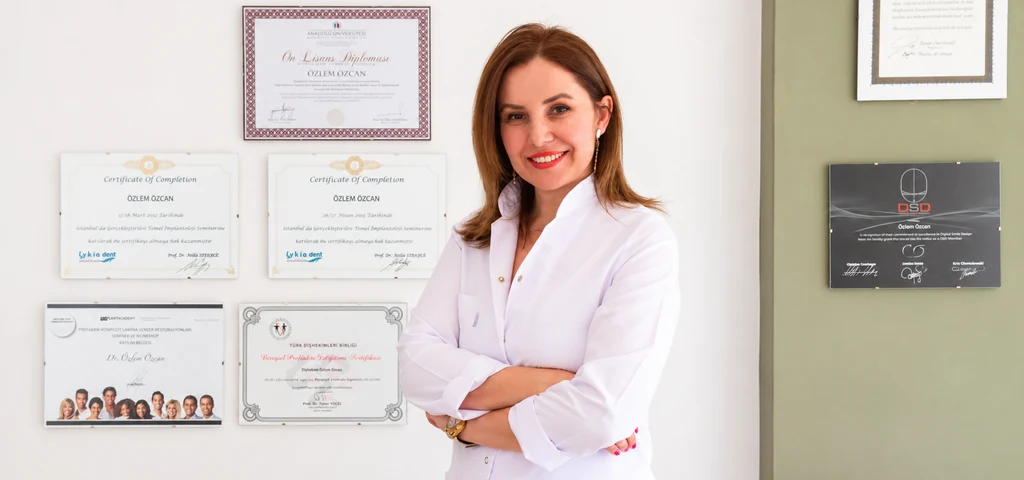
Root canal treatment removes inflamed or infected pulp from inside a tooth, cleans and shapes the root canal system, then fills and seals it so the natural tooth can remain in function. It may be needed after deep decay, a crack, trauma, repeated dental treatment or infection around the root. The decision cannot be made from pain alone: some painful teeth do not need a root canal, while some teeth with a dead pulp cause few symptoms. At her clinic in Istanbul, Dt. Özlem Özcan assesses the diagnosis, whether the tooth can be predictably restored and what final filling, onlay or crown will protect it after endodontic treatment.
Diagnosis, infection control and restoration planned as one treatment pathway
For patients considering root canal treatment in Turkey, saving the tooth involves more than cleaning its canals. The remaining tooth structure, periodontal support, crack pattern and quality of the final restoration strongly influence the long-term result. Treatment should not be started without considering whether the tooth is restorable, and it should not be regarded as complete while the tooth remains under an inadequate temporary filling. This guide explains diagnosis, treatment stages, discomfort, retreatment, restoration and travel planning in Istanbul.
What is the dental pulp?
The pulp is the soft tissue inside the tooth containing nerves, blood vessels and connective tissue. It occupies the central chamber and narrow canals extending through the roots. The surrounding dentine and enamel protect it, but deep decay, fractures, trauma or previous restorative procedures can allow inflammation or bacterial infection to develop.
Inflamed pulp may initially respond strongly to cold, heat or biting. When inflammation becomes irreversible, the tissue cannot recover simply by placing a filling over the tooth. If the pulp dies, sensitivity can reduce even while infection develops around the root. This is why the absence of pain does not prove that a tooth is healthy.
Root canal treatment treats the space inside the tooth; it does not remove the root or make the tooth an implant. The tooth remains connected to the jaw through its root and periodontal ligament. After treatment, it no longer contains vital pulp tissue, but the tissues around the root still provide sensation, so pressure and biting can be felt.
Why might root canal treatment be needed?
Common causes include deep decay reaching or approaching the pulp, a crack or fracture, trauma, a leaking or extensive restoration and repeated procedures that have stressed the pulp. Infection can also persist or return in a tooth that previously received root canal treatment. Occasionally, planned restorative treatment reveals pulpal disease that needs management before a definitive crown or bridge.
Symptoms can include spontaneous toothache, lingering sensitivity to hot or cold, pain on biting, tenderness, swelling, a pimple-like drainage point on the gum or darkening of a tooth. These signs are not specific enough for self-diagnosis. Sinus problems, gum disease, jaw muscles, cracked teeth and neighbouring teeth can produce similar pain.
A tooth with a dead pulp can remain silent until a radiograph shows a change around the root or an acute infection develops. Conversely, brief cold sensitivity can arise from exposed dentine and may not require endodontic treatment. Clinical tests and imaging connect the symptom to the correct tooth and diagnosis.
How is the diagnosis made?
Diagnosis begins with a detailed history: where the pain occurs, what triggers it, how long it lasts and whether there has been trauma, swelling or previous treatment. The dentist examines decay, fillings, cracks, gum condition and bite. Tapping, palpation, mobility and periodontal probing can reveal inflammation or a deep isolated defect associated with a crack.
Pulp sensibility tests use cold, heat or electrical stimuli to compare the suspected tooth with control teeth. They measure a response rather than directly measuring blood supply, so results are interpreted with symptoms and other findings. Local anaesthetic tests or selective biting tests can sometimes help locate difficult pain.
Dental radiographs show root anatomy, existing root fillings, decay, bone around the roots and certain treatment complications. Early inflammation does not always appear radiographically. Three-dimensional imaging may be indicated for complex anatomy, suspected fractures, resorption or retreatment planning, but it is not required for every routine case.
A sound diagnosis identifies both pulpal and apical conditions and asks a separate question: can the tooth be restored after treatment? Severe structural loss, an unfavourable vertical root fracture, deep decay that cannot be isolated or hopeless periodontal support can make extraction more appropriate even if the canals could technically be treated.

Root canal treatment or extraction?
Root canal treatment aims to preserve the natural tooth. Keeping a maintainable tooth avoids creating a missing space and can retain natural periodontal sensation. However, saving a tooth is worthwhile only when infection can be managed and enough tooth and periodontal support remain for a durable restoration.
Extraction removes the tooth and infection source but creates a new restorative decision. The space may be managed with an implant, bridge, removable partial denture or monitoring, depending on location and bite. Each replacement has surgical, tooth-preparation, maintenance and financial implications. Extraction can be the correct choice for an unrestorable tooth, but it should not be presented as a simpler equivalent without considering the complete replacement pathway.
The comparison includes crack extent, remaining tooth structure, bone support, previous treatment quality, strategic value of the tooth, expected restoration and patient preference. A questionable tooth may require consultation with an endodontic or restorative specialist. No responsible clinician can guarantee that every tooth will be saved or that every implant will avoid complications.
| Consideration | Root canal and restoration | Extraction and replacement |
|---|---|---|
| Natural tooth | Retained if the tooth is restorable | Removed permanently |
| Structural requirement | Needs sufficient root, periodontal and coronal support | Replacement depends on bone, adjacent teeth and prosthetic design |
| Treatment stages | Endodontic treatment followed by a definitive restoration | Extraction, healing and possible implant, bridge or denture stages |
| Future risks | Persistent infection, fracture, decay or restorative failure | Surgical, implant, bridge or removable-prosthesis complications |
| Maintenance | Daily cleaning and protection of the restored tooth | Care specific to the chosen replacement or monitored space |
What happens during root canal treatment?
1. Anaesthesia and isolation
Local anaesthesia is used where appropriate, and the tooth is isolated—commonly with a rubber dam—to keep the field dry and reduce contamination. An inflamed tooth can occasionally be harder to numb, so additional anaesthetic techniques may be required. Patients should tell the dentist if they feel discomfort rather than assuming they must tolerate it.
2. Access to the pulp chamber
An opening is made through the biting or inner surface of the tooth to reach the pulp chamber and canal entrances. Existing fillings, crowns or decay may need to be removed or accessed. The clinician inspects for cracks, additional canals and whether the tooth remains restorable.
3. Cleaning and shaping
Small instruments and disinfecting solutions are used to remove tissue, reduce microbes and shape the canal system. Working length is established so treatment extends appropriately through the roots without unnecessary damage beyond them. Root canal anatomy is complex, with fins, curves and accessory spaces that cannot be treated by instruments alone, which is why irrigation is essential.
4. Medication or temporary sealing when required
Some teeth can be filled in one visit; others benefit from medication inside the canals and a temporary restoration between appointments. Active drainage, complex anatomy, retreatment, symptoms and scheduling can influence the number of visits. One visit is not automatically better or worse than multiple visits.
5. Filling the canals
When the canals are ready, they are filled with an endodontic material and sealer to occupy the prepared space. The access opening is then sealed temporarily or permanently depending on the restorative plan. A well-sealed coronal restoration is important because leakage from the mouth can compromise the treated system.
6. Definitive restoration
The tooth is restored with a filling, onlay or crown based on remaining structure, tooth position and bite. Back teeth with weakened cusps often need coverage, but not every root-treated tooth receives the same restoration. Delaying the final restoration can leave the tooth vulnerable to fracture or contamination.
7. Review
Symptoms and healing are monitored clinically and, where indicated, radiographically. Bone changes around the root can take time to resolve. Absence of pain is encouraging but is not the only outcome; function, restoration quality and tissue healing are also evaluated.
Does root canal treatment hurt?
Root canal treatment is performed to relieve pain caused by inflamed or infected pulp. Local anaesthesia usually makes the procedure manageable, but the experience varies with the tooth, severity of inflammation and individual response. Promising that every case is completely painless is inappropriate; the clinician should instead explain how comfort will be assessed and managed.
Mild tenderness when biting can occur for several days after treatment because tissues around the root have been inflamed and instrumented. The temporary filling may also feel different. Patients should follow the medication instructions provided and avoid chewing hard foods on an incompletely restored tooth.
Severe or increasing pain, visible swelling, fever, difficulty swallowing or breathing, an uneven bite or loss of a temporary restoration requires contact with a dentist. Facial swelling with breathing or swallowing difficulty is urgent and should not wait for a scheduled flight or routine review.
Will the tooth need a crown afterwards?
The need for a crown depends on the tooth and remaining structure rather than root canal treatment alone. Posterior teeth often have large decay or fillings and are exposed to substantial forces, making cuspal coverage important. Some can be restored with an onlay or endocrown design, while others need a conventional crown. A relatively intact front tooth may be restored more conservatively.
Root-treated teeth are not automatically brittle solely because the pulp was removed. Their fracture risk is strongly related to the amount of structure lost through decay, cracks, previous restorations and access. Preserving cervical tooth structure and creating an appropriate definitive restoration are central to survival.
A post is not routinely required. It is used to retain a core when too little coronal structure remains; it does not reinforce a weak root. Post preparation removes root filling and dentine, so its benefit and risks are assessed individually. The final crown or onlay must also be designed around bite and ferrule—the band of sound tooth structure engaged by the restoration.
Patients can review Dental Crowns in Turkey for material and preparation details, Dental Fillings in Turkey for direct restorative options and Porcelain Crowns in Turkey for ceramic alternatives. The restorative plan should be discussed before or during endodontic treatment, not left as an unrelated future decision.
When is root canal retreatment considered?
A previously treated tooth can remain painful or develop new disease months or years later. Causes can include untreated anatomy, persistent bacteria, leakage, new decay, a loose or fractured restoration, procedural complications or a crack. Symptoms and radiographic findings are interpreted together because not every radiographic change or discomfort has the same cause.
During nonsurgical retreatment, the restoration and previous root filling are accessed and removed where possible. The canals are re-cleaned, disinfected and filled. Posts, crowns or separated instruments can make access more complex and may require specialist equipment. In selected cases, endodontic surgery treats the root end when conventional retreatment is unsuitable or has not resolved disease.
Retreatment is not always possible or appropriate. A vertical root fracture, severe structural loss, non-restorable decay or poor periodontal support may make extraction the better option. Patients should understand the prognosis of both the endodontic procedure and the tooth that must support a new restoration.
Cracked teeth and endodontic treatment
A cracked tooth can produce sharp pain on biting or release, intermittent temperature sensitivity or symptoms that are difficult to locate. The crack may involve only enamel and dentine, extend into the pulp or continue below the gum and along the root. Root canal treatment can address pulpal inflammation or infection, but it does not physically erase or fuse the crack.
The prognosis depends on crack direction, depth, mobility of tooth segments, periodontal probing and how much sound structure can be protected by a restoration. A crack limited to the crown may be managed with endodontic treatment and cuspal coverage when indicated. A vertical root fracture or a crack extending unfavourably below the supporting tissues may make the tooth unrestorable.
Because cracks can be difficult to visualise, diagnosis may involve magnification, transillumination, staining, bite tests, removal of old restorations and three-dimensional imaging in selected cases. Even after careful assessment, the full extent can become clear only during treatment. Patients should understand this uncertainty before committing to root canal and crown procedures.
Calcified, curved and complex root canals
Root canal systems vary. Some teeth have additional canals, severe curves, narrow or calcified pathways and previous restorative obstructions. Trauma and ageing can cause the pulp space to narrow. Calcification does not automatically mean disease, but it can make treatment more technically demanding when endodontic access becomes necessary.
Magnification, illumination, electronic length measurement, flexible instruments, ultrasonic techniques and appropriate imaging can assist complex treatment. These tools support clinical judgement but do not guarantee that every canal can be located or negotiated without complication. Excessive removal of tooth structure in search of a canal can weaken the tooth or cause perforation.
When anatomy, previous treatment or procedural complications exceed the reasonable scope of routine care, referral to an endodontist may be appropriate. Referral is not a failure; it is part of selecting the level of expertise and equipment required for the tooth. The restorative plan and prognosis still need coordination after specialist treatment.
Medical history, pregnancy and dental radiographs
Patients should disclose pregnancy, allergies, heart conditions, immune disorders, diabetes, bleeding problems and all medicines. Most medical conditions do not automatically prevent necessary endodontic care, but they can affect appointment planning, anaesthetic choice, prescriptions and communication with the patient’s physician.
Urgent dental infection should not be ignored during pregnancy. Necessary dental assessment and treatment can be planned with appropriate precautions, while elective timing may be coordinated individually. Dental radiographs are taken only when clinically justified and with measures appropriate to current standards. A remote assumption that imaging is either always required or always forbidden is not a substitute for individual risk-benefit assessment.
Antibiotics and dental infection
Antibiotics do not clean an infected root canal or replace drainage and dental treatment. Localised pulpal or apical disease is generally managed by treating the tooth. Antibiotics may be indicated when there are signs of spreading infection, systemic involvement or specific medical considerations, based on clinical assessment.
Taking leftover antibiotics, sharing medication or delaying treatment because pain temporarily improves can allow the source to persist. Unnecessary use also contributes to adverse reactions and antimicrobial resistance. Patients should use medicines only as prescribed and complete or stop them according to the clinician’s instructions.
Planning root canal treatment in Istanbul from abroad
Patients travelling with tooth pain should not rely on a photograph-based diagnosis. Recent radiographs, a description of symptoms, previous root canal records and information about swelling or medication can help prepare an appointment. Clinical tests and new imaging may still be required. If swelling is rapidly spreading, fever is present or swallowing or breathing is affected, urgent local care should be sought rather than waiting to travel.
Treatment may require one or more appointments, followed by a definitive filling, onlay or crown. Complex molar anatomy, retreatment, drainage, persistent symptoms and laboratory restoration stages can extend the schedule. International patients should avoid booking departure immediately after the last possible treatment slot and should leave time for bite and symptom review.
Before returning home, patients should receive information about which tooth was treated, whether treatment is complete, the type of temporary or definitive restoration and when follow-up is required. If the final crown cannot be completed in Istanbul, the temporary phase and required timeline should be communicated clearly to the dentist who will continue care.
Information to provide before the appointment
- The location, triggers, duration and severity of pain
- Any swelling, drainage, fever, bad taste or difficulty biting
- Recent radiographs and details of previous root canal or crown treatment
- A history of trauma, cracks or repeated restoration failure
- Medical conditions, allergies and all current medicines
- Antibiotics or pain medicines recently taken and the response
Risks and limitations
Possible complications include post-treatment pain, persistent infection, missed anatomy, instrument separation, perforation, ledging, difficulty reaching calcified canals, extrusion of material and fracture of the tooth. Complex anatomy or previous treatment can increase difficulty. A procedure can be technically completed yet fail to heal, and further treatment or extraction may be required.
The tooth remains susceptible to decay and structural fracture. A leaking or delayed restoration can compromise treatment. Gum and bone support also influence survival. Root canal treatment cannot repair an unfavourable vertical root fracture or replace missing tooth structure without restorative care.
No percentage can guarantee the outcome for an individual tooth. Prognosis depends on diagnosis, anatomy, microbial control, procedural quality, periodontal health, remaining structure and final restoration. These factors should be explained without using fear to push extraction or certainty to sell treatment.
Aftercare and protecting the treated tooth
Avoid chewing hard foods on a tooth with a temporary filling or incomplete restoration. Brush normally but carefully, and maintain cleaning between teeth unless instructed otherwise. If the bite feels high, request adjustment because repeated heavy contact can prolong tenderness and stress the tooth.
Complete the definitive restoration within the advised timeframe. Attend follow-up when requested, even if the tooth feels comfortable, because healing around the root may need radiographic review. Routine examinations remain necessary to detect decay, cracks and restoration problems.
Contact a dentist for increasing pain, pressure lasting more than a few days, swelling, return of previous symptoms, loss of the temporary restoration or an allergic reaction to medication. Urgent medical or dental assessment is needed for rapidly spreading facial swelling, breathing or swallowing difficulty or severe systemic illness.
Frequently asked questions
Does tooth pain always mean I need a root canal?
No. Sensitivity, cracks, gum problems, bite trauma and referred pain can mimic pulpal disease. Diagnosis uses symptom history, clinical tests and imaging. Some teeth that need root canal treatment may have little or no pain.
Is the tooth nerve removed during treatment?
The inflamed or infected pulp tissue, which contains nerves and blood vessels, is removed from inside the tooth. The root remains in the jaw, and surrounding tissues continue to provide pressure sensation.
How many appointments are needed?
Some cases can be completed in one visit, while others require medication and a temporary seal between appointments. Tooth type, infection, anatomy, retreatment and restorative planning influence the number of visits.
Is root canal treatment painful?
Local anaesthesia is used and treatment aims to relieve pain. The experience varies, and additional anaesthetic methods may be needed for highly inflamed teeth. Mild tenderness after treatment is possible.
Do I need antibiotics after a root canal?
Not routinely. Antibiotics do not replace cleaning and sealing the root canal. They may be prescribed for spreading infection, systemic signs or specific medical indications after clinical assessment.
Does every root-treated tooth need a crown?
No. The definitive restoration depends on tooth position, remaining structure, cracks and bite. Many posterior teeth need cuspal coverage, while selected front teeth can be restored more conservatively.
Can a root canal-treated tooth become infected again?
Yes. Persistent bacteria, untreated anatomy, leakage, new decay, restoration failure or cracks can cause continuing or new disease. Retreatment, surgery or extraction may be considered depending on the cause and restorability.
How long does a root canal-treated tooth last?
There is no fixed lifespan. Many treated teeth remain functional for long periods, but periodontal health, remaining structure, restoration quality, cracks, decay risk and follow-up affect survival.
Can I fly after root canal treatment?
Flying is not usually restricted after uncomplicated treatment, but symptoms, swelling, temporary restorations and incomplete treatment matter. Leave time for review and seek individual advice, particularly after treatment of an acute infection.
When should I seek urgent help?
Seek urgent care for rapidly increasing facial swelling, fever with worsening dental infection, difficulty swallowing or breathing or severe systemic illness. Do not wait for a scheduled trip when these warning signs are present.
Requesting a root canal consultation in Istanbul
If you are considering root canal treatment in Istanbul, contact Dt. Özlem Özcan’s clinic with your symptoms, recent radiographs and details of previous fillings, crowns or endodontic treatment. A preliminary exchange can help prepare the appointment, but the diagnosis, restorability, treatment stages and final restoration are confirmed after clinical assessment.
The goal is not simply to fill canals; it is to keep a treatable tooth healthy, sealed and functional. The consultation should address both infection control and the restoration that will protect the remaining tooth after treatment.