

Laminate Veneers in Turkey
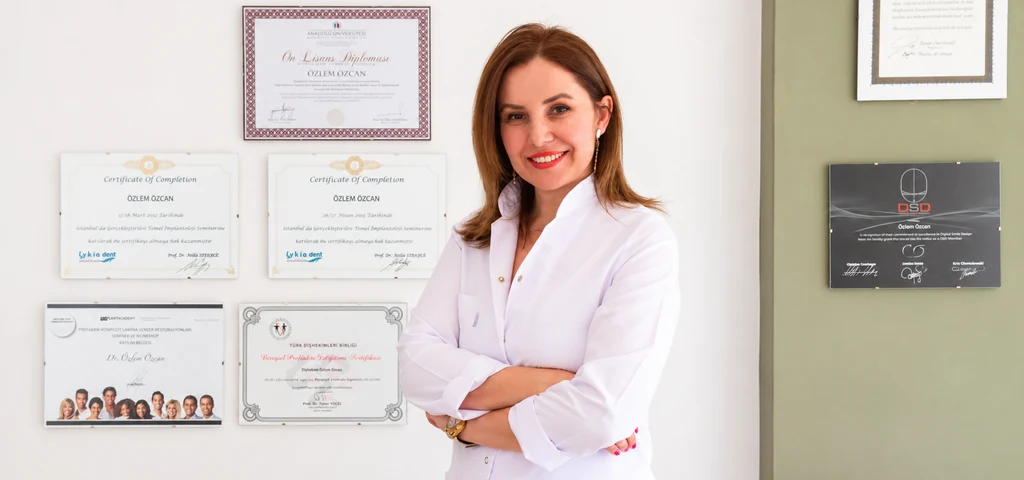
Laminate veneers are thin, individually made ceramic restorations bonded mainly to the front surface of selected teeth to change their colour, shape, proportion or visible alignment. They can provide a natural-looking result when the teeth are suitable, the design respects the face and bite, and preparation is kept within a carefully planned range. They are not the right answer for every cosmetic concern, and they should not be presented as a standard package involving the same number of teeth for every patient. At her clinic in Istanbul, Dt. Özlem Özcan assesses the condition of each tooth, gum health, enamel, bite and the patient’s expectations before recommending veneers or a more conservative alternative.
Veneer planning based on enamel, preparation, bite and individual goals
For patients considering laminate veneers in Turkey, the central decision is not simply which shade or ceramic to choose. It is whether veneers are clinically appropriate, how much tooth structure would need to be altered, which teeth genuinely require treatment and whether whitening, composite bonding or orthodontics could achieve the goal with less intervention. This guide explains those decisions, the stages of treatment and the practical considerations for patients travelling to Istanbul.

What is a laminate veneer?
A laminate veneer is a thin layer of dental ceramic made to cover the visible surface of a tooth. Unlike a crown, it does not normally surround the entire tooth. The restoration is produced outside the mouth from clinical records and is bonded to the prepared or, in carefully selected cases, minimally altered tooth surface. The terms porcelain veneer, ceramic veneer and laminate veneer are often used in similar ways, although the precise ceramic and design can differ.
The word “thin” can be misleading if it is interpreted as meaning no clinical planning is required. A veneer needs enough space to reproduce natural contours without making the tooth look bulky. It also needs an appropriate bonding surface, controlled margins and a design compatible with biting forces. Some teeth permit an additive or very limited-preparation approach. Others require measured reduction to correct position, provide space for ceramic or mask discolouration. If a tooth is too far forward, severely damaged or mostly restored, a veneer may not be the most responsible option.
Veneers are usually considered for visible front teeth. They may be used on one tooth to improve a local defect or on several teeth when colour and proportions need to be coordinated. The number is not decided by a preset “smile package.” It depends on how many teeth show during speech and smiling, where the concern is located, whether untreated teeth can be blended into the result and what the patient wishes to change.
What can porcelain veneers change?
Laminate veneers may be considered for teeth with persistent discolouration that cannot be managed satisfactorily with whitening, small chips, worn or uneven edges, unfavourable proportions, selected gaps or mild shape and position discrepancies. They can also replace older veneers when replacement is clinically justified. The aim is to alter the visible surface while retaining more natural tooth structure than would generally be removed for a full crown.
Veneers do not treat active decay, gum disease, infection or the cause of continuing tooth wear. They cannot move tooth roots in the way orthodontic treatment does. A veneer can visually mask a limited positional irregularity, but using ceramic to camouflage significant crowding may require excessive preparation or create difficult contours. Likewise, covering a dark tooth without investigating why it changed colour can miss a pulpal or structural problem. Cosmetic appearance must be connected to diagnosis.
Not every requested change is achievable with a thin restoration. Very dark underlying colour may require a more opaque material strategy, which can affect translucency. A severely fractured tooth may need a different restoration. Large existing fillings reduce the amount of intact enamel available for bonding. A deep bite or uncontrolled grinding can place veneers under unfavourable forces. These factors do not create a single automatic rule, but they change the balance of benefits and risks.
Who may be suitable for laminate veneers?
A potential candidate generally has a clear aesthetic concern, stable oral health, realistic expectations and enough sound tooth structure for a predictable adhesive approach. The gums should be healthy or treated before definitive records are taken. Decay and infection must be managed. The patient should be able to maintain daily plaque control and attend long-term dental reviews.
Enamel is particularly important because ceramic veneers perform most predictably when bonding can be maintained mainly to enamel. This is one reason preparation should be planned rather than improvised. Existing restorations, tooth position, the desired colour change and previous wear can limit how much enamel remains. A dentist cannot determine this accurately from a holiday photograph or a short video consultation.
Additional caution may be required for patients with heavy grinding, a deep overbite, severe crowding, active gum disease, poor hygiene, high decay risk or insufficient enamel. Some concerns may first need orthodontics, gum treatment, bite management or replacement of disease-damaged tooth structure. Suitability is assessed tooth by tooth; one person may be suitable for veneers on some teeth and better served by bonding, a crown or no restoration on others.
Laminate veneers, composite bonding or crowns?
| Option | Coverage and purpose | Potential advantage | Important consideration |
|---|---|---|---|
| Laminate veneer | Thin ceramic bonded mainly to the visible surface to change colour or form | Controlled shape, colour and surface with less coverage than a crown | Usually irreversible and dependent on appropriate enamel, preparation and bite |
| Composite bonding | Tooth-coloured resin added directly to selected areas | Often more additive, adjustable and repairable | More prone to staining, wear and edge chipping than ceramic |
| Dental crown | Restoration covering the prepared tooth around its circumference | Can restore a tooth that is extensively weakened, filled or fractured | Generally requires more tooth reduction and should not replace a veneer simply for convenience |
| Orthodontics | Moves teeth and roots into a different position | Can correct alignment while preserving intact tooth surfaces | Requires time, monitoring and retention rather than an immediate shape change |
| Whitening | Lightens responsive natural tooth structure | Changes colour without covering the tooth | Cannot alter shape and does not whiten existing restorations |
These options are not competitors in every case; they can be sequenced. Orthodontics may place teeth in a position that reduces preparation. Whitening may improve the background shade before final ceramic colour is selected. Composite bonding may be sufficient for one small edge while veneers are reserved for teeth with a different indication. A heavily restored tooth within the same smile may require a crown even when neighbouring teeth receive veneers.
Patients comparing options can read the dedicated guides to composite bonding in Turkey, dental crowns in Istanbul and professional teeth whitening. The separate guide Veneers or Crowns in Turkey: Which Do I Need? explains why tooth condition, rather than appearance alone, determines the choice.
How much tooth preparation do veneers require?
There is no honest universal answer in millimetres before the teeth have been examined and the intended result has been designed. Preparation can vary across different teeth and even across different parts of the same tooth. The starting position, final contour, ceramic space, degree of discolouration, existing fillings and planned edge changes all matter. The clinical goal is to create the space and margin needed for the selected design while preserving enamel whenever reasonably possible.
“No-prep veneers” are not a separate solution suitable for everyone. An additive approach may work when teeth are small, positioned slightly inward or when the proposed change naturally adds volume. Placing ceramic over a tooth that is already prominent can make it overcontoured, affect the way the lips sit, create unnatural emergence near the gums or make cleaning difficult. Conversely, aggressive preparation can reduce enamel and move bonding into dentine, changing the risk profile.
Dt. Özlem Özcan evaluates preparation in relation to the planned final tooth, not as an isolated drilling step. Photographs, scans or impressions and a diagnostic design can help show where material needs to be added and whether reduction is necessary. Patients should be told that most conventional veneer treatment is irreversible and that the teeth are likely to require restorations and maintenance in the future.
Planning a natural veneer result
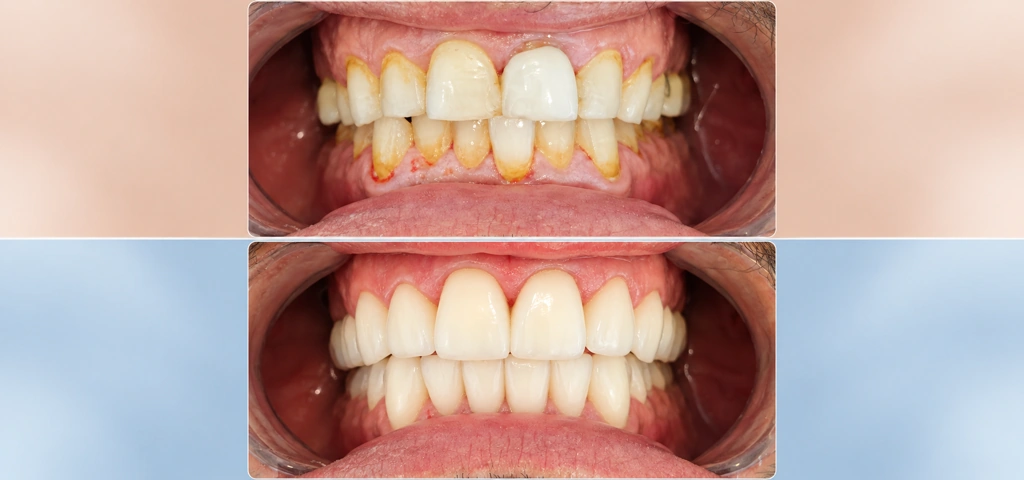
Natural appearance depends on more than selecting a white shade. Tooth length, width, edge position, line angles, surface texture, translucency and the amount of tooth shown at rest and in a full smile all influence the result. Gum levels and lip movement form the frame around the restorations. The design should also preserve individual variation; perfectly identical teeth can look less natural than a coordinated smile with subtle differences.
Shade selection considers the untreated neighbouring teeth, the underlying tooth colour, ceramic thickness and the cement used during bonding. A translucent veneer can interact with enamel in a lifelike way, but it may not mask a very dark substrate. Increasing opacity may help control colour while changing how light behaves. This is why the material decision cannot be separated from preparation and the starting shade.
A mock-up or provisional stage may help the patient and dentist evaluate proportions, smile width, tooth display and speech before final ceramic is bonded. It is useful for communication but should not be sold as a guarantee that eliminates every difference between a preview and the final restoration. The final result still depends on clinical conditions, ceramic fabrication, bonding and the behaviour of light in the mouth.
Patients often arrive with reference photographs. These can clarify whether they prefer softer edges, stronger symmetry, visible texture or a brighter shade. They cannot be copied literally because face shape, lips, gums, bite and natural teeth differ. A better aim is to translate the preferred characteristics into a design suited to the individual.
Two retained resources on the site examine this topic in more detail: What Makes a Natural Smile? and Why Some Veneers Look Fake—and How to Avoid It.
What happens during laminate veneer treatment?
1. Consultation and diagnostic assessment
The process begins with the patient’s concerns and priorities. The clinical examination checks teeth, existing fillings, gums, bite and visible smile dynamics. Photographs, radiographs where indicated and digital or conventional records support diagnosis. If there is unexplained discolouration, previous trauma, sensitivity or a questionable old restoration, further testing may be necessary before cosmetic treatment is planned.
2. Stabilising oral health
Active decay, infection and gum inflammation are treated before definitive veneers. Whitening, orthodontics or gum care may be considered first when they improve the final plan. If the patient grinds or has significant wear, the cause and available restorative space need assessment. Moving directly to ceramic without stabilising these factors can compromise margins, bonding or function.
3. Design and informed consent
The planned tooth shapes, number of veneers, shade direction and alternatives are discussed. Where useful, a diagnostic wax-up, digital design or mock-up can support communication. The patient should understand which teeth will be prepared, the anticipated amount of alteration, whether local anaesthesia is expected, the role of temporary restorations and the possibility of future repair or replacement.
4. Tooth preparation and records
When preparation is required, it is carried out according to the planned contours and the condition of each tooth. The teeth are recorded with a scan or impression for the dental laboratory. Shade information and clinical photographs may also be provided. Temporary veneers can protect prepared surfaces and help maintain appearance while definitive restorations are produced, although their texture and colour are not identical to final ceramic.
5. Evaluation and bonding
Before bonding, the veneers are evaluated for fit, margins, colour, shape and their relationship to neighbouring teeth. The teeth and ceramic surfaces are conditioned according to the selected materials and adhesive protocol. Once bonded, the margins are finished and the bite is checked in different movements. Bonding is a technique-sensitive stage; moisture control and correct surface treatment matter.
6. Review and maintenance plan
A review allows the gums, comfort, bite and cleaning access to be reassessed. The dentist explains daily care and whether a protective appliance is advisable. International patients should know how to contact the clinic and should maintain regular examinations with a dentist where they live.
How many veneers might I need?
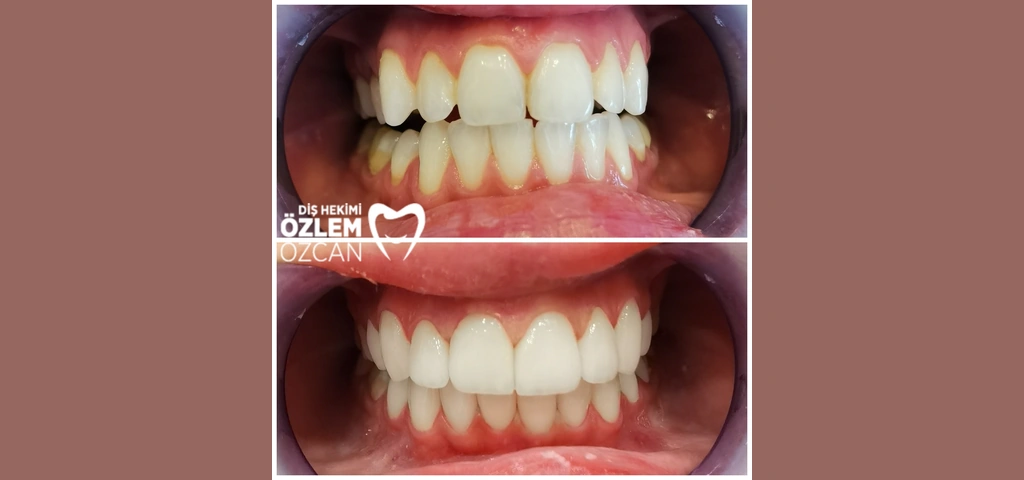
The appropriate number is the number required to address the agreed concern while allowing untreated teeth to remain harmonious. One discoloured or malformed tooth may need one restoration, although matching a single front veneer to neighbouring natural teeth can be technically demanding. A broader design may involve the teeth visible in the patient’s smile, but smile display varies widely. Some people show six upper teeth; others show ten or more, particularly in side views and during speech.
Midline, tooth proportions, existing restorations, colour difference and the transition between treated and untreated teeth influence the decision. Lower teeth are not automatically included. Nor must every visible tooth receive ceramic merely to make the case symmetrical. A clinical design can show where the aesthetic transition will occur and whether whitening or bonding can help untreated teeth blend naturally.
The detailed guide How Many Veneers Do I Need? 8, 10, 16 or 20? explains why the answer should follow smile analysis rather than a standard sales bundle.
Planning veneer treatment in Istanbul from abroad
A remote exchange can help Dt. Özlem Özcan understand the main concern and identify records to bring, but it cannot confirm suitability or a final schedule. Patients should send clear photographs, available recent radiographs, relevant dental history and accurate information about medical conditions, medicines, allergies, smoking or nicotine use, grinding and previous cosmetic treatment. Any pain, swelling, mobility or recent trauma should be disclosed before travel.
The duration and number of visits depend on the condition of the teeth, number of restorations, preliminary treatment, laboratory stages and whether the provisional phase requires adjustment. A plan may change after examination if decay, gum disease, insufficient enamel, an unfavourable bite or a structurally compromised tooth is discovered. Flights and accommodation should therefore allow clinical flexibility rather than being built around an unverified promise of completion.
Patients should ask how many clinical appointments are expected, when preparation and bonding are planned, whether temporary veneers will be used and when a final review can occur. After returning home, routine preventive care continues with a local dentist. Remote messages cannot replace an examination if pain, swelling, fracture, looseness or a significant bite change develops.
What to send before travelling
- Full-face photographs at rest and smiling, plus clear close-up views of the teeth
- Recent dental radiographs and treatment notes if available
- A description of previous veneers, crowns, root canal treatment or trauma
- Medical conditions, regular medicines, allergies and nicotine use
- Information about grinding, clenching, jaw discomfort or broken restorations
- Your available dates, understood as travel information rather than a guaranteed clinical timetable
Risks and limitations to understand
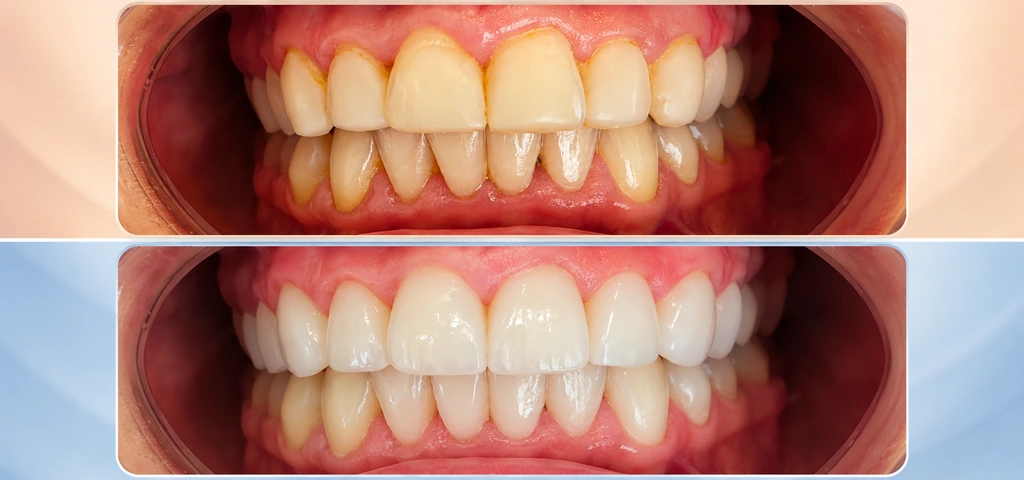
Veneer treatment is usually irreversible when enamel is removed. Possible complications include sensitivity, gum irritation, colour or contour dissatisfaction, chipping, fracture, debonding, marginal staining and the later need for repair or replacement. A tooth can still develop decay near a veneer margin. Gum recession may expose the transition between tooth and restoration. Although ceramic is colour-stable, surrounding natural teeth and composite restorations can change over time.
Some complications can be managed by polishing, repair or rebonding; others require a new restoration. A veneer does not make the underlying tooth immune to future disease, trauma or pulpal problems. A tooth may occasionally require root canal treatment later for reasons related to its original condition, previous trauma, decay or restorative history. It is inappropriate to promise that this can never occur.
Grinding and clenching increase mechanical demands. The bite, ceramic design and patient habits should be considered before treatment, and a protective night appliance may be advised. An appliance can reduce some risks but does not guarantee that porcelain will never chip. Patients who bite nails, pens, ice or very hard foods should understand the additional load these habits place on thin restorations.
How to care for porcelain veneers
Veneers are cleaned like natural teeth: brush thoroughly with fluoride toothpaste and clean between the teeth every day. Technique matters around the gum margins, where plaque can cause inflammation or decay. Abrasive products should not be used in an attempt to polish ceramic at home. Professional cleaning should be performed with awareness of the restorations and their margins.
Regular dental examinations are needed to assess the teeth, gums, bite and restorations. The interval is based on individual risk rather than the country where treatment was completed. Use any retainer or protective appliance as instructed. Do not use veneered teeth to tear packaging or bite hard objects. Contact a dentist if a veneer feels mobile, the bite changes, a margin feels rough, sensitivity persists or part of the restoration fractures.
Whitening does not lighten porcelain veneers. If natural teeth are whitened after veneers are placed, a mismatch may develop. This is why any appropriate whitening is normally discussed before the final ceramic shade is selected. Tea, coffee and smoking may stain natural teeth and surface deposits even when the ceramic itself remains comparatively colour-stable.
Frequently asked questions
Are laminate veneers the same as porcelain veneers?
The terms are commonly used for thin ceramic restorations bonded to the visible surface of teeth. “Laminate” describes the layered covering concept, while porcelain or ceramic refers to the material family. The precise material, thickness and preparation design should be explained for the individual case.
Can I have veneers without shaving my teeth?
Sometimes an additive or no-preparation design is possible, particularly when teeth are small or positioned to allow added volume. It cannot be promised before examination and design. Adding material to prominent or normally sized teeth may create bulky contours, so limited preparation may be necessary for a natural, cleanable result.
Are teeth filed down to pegs for veneers?
Conventional veneers are different from full crowns and are intended to cover mainly the front surface. Preparation varies, but reducing teeth to small pegs is not the normal concept of a laminate veneer. Patients should ask whether the proposed restorations are veneers or crowns and why that coverage is required.
Can veneers fix crooked teeth?
Veneers can visually modify mild irregularities in selected cases but do not move roots or correct the underlying alignment. Moderate or severe crowding may require orthodontics, and masking it with restorations could demand excessive tooth reduction. Examination determines whether restorative camouflage is appropriate.
Do porcelain veneers stain?
Glazed and polished ceramic is relatively resistant to external staining, but deposits can collect and natural teeth or exposed margins can change colour. Composite at margins may also discolour. Hygiene, smoking, diet and professional maintenance still influence overall appearance.
Will veneers cause sensitivity?
Temporary sensitivity can occur after preparation and bonding. Its likelihood varies with the starting condition of the tooth, the amount of preparation and individual response. Persistent or increasing sensitivity should be assessed rather than assumed to be normal.
How long do laminate veneers last?
No dentist can provide one lifespan for every veneer. Evidence shows that well-selected ceramic veneers can perform for many years, but outcomes depend on enamel support, bonding, bite, grinding, oral hygiene, decay risk, trauma and maintenance. Repair or replacement may eventually be required.
Can a veneer be repaired if it chips?
Small defects can sometimes be smoothed or repaired with composite, depending on their position and cause. Larger fractures, repeated debonding, poor fit or damage involving the underlying tooth may require replacement. The bite and cause of failure should be investigated before treatment.
Can I choose an extremely white shade?
Shade is discussed with the patient, but brightness is only one component of appearance. Opacity, translucency, skin tone, neighbouring teeth and how many teeth are treated affect the result. A very bright shade can be an informed preference, although it may appear less natural or require a different masking strategy.
Can I fly after my veneers are bonded?
Flying itself is not usually the central issue after uncomplicated veneer bonding. The more important question is whether enough time has been allowed for clinical review, bite adjustment and management of any early concern before departure. Travel advice should be based on the completed treatment and the individual’s condition.
Requesting a laminate veneer consultation in Istanbul
If you are considering laminate veneers in Istanbul, contact Dt. Özlem Özcan’s clinic with your main concern, clear photographs and any recent dental records available. This information supports an initial discussion but does not commit you to a number of veneers or a fixed treatment package. Final suitability, preparation, ceramic choice, timing and alternatives are confirmed after clinical examination and appropriate diagnostics.
A responsible veneer plan should make clear not only what will change, but also which healthy teeth can remain untouched. The consultation is the point at which appearance goals are balanced with enamel preservation, function, maintenance and long-term oral health.