

Porcelain Crowns in Turkey
A porcelain crown is a tooth-shaped ceramic restoration that covers most or all of a prepared tooth to restore its form, appearance and function. Depending on the case, it may be made entirely from ceramic or consist of porcelain layered over zirconia or metal. A crown is different from a porcelain veneer, which mainly covers the visible front surface, and from an implant crown, which replaces the visible part of a missing tooth on an implant. The correct option depends on how much healthy tooth remains, the bite, gum condition, colour and the reason treatment is being considered.
Crown planning based on tooth structure, material, bite and long-term care
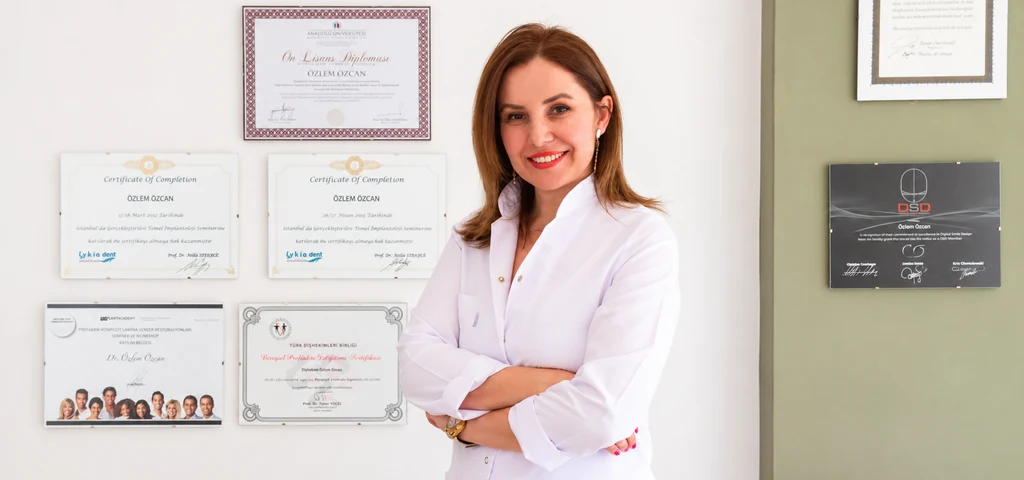
At her clinic in Şişli, Istanbul, Dt. Özlem Özcan plans porcelain crowns around tooth preservation, function and a natural relationship with the face—not around a fixed package or a predetermined number of teeth. For patients researching porcelain crowns in Turkey, accurate terminology is important because a veneer, partial restoration and full crown require very different preparation. This guide explains crown materials, suitability, treatment stages, aesthetic decisions, risks, aftercare and travel planning so that patients can give informed consent rather than choosing from a photograph alone.

What is a porcelain crown?
Porcelain is commonly used as an everyday name for dental ceramics: tooth-coloured materials shaped and fired or milled to reproduce enamel and dentine. Modern ceramic families have different optical and mechanical properties. Some are selected for high translucency and enamel-like appearance, while others provide greater strength or are used as a framework beneath layered porcelain. “Porcelain” therefore describes a material category, not a single treatment.
A restoration can be made entirely from ceramic, layered from more than one ceramic, or formed by applying porcelain over a metal or zirconia substructure. The design may be a veneer, crown, inlay, onlay or part of a bridge. Material and design must be considered together: the same ceramic is not automatically suitable for every thickness, tooth position or bite.
Patients sometimes use “porcelain teeth” to describe crowns, veneers or a complete smile makeover. Clinically, each tooth should still have its own diagnosis. One tooth may need a porcelain crown because it is structurally damaged, another may be suitable for a veneer, and a healthy neighbouring tooth may need no restoration. Treating every visible tooth identically can remove more tooth structure than necessary and may create avoidable maintenance.
Porcelain veneers, ceramic crowns and other restorations
Porcelain laminate veneers
A porcelain veneer is a thin custom-made restoration bonded mainly to the front surface of a tooth. It may change colour, contour, proportion and the appearance of small spaces or worn edges. Veneers usually preserve more tooth structure than full crowns when the tooth is otherwise healthy and its position allows a conservative design. Reliable bonding is generally most favourable when adequate enamel remains.
All-ceramic crowns
A crown covers the prepared tooth more extensively and can restore a tooth weakened by a large filling, fracture, decay, substantial wear or root canal treatment. Full coverage requires preparation around the tooth, so a crown should not be selected solely because it is easier to make teeth look aligned or uniformly white. The structural indication and expected benefit must justify the additional reduction.
Porcelain-fused-to-metal crowns
These restorations have a metal framework covered by tooth-coloured porcelain. They have a long clinical history and may remain appropriate in selected situations. Their opacity can help mask a dark foundation, but achieving enamel-like light transmission may be more difficult. If the gum recedes, a darker margin can sometimes become visible. Material selection should be based on the tooth and treatment objectives rather than assuming that newer always means better.
Zirconia-supported or monolithic restorations
Zirconia is a high-strength dental ceramic. It may be used as a framework with layered porcelain or as a monolithic crown shaped largely from one block. Different zirconia formulations vary in translucency and strength. This page focuses on porcelain crown planning; patients comparing zirconia specifically can read Zirconia Crowns in Turkey.
Ceramic inlays, onlays and overlays
These partial restorations replace damaged areas without surrounding the entire tooth. An onlay or overlay can cover weakened cusps while preserving other sound surfaces. In selected posterior teeth, this may be more conservative than a full crown. Suitability depends on the crack pattern, remaining structure, margin location, isolation for bonding and bite.
| Restoration | Coverage | Typical purpose | Key limitation |
|---|---|---|---|
| Porcelain veneer | Mainly the visible front surface | Colour, shape, proportion and selected minor positional concerns | Needs suitable enamel, bite and tooth position |
| All-ceramic crown | Most or all of the prepared clinical crown | Restore a weakened, heavily restored or substantially damaged tooth | Requires more tooth reduction than a veneer or partial restoration |
| Porcelain-fused-to-metal crown | Full coverage with a metal framework | Selected restorative and masking requirements | Metal can affect translucency and may become visible at a receded margin |
| Ceramic onlay or overlay | Damaged area and selected cusps | Rebuild a posterior tooth while preserving suitable surfaces | Requires an appropriate fracture pattern and bondable conditions |
| Implant crown | Replaces the visible tooth on an implant | Restore one missing tooth after implant integration | Does not replace the need for implant assessment and surgical healing |

When may a ceramic restoration be appropriate?
A ceramic restoration may be considered when a tooth is fractured, extensively filled, weakened by decay, worn, misshapen or persistently discoloured. It may rebuild structure after root canal treatment, replace a failing restoration or form the visible crown of an implant. In aesthetic care, porcelain can adjust shape, surface texture and light behaviour when whitening, bonding or orthodontics alone cannot meet the agreed objective.
The indication determines the least invasive suitable design. A heavily damaged molar and an intact but discoloured incisor do not need the same solution. The clinician evaluates how much enamel and dentine remain, whether cracks extend below the gum, whether the pulp is healthy and how forces are distributed. A restoration should have a clear purpose beyond making every tooth the same shade.
Patients with active decay, untreated gum disease or inadequate plaque control generally need stabilisation first. Inflamed gums make margin placement and shade communication less reliable, while uncontrolled disease threatens both the restoration and the tooth. Tooth grinding, nail biting, opening objects with teeth and other heavy-load habits may require design changes and protective measures.
When might another treatment preserve more tooth?
Professional teeth whitening may improve the colour of healthy natural teeth without preparing them, although it cannot change shape and does not whiten existing crowns or veneers. Composite bonding may repair small chips or adjust limited contours directly, often with less or no preparation, but it has different wear, staining and maintenance characteristics from ceramic.
Orthodontics can move crowded, rotated or spaced teeth rather than disguising their position with thick or extensively prepared restorations. It requires time and retention, but may preserve healthy tooth structure. In some cases, orthodontics followed by minimal bonding or veneers produces more balanced contours than restorations alone.
A direct filling or ceramic onlay may be sufficient when damage is localised. If a tooth is missing, a conventional bridge, adhesive bridge, implant or removable option may be considered; placing “porcelain” does not itself replace the root. Severely compromised teeth may require endodontic or periodontal care before restoration, and some teeth cannot be predictably restored.
The consultation should compare doing nothing or monitoring where reasonable. Minor colour, alignment or shape differences are not diseases. Elective treatment becomes more defensible when the patient understands the irreversible aspects, alternatives, maintenance and likely limitations without being pressured by a package deadline.
How is suitability assessed?
Assessment begins with the patient’s concern, expectations, dental history and previous treatment. Dt. Özlem Özcan examines tooth structure, existing fillings, cracks, decay, wear, sensitivity, gum levels and the bite. The smile is considered at rest, in speech and in natural expression rather than only in a retracted close-up photograph.
Radiographs are taken when clinically justified to assess roots, decay, bone and previous root canal treatment. Pulp vitality tests or periodontal measurements may be required. Photographs and a digital scan or impressions document shape and bite. These records can support design, but no scan can decide on its own whether enamel should be removed.
Tooth colour has several components: brightness, hue, chroma, translucency and the colour of the underlying tooth or core. A dark root-treated tooth, metal post or implant abutment can influence the material and thickness needed for masking. Adjacent natural teeth also change with hydration and lighting, so shade selection is performed under appropriate conditions and may involve the dental laboratory.
For multiple front restorations, a diagnostic wax-up or digital preview may help communicate length, width and arrangement. A trial smile or provisional stage can test speech, lip support and appearance. These tools are guides, not promises that a two-dimensional simulation will be reproduced exactly in living tissues.
Choosing the ceramic material
No ceramic is “best” for every tooth. Highly translucent ceramics can imitate enamel beautifully but may not mask a dark foundation at minimal thickness. Stronger or more opaque materials can manage heavier forces or discolouration but may require careful layering and surface characterisation to avoid a flat appearance. The final choice considers position, restoration thickness, remaining tooth, bonding surface and bite.
Lithium disilicate is an all-ceramic material commonly used for selected veneers, crowns and partial restorations because it combines useful strength with optical qualities. Feldspathic porcelain can provide fine aesthetic layering in suitable veneers but depends on case selection and bonded support. Zirconia offers higher strength, with optical properties that vary by formulation. Porcelain-fused-to-metal remains an option when its particular advantages outweigh aesthetic limitations.
Laboratory technique matters alongside the label. The ceramist manages internal colour, surface texture, translucency, incisal effects and symmetry. A branded block alone cannot create a natural result, and an unverified material claim should not replace documentation. Patients can ask which material and design are proposed for each tooth and why.
Planning a natural-looking result
Natural teeth are not uniformly white or perfectly identical. They show subtle gradients, surface texture, translucency near the edge and differences in reflection. A convincing ceramic restoration usually respects these features and the patient’s age, skin tone, lip movement and remaining teeth. The brightest available shade is not automatically the most harmonious.
Proportion is assessed in relation to gum levels, tooth width, visible length and the smile line. Overly wide restorations can close spaces but create bulky contours; excessive length can affect speech and bite; and attempting to align a severely rotated tooth with porcelain alone may require aggressive preparation. The design must fit biology as well as a photograph.
Gum architecture influences the result. If gums are inflamed, uneven or expected to recede, ceramic margins may become visible or symmetry may change. Periodontal treatment, orthodontic movement or conservative gum contouring may be discussed before final restoration. Healthy stable tissues make impressions, bonding and long-term cleaning more predictable.
A patient seeking an intentionally bright or highly symmetrical smile can express that preference, but informed planning should still show how it may appear under different lighting and beside natural teeth. Dt. Özlem Özcan’s role is to translate the patient’s goal into a result that remains cleanable, functional and proportionate—not to impose one repeated smile design.
Porcelain crown treatment step by step
1. Diagnosis and agreed objectives
Oral health, tooth structure, bite and aesthetic concerns are assessed. The plan identifies which teeth need treatment, the restoration type and alternatives. Any decay, gum inflammation, infection or unstable bite is addressed or incorporated into a coordinated plan.
2. Preview and shade planning
Photographs, scans, diagnostic designs and material samples may be used. If natural teeth will be whitened, this is usually completed before the final ceramic shade is chosen because porcelain will not bleach later. The colour should stabilise before definitive matching.
3. Tooth preparation
The amount removed depends on the restoration and starting condition. A veneer may require limited front-surface preparation; a crown requires circumferential and biting-surface reduction; an onlay targets damaged areas and selected cusps. “No-prep” is suitable only for specific tooth positions and additive designs. Adding ceramic without enough space can create bulky, uncleanable contours.
4. Scan or impression
The prepared teeth, margins, adjacent teeth and bite are recorded digitally or conventionally. Accuracy depends on controlling moisture and exposing clear margins without harming the tissues. Laboratory instructions include material, shade, shape and occlusal details.
5. Provisional restorations
Temporary restorations protect prepared teeth and allow evaluation while the laboratory produces the ceramics. They may feel and look different from the final result. Patients should follow instructions about cleaning and food, and report a lost temporary, worsening sensitivity or bite discomfort promptly.
6. Try-in
Fit, contacts, margins, shade and appearance are assessed. Veneers can look different with try-in materials because the underlying tooth and cement influence the final colour. The patient reviews the appearance before definitive bonding or cementation, while understanding that clinical fit and material handling also set practical limits.
7. Bonding or cementation
The tooth and restoration are treated according to the ceramic and adhesive protocol. Moisture control is crucial for bonded restorations. Excess cement is removed, contacts and bite are checked, and surfaces are finished. The patient receives cleaning and aftercare guidance.
8. Review
A review assesses comfort, speech, bite, gum response and cleaning. Small adjustments may be needed after the patient has used the restorations. The review is also an opportunity to establish maintenance, night-guard use where indicated and a plan for care after returning home.
How much tooth reduction is required?
There is no honest single preparation measurement for every porcelain crown. Reduction depends on existing structure, colour, crown material, required thickness and the need to create space without over-contouring. A dark foundation may require different masking space from a normally coloured tooth, while a structurally damaged tooth may already have lost substantial tissue before treatment begins.
Preservation means choosing the least invasive treatment capable of meeting the health and functional objective; it does not mean claiming every case is no-prep. Very thin ceramics cannot always mask dark teeth or correct severe position. Conversely, preparing a healthy tooth for a crown when whitening, orthodontics, bonding or a veneer would work removes tissue that cannot grow back.
Patients should ask whether each proposed restoration is a veneer, partial restoration or crown and why. Before-and-after images of tooth preparations should be interpreted carefully because the original structural condition may not be visible. Consent should occur before irreversible preparation, with the planned extent and alternatives explained.
Will treatment hurt or cause sensitivity?
Local anaesthesia is used when needed during preparation and related procedures. Pressure and vibration may be felt, but patients should tell the dentist if they are uncomfortable. Gum tissues can feel tender temporarily after impressions, retraction, bonding or cement cleanup.
Short-term sensitivity to cold can occur after tooth preparation and while wearing provisional restorations. It often settles, but severe, spontaneous or worsening pain requires assessment. Occasionally a tooth with deep previous damage or extensive preparation develops pulpal inflammation and later needs root canal treatment; a crown is not a guarantee against this biological response.
A restoration that feels high can cause biting tenderness or overload. It should be checked rather than waiting indefinitely. Persistent symptoms may also come from cracks, gum inflammation, bonding problems or another tooth, so the cause should be diagnosed before treatment is repeated.
Risks and limitations
Ceramic can chip or fracture, while the cement seal or bond can fail. The underlying tooth can still develop decay, sensitivity, pulp problems or fracture. Gum recession may expose a margin, and changes in neighbouring teeth can alter colour matching. Repairs are sometimes possible, but replacement may be necessary depending on the location and extent of damage.
Removing sound tooth structure is irreversible. Crown preparation can increase biological risk compared with a more conservative restoration when both are feasible. Veneers also involve permanent commitment when enamel is prepared. Future replacements may require additional treatment, so the first decision affects a lifetime maintenance pathway.
Heavy grinding and clenching increase stress on restorations and natural teeth. Design, material, bite adjustment and a protective night guard may reduce risk but cannot make ceramic indestructible. Patients should not bite ice, pens, fingernails or packaging, and teeth should never be used as tools.
Aesthetic limitations include difficulty masking very dark foundations at conservative thickness, differences under various light sources and the challenge of matching one restoration to aged natural teeth. Symmetry can improve, but gums, lips, jaw relationships and facial asymmetry remain relevant. No ethical plan can guarantee an exact digital image or a restoration that will last forever.
How long do porcelain restorations last?
There is no fixed expiry date and no single lifespan that applies to every veneer or crown. Longevity depends on the diagnosis, material, preparation, bond or cement, bite, laboratory quality, oral hygiene, decay risk, gum health and habits. A technically sound restoration can still fail if the supporting tooth or tissues develop disease.
Regular examinations help detect small chips, margin changes, decay and gum problems before they become more extensive. Maintenance may include professional cleaning, bite review, repair, polishing or night-guard replacement. A promise based only on a material warranty does not cover the biology of the tooth and mouth.
Aftercare for porcelain crowns
Brush twice daily with fluoride toothpaste and clean between the teeth every day using floss or interdental aids suited to the contacts and bridge design. Pay particular attention to the gum margin, where plaque accumulation can inflame tissues and contribute to decay. Ceramic itself does not decay, but the natural tooth at its edge can.
Avoid abrasive cleaning products unless recommended, as they can affect polished surfaces or neighbouring teeth. Ceramic resists many stains, but coffee, tea, tobacco and other habits still affect natural teeth, gums and surface deposits. Professional cleaning should use methods appropriate for ceramic restorations.
Whitening gel does not lighten porcelain. If natural teeth darken while restorations retain their shade, a mismatch can develop. Whitening should be professionally assessed to protect oral tissues and understand which teeth will respond. Replacing sound ceramic solely for a new shade is an irreversible and potentially avoidable cycle.
Wear a prescribed night guard consistently if grinding risk makes it appropriate. Bring it to dental reviews so fit and wear can be checked. Contact a dentist if a restoration moves, chips, feels high, becomes painful or if floss repeatedly catches or shreds at a margin.
Planning porcelain crowns in Istanbul from abroad
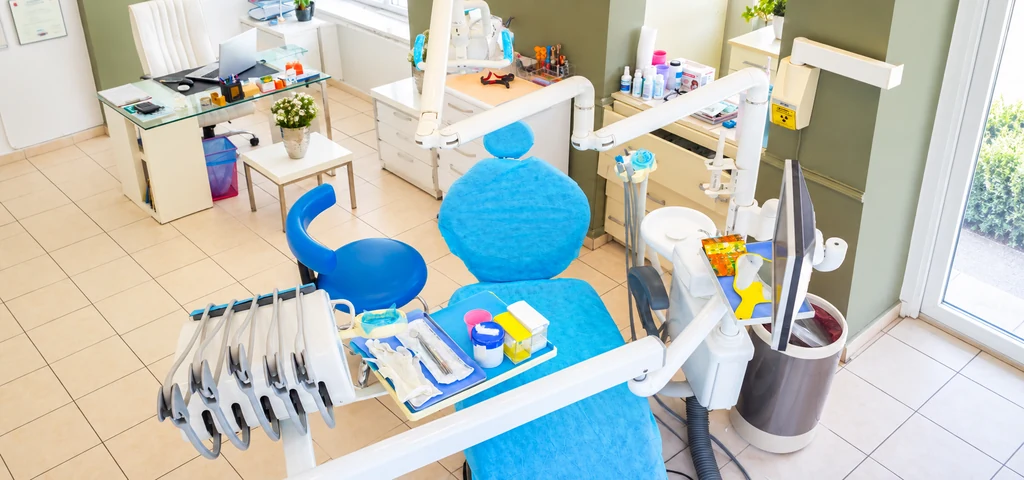
International planning can begin with clear photographs, recent radiographs and information about previous fillings, root canals, crowns, implants and gum treatment. These materials help prepare the consultation but cannot confirm the final diagnosis, restoration type or number of teeth. Clinical examination may reveal decay, cracks, bite issues or periodontal needs that change the preliminary idea.
The schedule depends on the number and type of restorations, laboratory stages, tissue health and whether other care is required. A simple restoration and a multi-tooth rehabilitation do not follow the same timeline. Additional visits may be needed for gum stabilisation, root canal treatment, implant healing, shade correction, remakes or review. Flights should not be booked around an unverified promise of completion.
Allow time after fitting for a clinical review rather than departing immediately after cementation. Ask how urgent adjustments, provisional problems or laboratory changes will be managed. Before leaving Istanbul, obtain a treatment summary identifying the restored teeth, materials, implant components where relevant and aftercare recommendations.
Long-term care continues at home. Patients should identify a local dentist willing to provide routine examinations and urgent assessment. Remote messages and photographs can help communicate, but they cannot assess a margin under the gum, diagnose pulpal pain or adjust a bite. Continuity is part of safe dental tourism.
Information to send before travelling
- Clear smile and close-up photographs taken in natural light
- Recent dental radiographs and treatment records where available
- Details of existing crowns, veneers, implants and root canal treatment
- Symptoms such as pain, sensitivity, bleeding gums, mobility or broken teeth
- Your desired changes in colour, shape and alignment
- A history of grinding, clenching, jaw discomfort or restoration fractures
- Medical conditions, allergies, medicines, smoking and realistic travel dates
Porcelain restorations and implants or bridges
An implant crown replaces the visible tooth but is supported by an implant rather than a natural tooth. Its design must account for implant position, abutment, gum contour, screw access or cement and the bite. Implant integration and tissue maturation may require a longer schedule than manufacturing the ceramic crown itself. See Dental Implants in Turkey for the surgical and restorative pathway.
A conventional bridge uses crowns on supporting teeth to replace one or more missing teeth. This can be appropriate when the supporting teeth already need crowns, but it also connects their future maintenance. An adhesive bridge may preserve more tooth structure in selected situations. Implant, bridge and removable options should be compared rather than calling each one simply a “porcelain tooth.”
Cleaning under bridge pontics and around implant crowns requires specific aids. Ceramic colour and contour are only part of success; the supporting tooth, implant, gum and bone must remain maintainable. If the missing-tooth space or gum volume is unfavourable, orthodontic or surgical preparation may be discussed before the final ceramic work.
Frequently asked questions
Are porcelain crowns the same as veneers?
No. A porcelain crown covers most or all of the prepared tooth, while a porcelain veneer mainly covers its visible front surface. They have different indications and require different amounts and patterns of preparation.
Are porcelain crowns the same as zirconia crowns?
Not exactly. Zirconia is a dental ceramic and may form a monolithic crown or a framework layered with porcelain. Other porcelain and glass-ceramic materials have different strength, translucency and bonding characteristics.
Do all porcelain treatments require shaving the teeth?
The amount varies. Some additive veneers need minimal or no preparation, while crowns require greater reduction. Tooth position, colour, damage and material thickness determine what is necessary; no-prep treatment is not suitable for everyone.
Can porcelain crowns or veneers be whitened?
No. Whitening agents lighten responsive natural tooth tissue but do not change the shade of ceramic restorations. If whitening is planned, it is usually completed before final shade selection.
How many porcelain crowns do I need?
There is no standard number. The plan depends on which teeth are visible, which genuinely need restoration, smile width, symmetry and the condition of each tooth. Healthy teeth should not automatically be included in a package.
Can porcelain crowns look natural?
They can be designed to reproduce natural colour gradients, translucency, surface texture and proportion. The result depends on tooth foundation, material, laboratory work, gum health and a design suited to the face and remaining teeth.
Can porcelain chip or break?
Yes. Modern ceramics are strong when correctly selected and supported, but no material is unbreakable. Grinding, impact, biting hard objects, inadequate thickness or loss of support can contribute to chipping or fracture.
Do porcelain crowns protect teeth from decay?
A crown restores and covers a tooth but does not make it immune to decay. Plaque can affect the natural tooth at the crown margin, so daily cleaning, fluoride and regular examinations remain necessary.
How many visits are required in Istanbul?
The number varies with diagnosis, restoration type, laboratory stages and any preparatory care. Assessment, preparation, temporaries, try-in, fitting and review may require separate appointments. The schedule is confirmed only after examination.
What happens if a porcelain restoration causes pain?
Contact a dentist for assessment. A high bite, temporary sensitivity, gum irritation, bonding problems, decay, a crack or pulpal inflammation can cause symptoms. Severe or worsening pain should not be managed only through remote messages.
Requesting a porcelain crown consultation in Istanbul
If you are considering porcelain crowns in Istanbul, contact Dt. Özlem Özcan’s clinic with your concerns, photographs, recent radiographs and details of existing restorations. A preliminary discussion can help identify likely records and appointments, but the final decision between a crown, veneer, partial restoration or an alternative follows clinical examination.
The objective is not to cover the largest possible number of teeth. It is to use the most conservative suitable treatment for each tooth while creating a cleanable, functional and natural-looking result. Material, preparation, bite, laboratory communication and long-term maintenance should all be part of that decision.