


Dental Fillings in Turkey
A dental filling restores a tooth after decay or limited structural damage has been removed or stabilised. The filling seals the prepared area, rebuilds tooth shape and helps the tooth return to comfortable function. Tooth-coloured composite resin is widely used because it bonds to dental tissues and can be shaped and shaded to resemble the natural tooth. However, not every dark mark needs drilling and not every damaged tooth can be restored predictably with a direct filling. The depth of decay, remaining structure, cracks, bite and ability to keep the treatment area dry determine the plan.
Diagnosis-led treatment that preserves sound tooth structure
At her clinic in Şişli, Istanbul, Dt. Özlem Özcan assesses the diagnosis and remaining tooth before selecting a filling material or a more extensive restoration. For patients researching dental fillings in Turkey, the objective should be to preserve sound tissue while creating a sealed, cleanable and functional restoration—not simply to replace every old filling because it looks different. This guide explains decay diagnosis, filling materials, treatment stages, sensitivity, repair, replacement, aftercare and planning dental treatment while travelling.
When is a dental filling needed?
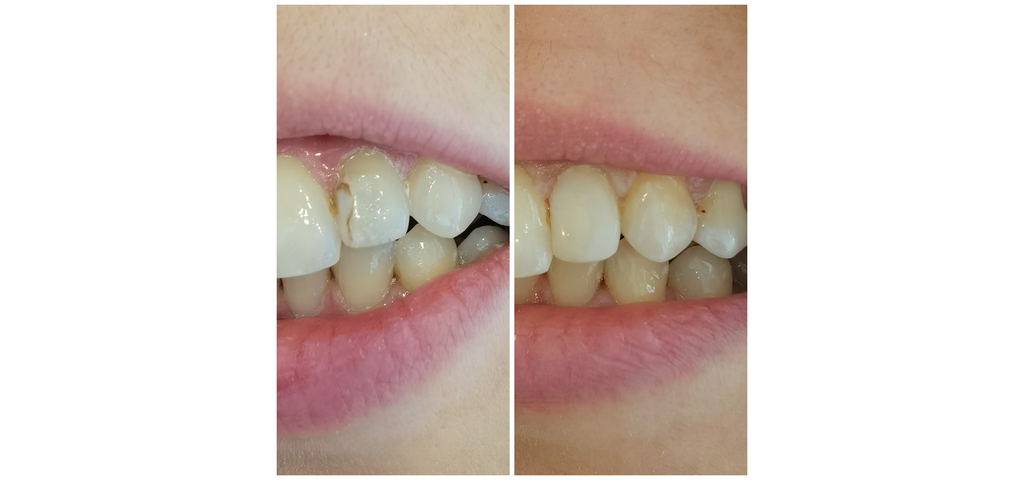
A filling is commonly placed after caries has created a cavity or softened tooth structure that cannot be maintained through preventive care alone. It may also repair a small fracture, worn area, defective margin or limited loss around an existing restoration. The aim is to remove or manage diseased tissue while conserving the healthy enamel and dentine that still support the tooth.
Early enamel demineralisation without a cavity may be managed with fluoride, plaque control, dietary changes, sealing, resin infiltration or monitoring, depending on the site and activity. Drilling every early radiographic or white-spot change can start a lifelong restoration cycle unnecessarily. Conversely, postponing an active cavitated lesion can allow it to approach the pulp and require more complex treatment.
Symptoms are not a reliable measure of depth. A tooth with advanced decay can be painless, while sensitivity may arise from recession, cracks, erosion, grinding or another tooth. Diagnosis connects the clinical findings, radiographs where indicated and the patient’s history rather than treating pain alone.
How is tooth decay diagnosed?
The dentist examines tooth surfaces under clean, dry conditions and looks for cavitation, shadowing, soft tissue, plaque-retentive areas and changes around existing restorations. Gentle instruments may assist assessment, but forceful probing of an early lesion can damage a surface that might otherwise be managed preventively.
Bitewing or other radiographs can reveal decay between teeth and estimate its depth. Radiographs are two-dimensional and do not show every lesion or confirm activity by themselves, so findings are interpreted with the clinical examination and previous images. Transillumination, magnification or other adjuncts may help in selected situations.
Caries risk considers more than the visible hole. Frequent sugar exposure, fluoride availability, dry mouth, medicines, oral hygiene, previous decay, gum recession and the condition of existing restorations influence future disease. A filling treats the damaged site; prevention addresses why it developed.
Cracks and leaking margins can resemble recurrent decay. Staining at the edge of a composite does not always mean the entire filling has failed. Monitoring, polishing, sealing or local repair may preserve more tooth than complete replacement when clinical and radiographic findings are favourable.
Types of dental filling materials
Composite resin fillings
Composite is a tooth-coloured material containing a resin matrix and glass or ceramic filler particles. It bonds to conditioned tooth structure and is placed in increments or according to the material system, then hardened with a curing light. It can restore front or back teeth when the cavity size, isolation and forces are suitable.
Glass ionomer and resin-modified glass ionomer
Glass ionomer materials chemically interact with the tooth and can release fluoride. They may be used for selected root-surface lesions, temporary or transitional care, cervical restorations and situations where moisture control or caries risk shapes the choice. Their wear and strength differ from composite, so they are not interchangeable in every load-bearing cavity.
Dental amalgam
Amalgam is a silver-coloured alloy material with a long history in posterior fillings. It does not bond to teeth in the same way as composite and requires a preparation form that retains it. Appearance and the need to preserve tooth structure influence modern material choices, but an intact, functional amalgam should not automatically be removed solely because of its age or colour.
Ceramic inlays and onlays
An inlay or onlay is made outside the mouth from a scan or impression and then bonded or cemented to the tooth. It may be considered when damage is too extensive for a predictable direct filling but enough tooth remains to avoid a full crown. An onlay can cover one or more weakened cusps.
Gold and other indirect restorations
Cast gold restorations have favourable durability and fit in suitable cases but are visibly metallic and require laboratory stages. Other indirect resin or hybrid materials may also be considered. Selection depends on tooth position, tissue remaining, bite, appearance, laboratory access and patient preference.
| Material | Appearance | Typical use | Important consideration |
|---|---|---|---|
| Composite resin | Tooth-coloured | Small to moderate direct restorations in front or back teeth | Reliable moisture control and correct bonding are important |
| Glass ionomer | Tooth-coloured but generally less translucent | Selected root, cervical, temporary and lower-load restorations | Strength and wear resistance limit some load-bearing uses |
| Amalgam | Silver-coloured | Selected posterior direct restorations | Does not bond like composite and is visually conspicuous |
| Ceramic inlay or onlay | Tooth-coloured | Larger indirect restoration and selected cusp coverage | Requires additional manufacturing and bonding or cementation stages |
| Gold inlay or onlay | Metallic gold | Selected durable indirect restorations | Visible material and laboratory fabrication |
Composite filling or ceramic inlay, onlay or crown?
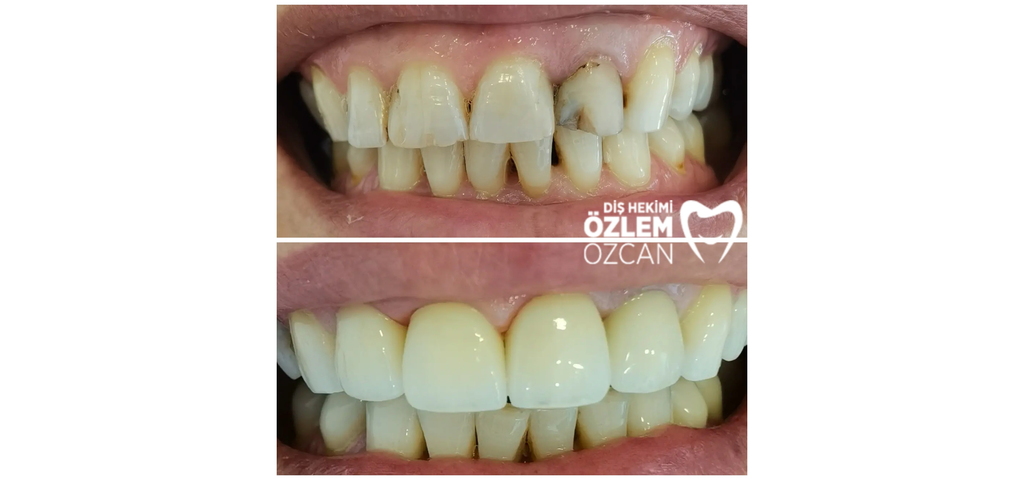
A direct composite filling is often appropriate for a small or moderate defect surrounded by enough sound tooth. It is shaped in the mouth, usually within one appointment, and can preserve healthy structure. As the missing portion becomes larger, polymerisation stress, contact formation, cusp weakness and wear become more important.
An inlay fits within the cusps, while an onlay or overlay replaces the damaged area and covers selected weakened cusps. These indirect restorations can provide controlled anatomy and material properties for larger defects. They are not automatically required for every back tooth and still depend on sound diagnosis, preparation and bonding.
A crown surrounds most or all of the prepared clinical crown and may be indicated when extensive structural loss, cracks or previous treatment leave insufficient support for a filling or partial restoration. It requires more tooth preparation. See Dental Crowns in Turkey for a detailed comparison.
The most conservative treatment is not necessarily the smallest restoration at any cost; it is the least invasive design that can predictably function. Repeatedly placing an oversized direct filling in a badly weakened tooth can delay but not prevent fracture, while crowning a tooth that could be restored with a small filling removes unnecessary tissue.
Composite filling treatment step by step
1. Diagnosis and shade selection
The tooth and surrounding tissues are examined, and radiographs are reviewed when indicated. For a visible tooth, the composite shade is selected before prolonged isolation dehydrates the enamel and makes it appear lighter. The expected limits of colour matching are discussed.
2. Local anaesthesia and isolation
Local anaesthesia is used when the depth, site and patient comfort make it appropriate. The tooth is isolated with a rubber dam, cotton rolls, suction or another suitable method. Composite bonding is sensitive to saliva and moisture contamination, so isolation is part of the restoration quality rather than a cosmetic detail.
3. Removing decay or defective material
Infected or structurally unsound tissue is removed while sound tooth is preserved. Deep cavities may be managed selectively to reduce the risk of exposing the pulp, depending on diagnosis. An old filling is removed only to the extent required to address the defect and assess remaining structure.
4. Protecting the pulp when required
For a deep cavity, the clinician evaluates the pulp response and remaining dentine. A liner, base or other protective strategy may be used where indicated, but placing a filling over irreversible pulp disease will not solve it. Symptoms and clinical tests guide whether restorative or root canal treatment is appropriate.
5. Adhesive procedure
The enamel and dentine are treated with the chosen bonding system according to its instructions. Contamination can compromise the bond, and over-drying dentine can also be problematic with some systems. Careful technique is essential even though these stages are not visible after completion.
6. Building the restoration
Composite is placed and light-cured in a manner suited to the cavity and material. A matrix and wedge help recreate the side wall and contact between teeth. The dentist shapes grooves, ridges and contours so the tooth can function and be cleaned.
7. Bite adjustment and polishing
The bite is checked in normal closing and side movements. High points are adjusted without flattening necessary anatomy. The restoration is finished and polished to reduce roughness and plaque retention while maintaining the contact and margin.
8. Review when indicated
Deep, symptomatic or complex restorations may require review. The dentist assesses sensitivity, bite, contact, gum response and pulp health. A comfortable tooth immediately after filling is encouraging but does not remove the need for routine examinations.
Does getting a filling hurt?
Local anaesthesia can numb the tooth and surrounding area during decay removal and restoration. Patients may feel pressure, vibration and water but should tell the dentist if they experience sharp pain. Very shallow procedures may not always require anaesthesia, but comfort planning is individual.
Mild temperature or biting sensitivity can occur after treatment, especially in a deep cavity. The pulp may have been irritated by decay before the filling was placed. Symptoms should generally improve rather than intensify, although the pattern and duration vary.
A filling that feels high can cause tenderness when chewing and should be adjusted. Persistent spontaneous pain, night pain, swelling, prolonged thermal pain or worsening symptoms may indicate pulpal inflammation, a crack or another problem. Some teeth ultimately need root canal treatment despite appropriate restorative care because the original disease was already close to or affecting the pulp.
Front-tooth composite fillings
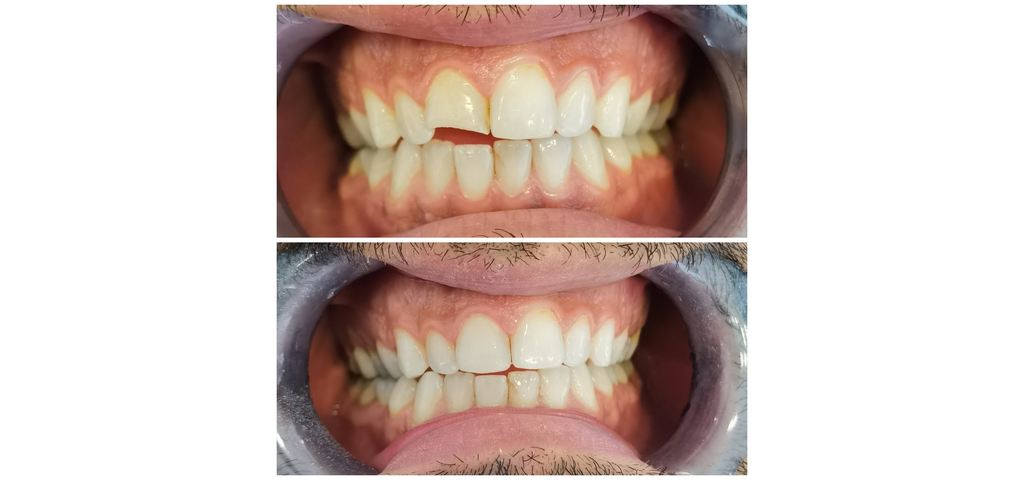
Composite can repair front-tooth decay, chips, small fractures and localised shape loss. Multiple shades and translucencies may be layered to reproduce dentine, enamel and the incisal edge. Surface texture and polish affect how the restoration reflects light.
Colour matching has limits. Natural teeth are polychromatic and change with hydration and lighting, while composite can stain or lose polish over time. A repair may be nearly imperceptible under ordinary conditions without being invisible under every light or close-up photograph.
When treatment is primarily elective reshaping rather than decay repair, the broader decision may fall under Composite Bonding in Turkey. The same material may be used, but diagnosis, extent and aesthetic planning differ. A filling restores disease or damage; bonding may also alter appearance on an otherwise healthy surface.
Replacing old or metal fillings
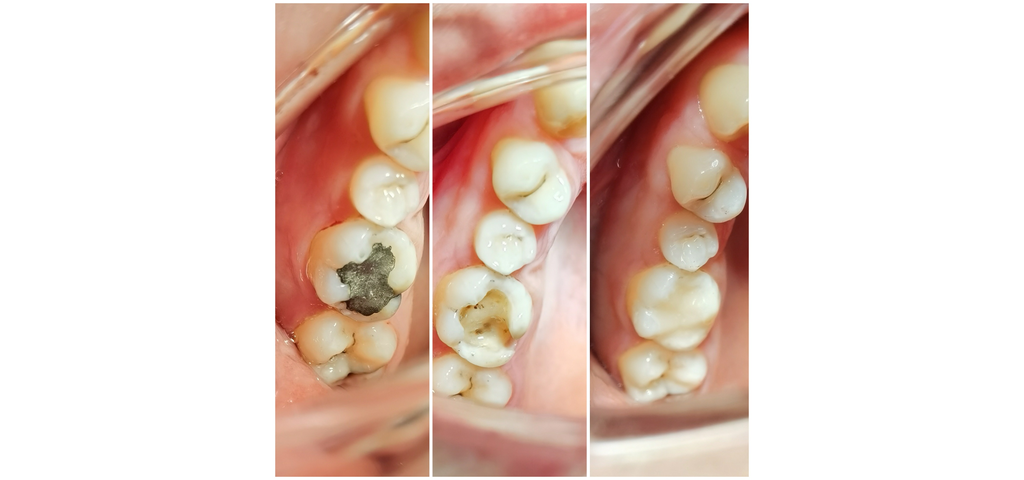
An old filling is assessed for cracks, marginal breakdown, decay, wear, contact and symptoms. Age or visible staining alone does not prove failure. Replacing a restoration removes additional tooth tissue and can bring treatment closer to the pulp, so the expected benefit should outweigh that cost.
Amalgam fillings are sometimes replaced because of recurrent decay, fracture, loss, structural concerns or an informed aesthetic preference. Intact restorations should not automatically be removed under a claim that replacement “detoxifies” the body. Removal requires appropriate isolation, suction and clinical technique.
A large metal filling can hide cracks or leave thin cusps once removed. The final restoration may therefore change from the preliminary expectation after the underlying tooth is visible. Composite, an onlay or a crown may be discussed according to remaining structure rather than simply exchanging one material for another of the same size.
Repairing a filling instead of replacing it
A local chip, small marginal defect or limited discolouration can sometimes be cleaned, conditioned and repaired with new material. Repair may preserve sound tooth and existing restoration while shortening treatment. It is particularly relevant when the rest of a large restoration remains clinically acceptable.
Repair is not suitable when decay is extensive, the restoration is loose, the fracture affects support, the contact or bite cannot be corrected locally or the full interface is compromised. The dentist needs access and isolation that allow a reliable bond.
The choice between monitoring, polishing, sealing, repair and replacement should be documented. A conservative decision still requires follow-up because a repaired restoration has both an older and a newer component with margins that must be maintained.
Temporary fillings and lost fillings
A temporary filling seals a tooth between treatment stages, protects medication or provides short-term management until definitive care. It is softer or less durable than a final restoration and should not be treated as a permanent solution. The planned completion date and dietary guidance should be clear.
If a filling falls out, the tooth may be sensitive and the cavity can trap food. Keep the area clean, avoid hard chewing on the tooth and arrange dental assessment. Pharmacy temporary-filling material may offer brief protection when professional care is not immediately available, but it cannot diagnose decay, cracks or pulp disease.
Seek urgent care for facial swelling, fever with worsening dental infection, difficulty swallowing or breathing, severe uncontrolled pain or trauma. Do not place household glue, aspirin or unverified chemicals in the cavity.
Risks and limitations of dental fillings
Possible complications include temporary sensitivity, postoperative pain, an uneven bite, open or tight contact, roughness, discolouration, marginal staining, chipping, fracture and recurrent decay. Composite can shrink slightly during polymerisation, making correct placement and curing technique important.
A filling does not strengthen every weakened tooth sufficiently. If cusps are undermined or a crack extends unfavourably, the tooth can fracture after treatment. Conversely, an extensive restoration chosen to prevent every possible fracture can remove unnecessary tissue. Risk is balanced rather than eliminated.
The pulp may remain inflamed after deep decay is treated. A tooth can become painful days, months or longer after restoration and may require root canal treatment. This does not automatically mean the filling was placed incorrectly; the biological status and original lesion depth matter.
No material is permanent. Fillings undergo chewing forces, temperature changes, chemical exposure and ageing. Longevity depends on cavity size, tooth, bite, isolation, technique, material, hygiene, diet, dry mouth and grinding. Guarantees based only on the filling label ignore these variables.
How long do dental fillings last?
There is no universal lifespan. A small well-isolated composite in a low-risk patient has a different prognosis from a very large filling in a heavily loaded molar. Failure can arise from decay, fracture, wear, contact problems or pulpal disease rather than the material simply “expiring.”
Routine examinations allow margins, contacts, cracks and symptoms to be monitored. Radiographs may be used at intervals based on caries risk. Minor issues can sometimes be polished or repaired before a full replacement becomes necessary.
Patients can support longevity through fluoride toothpaste, daily interdental cleaning, limiting frequent sugar exposure and managing dry mouth or grinding. Prevention protects both the filling margin and every unrestored tooth.
Eating and caring for a new filling
Composite is set with a curing light during the appointment, but the mouth may remain numb. Avoid biting the cheek, lip or tongue until sensation returns, and follow any specific food instructions. Temporary materials and certain other restorations may require a longer period before chewing.
Some cold sensitivity can occur after a deep filling. Choose comfortable temperatures temporarily and use any desensitising product as advised. If the tooth contacts first, feels too tall or becomes increasingly painful when chewing, arrange adjustment rather than adapting to an incorrect bite.
Brush twice daily with fluoride toothpaste and clean between teeth. Floss should pass through the contact with gentle resistance without shredding or becoming trapped. Persistent food packing, bleeding or a rough ledge requires assessment because it can affect the gum and decay risk.
Avoid using restored teeth to open packages, bite pens or crack hard objects. A night guard may be considered for significant grinding, although it cannot prevent every fracture. Regular care should continue even when the filling looks and feels normal.
Dental fillings in Istanbul for international patients
Patients travelling with pain or a broken filling can send symptoms, photographs and recent radiographs before an appointment. These help prepare the visit but cannot establish decay depth, pulp health, cracks or the final restoration. Examination may show that a filling is appropriate—or that root canal treatment, an onlay, crown or extraction needs discussion.
A straightforward direct filling is often completed in one appointment, but diagnosis and complexity affect timing. Deep decay, several teeth, difficult isolation, pulp symptoms or indirect laboratory restorations may require additional visits. International patients should allow time for numbness to resolve and for bite or contact review before departure.
When many fillings are proposed, ask which teeth have active cavitated disease, which lesions can be monitored and which old restorations genuinely require repair or replacement. A written tooth-by-tooth plan reduces unnecessary treatment and helps continuing care at home.
Before leaving Istanbul, obtain a treatment summary identifying the restored teeth, material and any areas requiring review. Seek local follow-up for persistent sensitivity, a high bite, fracture or pain. Remote photographs cannot diagnose recurrent decay or pulp inflammation.
Information to provide before the appointment
- The tooth location and whether symptoms involve cold, heat, sweets or biting
- The duration and pattern of pain, including spontaneous or night pain
- Recent radiographs and details of previous fillings or root canal treatment
- Any lost restoration, fracture, swelling, bad taste or food trapping
- A history of sensitivity, grinding, dry mouth or frequent decay
- Medical conditions, allergies, medicines and pregnancy status
- Your arrival, departure and availability for review
Preventing new decay around fillings
Fluoride toothpaste used twice daily supports remineralisation and helps prevent decay at restoration margins. After brushing, follow the dental team’s advice about rinsing so fluoride can remain available. Higher-fluoride prescription products are considered only when clinically indicated.
Frequency of fermentable carbohydrate exposure matters. Repeated sipping or snacking gives plaque bacteria frequent opportunities to produce acid, even when the total amount seems small. Dry mouth reduces the protective effects of saliva and may require medical review, hydration strategies and a targeted preventive plan.
Cleaning between teeth is essential because many cavities and filling margins lie where a toothbrush cannot reach effectively. Floss, interdental brushes or other aids should be selected for the space. Professional cleaning removes deposits but does not replace daily plaque control.
A restoration is one part of caries management. Without attention to risk factors, new decay can develop at another surface or around the filling. The strongest treatment is therefore a combination of accurate restoration and prevention.
Frequently asked questions
Does every cavity need a filling?
Not every early lesion requires drilling. Non-cavitated enamel changes may be managed preventively or monitored. A cavitated, active or structurally compromised lesion is more likely to need restoration after clinical assessment.
Are composite fillings suitable for back teeth?
Yes, composite can restore many posterior cavities when size, remaining tooth, bite and isolation are suitable. Very large defects or weakened cusps may require an onlay or crown instead.
How long does a composite filling take?
Time varies with tooth, cavity depth, number of surfaces, isolation and contact reconstruction. A small filling may be completed relatively quickly, while a deep or multi-surface restoration needs more time.
Can a filling match my natural tooth?
Composite is available in multiple shades and translucencies and can often blend closely. Natural teeth vary with light and hydration, so invisibility in every condition cannot be guaranteed.
Why is my tooth sensitive after a filling?
The pulp may be recovering from decay and treatment, or the filling may contact too heavily. Brief improving sensitivity can occur, but spontaneous, worsening, prolonged or biting pain should be assessed.
Should old amalgam fillings be removed?
Not automatically. Removal may be appropriate for decay, fracture, loss or an informed aesthetic reason, but replacing a sound restoration removes more tooth structure and should have a clear expected benefit.
Can a broken filling be repaired?
Sometimes. A local defect may be polished, sealed or repaired when the rest of the restoration and tooth remain sound. Extensive decay, looseness or structural fracture can require full replacement or another restoration.
Can I eat immediately after a filling?
Light-cured composite is set during the appointment, but wait until numbness resolves to avoid biting soft tissues and follow the dentist’s specific advice. Temporary materials may require extra caution.
Can decay return under a filling?
New decay can develop at a restoration margin if plaque, diet, dry mouth or other risks persist. Fillings do not make teeth immune to disease, so fluoride, cleaning and examinations remain necessary.
When does a filling need a crown instead?
A crown or onlay may be considered when extensive structure or cusps are lost, cracks threaten the tooth or a direct filling cannot provide predictable support. The decision depends on the remaining tooth and bite.
Requesting a dental filling appointment in Istanbul
If you need a dental filling in Istanbul, contact Dt. Özlem Özcan’s clinic with your symptoms, recent radiographs and details of previous restorations. A preliminary exchange can help arrange the appointment, but diagnosis, material and whether a filling is sufficient are confirmed after examination.
The aim is not simply to cover a hole with tooth-coloured material. It is to diagnose the disease, preserve sound tooth, create a sealed and functional restoration and reduce the risk of new decay. Monitoring, repair, a filling, an onlay or a crown should each be chosen for a clear clinical reason.