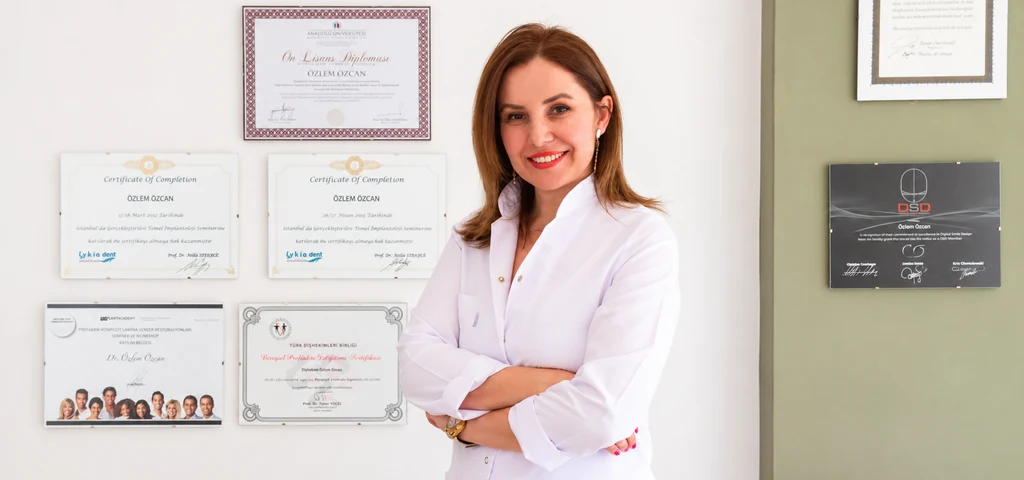


Hollywood Smile in Turkey
A “Hollywood Smile” is not a single dental treatment or a standard number of veneers and crowns. It is a popular name for a smile makeover that may involve whitening, composite bonding, orthodontics, laminate veneers, crowns, gum treatment or replacement of missing teeth. The appropriate combination depends on oral health, tooth position, enamel, bite, smile display and the patient’s own preference. At her dental clinic in Istanbul, Dt. Özlem Özcan plans smile changes tooth by tooth rather than applying the same package to every patient.
A smile plan shaped around oral health, tooth structure and individual goals
For patients considering a Hollywood Smile in Turkey, the safest starting question is not “How many teeth should be covered?” but “Which concerns can be addressed while preserving the greatest reasonable amount of healthy tooth structure?” Some patients need only whitening and small additions with composite; others have damaged teeth that genuinely require crowns. Orthodontics can sometimes avoid restorative preparation, while veneers may be suitable for selected front teeth. This page explains how those decisions are connected, how a natural result is designed and what international patients should understand before arranging treatment in Istanbul.

What does “Hollywood Smile” mean in dentistry?
The phrase describes an aesthetic goal rather than a recognised procedure with one fixed protocol. For one person, it may mean lighter natural teeth and repaired edges. For another, it may involve alignment, replacement of old restorations and ceramic work on selected teeth. The name does not tell a dentist whether teeth are healthy, how much preparation is required or which materials are appropriate.
This distinction matters because marketing images often make very different treatments look identical. Teeth whitening, composite bonding, veneers and crowns can all produce a brighter photograph, but they act on the tooth in different ways. Whitening changes the colour of responsive natural tooth structure. Bonding adds resin directly. A veneer covers mainly the front surface, while a crown covers the prepared tooth around its circumference. Orthodontics moves teeth rather than masking their position.
A smile makeover is therefore a planning process. The clinical aim is to identify the cause of each concern, decide whether treatment is needed and select the least invasive predictable option. “Hollywood” can describe a patient’s preference for a bright and highly coordinated result, but it should never remove the need for diagnosis or informed consent.
Which smile concerns can be addressed?
A smile plan may address colour, small chips, worn edges, uneven tooth length, gaps, crowding, old visible fillings, disproportionate teeth, gum inflammation, uneven gum levels or missing teeth. Some concerns are mainly aesthetic; others reveal disease or structural damage. A dark tooth may have a history of trauma. Short teeth may reflect wear, gum position or natural anatomy. A gap may be related to tooth size, tooth position, missing teeth or periodontal tissue loss.
These causes lead to different treatments. Covering a tooth without diagnosing the cause can hide disease or create an unstable result. Active decay, infection and gum disease must be treated. Progressive wear requires investigation of grinding, bite and possible acid exposure. Significant crowding may be safer to correct orthodontically than by reducing teeth for restorations.
The consultation should also distinguish features the patient genuinely wants to change from natural variation. Healthy smiles are not perfectly uniform. Small differences in tooth shape, surface texture and translucency can make a result look more authentic. The objective is not to remove every individual characteristic unless that is the patient’s informed preference and can be achieved responsibly.
Which treatments can form part of a smile makeover?
| Treatment | Primary role | Potential advantage | Important limitation |
|---|---|---|---|
| Professional whitening | Lightens responsive natural teeth | Changes colour without covering or reshaping teeth | Does not whiten fillings, veneers or crowns and cannot change shape |
| Composite bonding | Adds tooth-coloured resin to repair or reshape selected areas | Often conservative, adjustable and repairable | Can stain, lose gloss, wear or chip and may need maintenance |
| Laminate veneers | Ceramic covers mainly the visible front surface | Controls colour and form with less coverage than a crown | Usually irreversible and dependent on enamel, bite and preparation |
| Dental crowns | Full coverage for structurally compromised teeth | Can rebuild heavily filled, fractured or severely worn teeth | Requires more tooth reduction and should not be the default cosmetic option |
| Orthodontics | Moves teeth and roots to improve alignment and bite | Can preserve intact tooth surfaces and create better restorative space | Requires time, monitoring and retention |
| Gum treatment | Restores periodontal health or modifies selected gum contours | Addresses the tissue frame around the teeth | Biological limits and the cause of gum display must be assessed |
| Implants, bridges or dentures | Replace missing teeth | Can restore continuity, support and function | Each option has separate surgical, tooth-preparation and maintenance implications |
A well-sequenced plan may combine these treatments. Whitening usually occurs before colour-matched composite or ceramic work. Orthodontics can reduce the amount of tooth preparation required. Gum inflammation is treated before final scans or impressions. Implant treatment may require biological healing before definitive crowns are made. The sequence protects the final result from being designed around unstable conditions.
Detailed treatment information is available in the guides to teeth whitening in Istanbul, composite bonding in Turkey, laminate veneers, dental crowns and orthodontic treatment in Turkey.
How many teeth need to be included?
There is no standard answer such as eight, ten, sixteen or twenty. The number depends on the patient’s smile width, how many upper and lower teeth show during speech, the colour difference between treated and untreated teeth, existing restorations and the specific concern. A person who shows six upper teeth has a different transition zone from someone whose smile reveals first molars.
The plan should also distinguish the number of teeth included in the visual design from the number receiving an irreversible restoration. Whitening can coordinate untreated teeth. Bonding may refine one edge. Some teeth can remain untouched even within a broad smile makeover. Treating additional teeth solely to reach a package number increases biological cost without necessarily improving the result.
Lower teeth are not automatically included. Their colour, position, wear and visibility are assessed separately. In some cases, alignment or whitening is enough. In others, worn lower edges influence function and need a broader wear plan. Symmetry does not require identical treatment on both arches.
The retained guide How Many Veneers Do I Need? 8, 10, 16 or 20? explains how smile display and transition zones guide the decision.
Why preserving tooth structure matters
Enamel does not regenerate after it is removed. Whitening and orthodontics can change colour or position without covering teeth. Composite can often be added with little preparation. Veneers generally require less reduction than crowns, while full crowns are appropriate when the tooth itself needs broad structural restoration. This hierarchy is not absolute, but it encourages the dentist and patient to justify each irreversible step.
“No-prep” treatment cannot be promised to everyone. Adding composite or ceramic to teeth that are already prominent can create bulky contours, affect lip support and make cleaning difficult. Limited preparation may be required for space and natural emergence. Conversely, preparing healthy teeth aggressively for cosmetic crowns can sacrifice tissue unnecessarily.
Conservative treatment also considers future maintenance. A repairable composite addition may be reasonable for a young patient or small defect even if it needs polishing later. A ceramic veneer can offer colour stability where the tooth and bite are suitable. A damaged tooth may genuinely need a crown. The least invasive option is the one that balances tissue preservation with predictability, not simply the treatment involving the fewest appointments.
Designing a natural-looking Hollywood Smile
A natural result is created through relationships between the face, lips, gums and teeth. Tooth width and length, edge position, midline, smile arc, visible gum display, buccal corridors, surface texture and translucency all contribute. No single mathematical proportion applies perfectly to every face or cultural preference. Research shows that natural anterior tooth proportions vary among populations, so design should not be forced into one universal formula.
The central incisors often anchor the design because their length, width and position influence the adjacent teeth. Canine shape and prominence affect the transition toward the back of the smile. Lip movement changes which teeth and gum areas are visible. Photographs at rest, in a natural smile and during a broader smile provide different information.
Colour includes value, chroma, translucency and surface reflection. A very bright result may be the patient’s informed preference, but extreme opacity can make restorations appear flat. A natural-looking bright smile usually retains subtle texture and depth. When dark underlying teeth need masking, ceramic thickness and opacity must be balanced against tooth preservation and light behaviour.
The site’s retained resources What Makes a Natural Smile? and Why Some Veneers Look Fake—and How to Avoid It explore these design decisions in more detail.
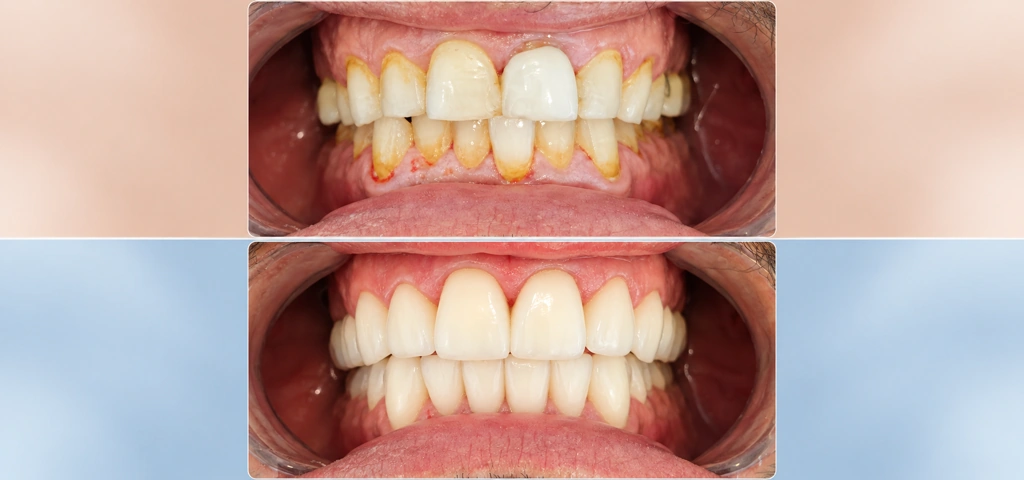
What digital smile design can and cannot do
Digital smile design uses photographs, scans and software to visualise possible changes in tooth shape and their relationship to the face. It can improve communication by allowing patient and dentist to discuss length, width, symmetry and shade direction before irreversible treatment. A digital plan can also support wax-ups, mock-ups, preparation guides and laboratory communication.
It is a planning and communication tool, not a diagnosis or guaranteed preview. A two-dimensional image cannot fully reproduce speech, bite, tissue response, ceramic translucency or the tactile limitations of the mouth. Artificially generated designs can look persuasive while ignoring enamel thickness, root position, gum health and restorative space. The clinical examination remains decisive.
A mock-up transfers a proposed shape to the mouth temporarily in selected cases. It can help the patient evaluate tooth length, lip support and speech. The material, surface and colour of a mock-up differ from definitive restorations, and it may not precisely represent every margin or optical characteristic. Its value lies in informed communication and refinement.
What happens during smile makeover treatment?
1. Listening to the patient’s priorities
Dt. Özlem Özcan first identifies what the patient actually wants to change: colour, tooth display, gaps, shape, wear, asymmetry or the overall character of the smile. Reference photographs can communicate preferences, but another person’s teeth cannot simply be copied onto a different face and bite.
2. Clinical and diagnostic assessment
The teeth, restorations, gums and bite are examined. Records may include photographs, radiographs where indicated, periodontal assessment and digital scans or impressions. Tooth vitality, cracks, decay, trauma history and wear causes are investigated. A remote photograph cannot replace these findings.
3. Stabilising oral health
Gum disease, decay, infection and unstable teeth are treated before elective aesthetic work. Hygiene and periodontal treatment may change gum appearance. Root canal or restorative care is used only where clinically indicated. Grinding and erosion require a plan before lost tooth length is rebuilt.
4. Comparing treatment paths
The dentist explains which concerns could be treated through whitening, bonding, orthodontics, veneers, crowns or combined care. The number of teeth, anticipated preparation, alternatives and maintenance are discussed. The option of doing less or no elective treatment should remain available.
5. Design, preview and consent
Photographs, digital design, wax-up or mock-up may be used depending on complexity. The patient discusses shape and shade preferences and understands which parts of a preview are approximate. Consent covers irreversible preparation, risks, provisional restorations and future repair or replacement.
6. Treatment in the correct sequence
Whitening, orthodontics and gum care occur before final colour-matched restorations when indicated. Bonding is placed and polished directly. Veneers and crowns involve preparation where required, records, provisional restorations and laboratory stages. Implant care may require separate surgery and healing.
7. Evaluation and review
Final restorations are assessed for margins, colour, contacts, speech and bite. A review checks comfort, gum response and cleaning access. The maintenance plan identifies hygiene needs, examination intervals and whether retainers or protective appliances are recommended.
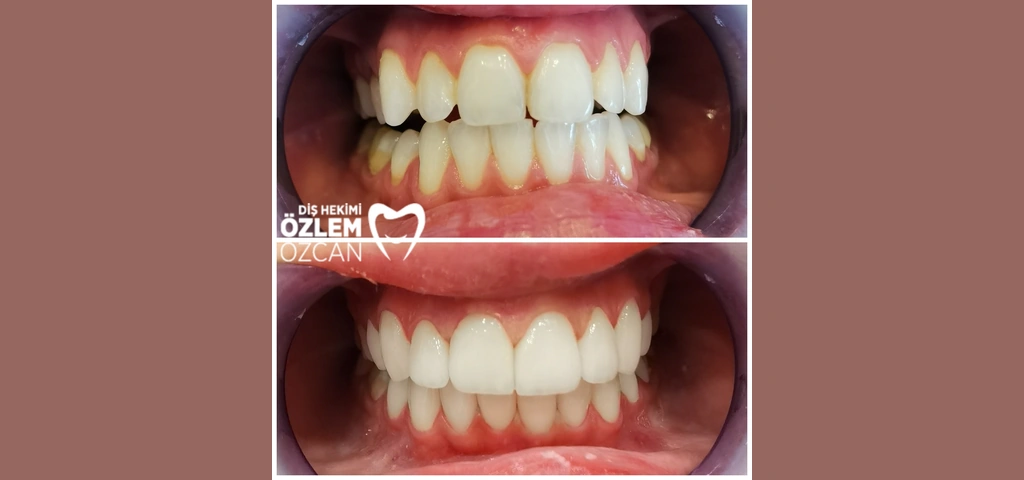
Hollywood Smile with veneers or crowns?
Veneers and crowns are not interchangeable names for the same white restoration. A veneer covers mainly the front surface and generally preserves more tooth structure. It is considered when the tooth is structurally suitable and the aim is primarily to change visible colour or form. A crown covers the prepared tooth around its circumference and is used when broader structural restoration is justified.
A healthy tooth should not receive a crown merely because a treatment package uses that material. Equally, a severely filled or fractured tooth may not be a suitable foundation for a thin veneer. Some smile plans appropriately contain veneers on relatively intact teeth and crowns on damaged teeth. The appearance can still be coordinated through material and laboratory planning.
Patients should ask whether proposed “veneers” are actually full crowns and how much tooth preparation is expected. Before-and-after images alone cannot reveal the original health of the teeth, the amount removed or the maintenance that followed. Clear naming is part of informed consent.
Does every smile makeover need very white teeth?
No. Brightness is a preference rather than a measure of clinical quality. Some patients want an unmistakably white result; others prefer a shade that blends with their complexion and appears less treated. Both preferences can be discussed, but material opacity, untreated teeth and the number of restorations influence what looks coherent.
Whitening affects natural teeth but does not lighten existing crowns, veneers or composite in the same way. If whitening is appropriate, it is usually completed before final restorative shade selection. Otherwise, newly made restorations may no longer match after the natural teeth become lighter.
Photographs and screen brightness can distort shade perception. A final colour should be evaluated clinically under suitable lighting and in relation to facial features. Choosing the lightest available tab without considering translucency and texture can produce an artificial result.
Planning a Hollywood Smile in Istanbul from abroad
International patients can send clear photographs, recent radiographs and treatment history for a preliminary conversation. Helpful views include the full face at rest, a natural smile, a broad smile and close-up images of the teeth. Medical conditions, medicines, allergies, nicotine use, grinding and previous aesthetic treatment should be disclosed.
A remote review cannot confirm the final number of veneers or crowns, tooth health, bite or treatment duration. If examination identifies gum disease, decay, infection, severe crowding or insufficient enamel, the proposed plan may change. Travel should not be arranged around a guaranteed package created only from photographs.
Treatment time depends on the components. Whitening, direct bonding, orthodontics, ceramic restorations, implants and gum procedures follow different schedules. Laboratory stages and provisional reviews require time. A plan that protects tissue and function may involve more than one trip, especially when orthodontic movement, implant healing or significant periodontal care is needed.
Questions to resolve before booking
- Which teeth need treatment, and which can remain untouched?
- Are the proposed restorations veneers, crowns or composite?
- How much tooth preparation is expected for each group?
- Could whitening or orthodontics reduce the restorative work?
- What preliminary treatment might change the timetable?
- How are provisional restorations, review and aftercare organised?
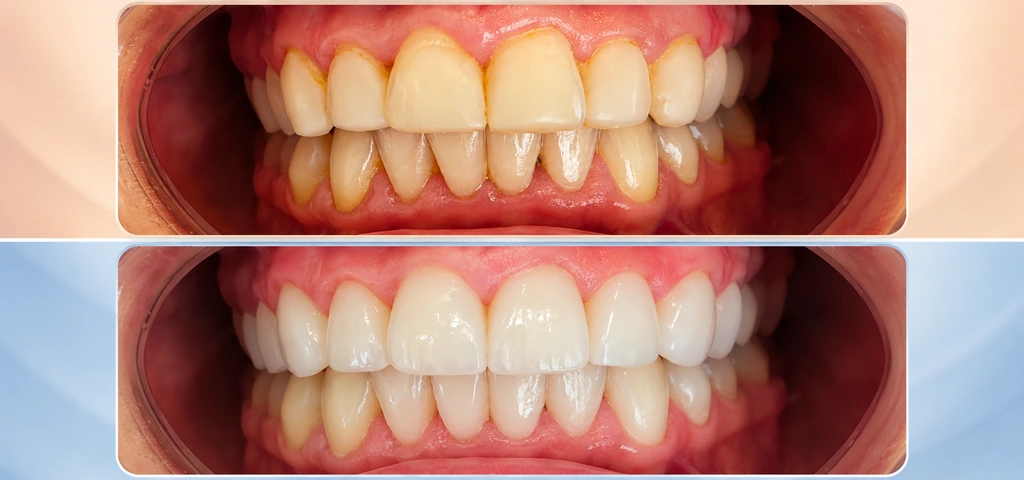
Who may need treatment before an elective smile makeover?
Aesthetic treatment may need to be delayed when there is active gum disease, uncontrolled decay, infection, unexplained pain or insufficient diagnostic information. These conditions do not necessarily prevent a future smile makeover, but definitive restorative work should not be placed over unstable disease. Gum inflammation can also change tissue levels and make final margins or proportions less predictable.
Patients with substantial grinding, severe tooth wear or an unstable bite require functional assessment before teeth are lengthened. Replacing lost structure without identifying why it was lost can expose the new restorations to the same forces. Treatment may involve stabilisation, orthodontics, rebuilding several teeth or a protective appliance rather than isolated cosmetic changes to the visible front teeth.
Expectations also affect suitability. Dentistry cannot reproduce another person’s face or guarantee an exact social-media image under every light and expression. Patients should be able to discuss preferences, accept biological limits and understand that restorations need maintenance. Irreversible treatment should be postponed when the desired outcome remains unclear or when the patient feels pressured by travel dates or a promotion.
How to evaluate a smile makeover proposal
A useful proposal identifies each tooth, the planned procedure and the reason for it. It distinguishes veneers from crowns, states whether preparation is expected and explains preliminary treatment. Material names and the total number of units are not enough. Patients should also know which healthy teeth will remain untreated and whether a less invasive path was considered.
Before-and-after photographs can demonstrate a clinician’s style, but they do not show the full diagnosis, tooth preparation, bite, complications or long-term maintenance. Images should represent real consented cases and should not be digitally altered in a way that misrepresents the clinical result. A consultation should be strong enough to stand without relying on dramatic photographs or claims of perfection.
Price comparisons are meaningful only when proposals describe the same clinical scope. One quotation may include whitening, temporaries, laboratory restorations and review, while another may describe only the restorative units. The lowest number of visits or lowest initial cost does not establish that the plan is conservative. Diagnosis, tissue preservation, repair options and continuity of care are part of the value of treatment.
Risks, limits and long-term maintenance
Risks depend on the procedures used. Whitening can cause temporary sensitivity and gum irritation. Composite can stain, wear or chip. Veneers and crowns involve irreversible preparation, may debond or fracture and may eventually need replacement. Orthodontics requires retention and can have periodontal or root-related risks. Gum and implant procedures involve surgical and healing considerations.
Restorations do not stop ageing or disease. Natural teeth can develop decay at margins, gums can recede and the bite can change. Ceramic does not whiten later, while neighbouring teeth and composite can change colour. Grinding, smoking, diet and oral hygiene influence maintenance. No responsible plan can promise that a smile makeover will remain unchanged for life.
Daily brushing with fluoride toothpaste, cleaning between teeth and regular dental examinations remain essential. Retainers or a night guard should be used as instructed. Pain, swelling, movement, a bite change or a fractured restoration needs assessment rather than remote reassurance alone.
Frequently asked questions
Is a Hollywood Smile a recognised dental procedure?
It is a popular name for an aesthetic goal or smile makeover, not one standard procedure. The plan may include whitening, bonding, orthodontics, veneers, crowns, gum care or tooth replacement depending on individual needs.
Does a Hollywood Smile always mean veneers?
No. Some patients can reach their goal through whitening, orthodontics or bonding. Veneers are considered only for suitable teeth when their benefits justify irreversible treatment. Damaged teeth may require crowns for separate structural reasons.
How many teeth are included in a smile makeover?
There is no standard number. Smile width, tooth display during speech, colour transitions, existing restorations and the patient’s concern determine which teeth are included. A conservative plan deliberately identifies teeth that can remain untouched.
Will my teeth be filed down?
That depends on the treatment. Whitening and orthodontics do not require restorative tooth preparation. Bonding can often be additive. Veneers usually involve limited irreversible preparation, while crowns require broader reduction around the tooth.
Can a Hollywood Smile look natural?
Yes, when proportions, texture, translucency, shade, gums, lips and facial features are considered together. Natural does not mean one universal design; preferences and natural tooth proportions vary between individuals.
Can I choose a very bright white shade?
Brightness can be selected as a preference, but opacity, translucency, untreated teeth and material thickness affect how it appears. A very bright result may look less natural and can require a different masking strategy.
Can digital smile design guarantee the final result?
No. Digital design supports visualisation and communication but cannot fully reproduce bite, speech, tissue response, material optics or clinical limitations. Examination and treatment stages determine the final result.
How long does a smile makeover last?
There is no single lifespan because a makeover can contain different treatments. Whitening needs refreshing, composite may require polishing or repair, and ceramic restorations may eventually need replacement. Bite, hygiene and maintenance influence all outcomes.
Can the whole treatment be completed in one trip?
Sometimes selected restorative plans fit one visit period, but orthodontics, implants, gum treatment and biological healing may require multiple phases or trips. The schedule can only be confirmed after clinical assessment.
What happens if I have a problem after returning home?
Contact the treating clinic and provide the requested information, but arrange local examination for pain, swelling, movement, trauma or a major bite change. Before treatment, ask how records and aftercare information will be shared.
Requesting a smile makeover consultation in Istanbul
If you are considering a Hollywood Smile in Istanbul, contact Dt. Özlem Özcan’s clinic with clear photographs, recent dental records and a description of what you want to change. A preliminary review can help organise the appointment, but the final number of teeth, treatment types, preparation, materials and timing are confirmed only after clinical examination and appropriate diagnostics.
Bring an aesthetic goal—not a commitment to a fixed package. The purpose of consultation is to identify the healthiest route to that goal, compare reasonable alternatives and make clear how the result will be maintained after treatment.